DR Congo: Constitutional Court upholds law on the organization of the referendum, with reservations

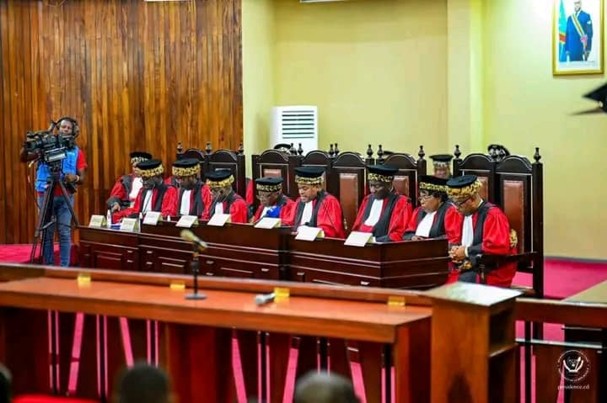
On Tuesday, the Constitutional Court ruled that the law setting out the procedures for organizing the referendum in the Democratic Republic of the Congo was in line with the Constitution. The high court did, however, express reservations regarding certain provisions of the text.

This decision comes after several weeks of waiting and puts an end to the uncertainty surrounding the enactment of this law, which had already been passed by both houses of Parliament.

In its review, the Constitutional Court found that the bulk of the law complies with the principles and provisions of the Constitution. However, reservations were expressed regarding certain provisions, calling for them to be addressed in accordance with constitutional requirements.

The high court’s decision thus marks an important step in the legal process governing the organization of a possible referendum in the DRC.

The adoption of this law comes against a political backdrop characterized by debates concerning the country’s institutional future and the question of a possible revision or amendment of the Constitution.

As a referendum is a procedure enabling the people to express their views directly on a matter submitted for their consideration, the arrangements for organizing it are of particular importance.

With the ruling handed down on Tuesday, the legal framework governing the organization of a referendum has now been declared compliant by the Constitutional Court, subject to compliance with the observations made by the Court.

The Constitutional Court’s ruling thus marks a new stage in the political and institutional debate in the DRC, whilst the issue of the referendum remains at the center of numerous discussions.

Written by Azarias Mokonzi
The DRC adopts a new law on fisheries and aquaculture

The Democratic Republic of the Congo has adopted a new law on fisheries and aquaculture, which was promulgated by the President of the Republic on 27 July 2026. The presidential order announcing this promulgation was read out on the Congolese National Radio and Television (RTNC). This new legislation replaces the decree of 21 April 1937, which had become unsuitable for the sector’s current realities.

Adopted by the National Assembly on 25 May 2026, this law establishes a modern legal framework designed to regulate fishing and aquaculture activities in the DRC. It aims to contribute to food security, promote the sustainable use of fishery resources and strengthen the involvement of all relevant stakeholders in their management.

In particular, the Act prohibits illegal fishing, as well as the use of toxic substances or any other practices that destroy aquatic ecosystems. It also encourages the development of aquaculture, job creation, cooperation between the various stakeholders in the sector, and regional integration for the coordinated management of cross-border fishery resources.

The new law comprises 102 articles divided into nine titles. It sets out the fundamental principles of conservation, sustainable use, protection and governance of fisheries and aquaculture resources, considering the specific characteristics of the various aquatic ecosystems in the Democratic Republic of the Congo.

Victoire Katembo Mbuto

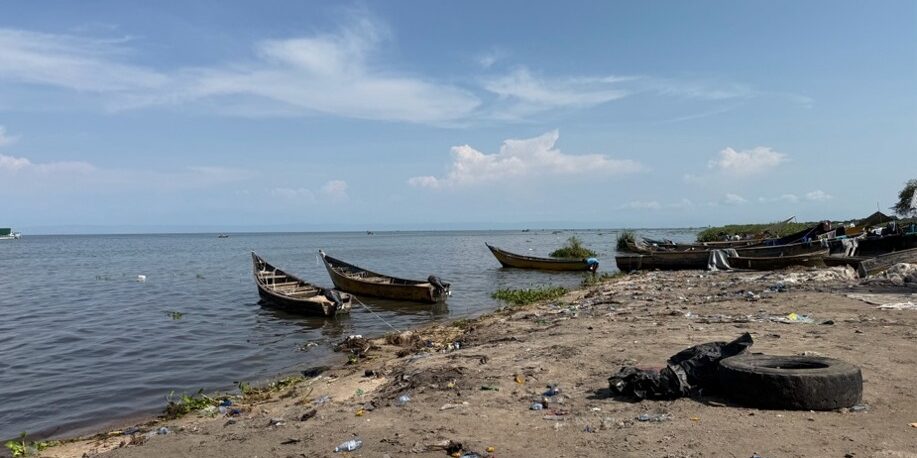
Caption: Fishing canoes moored along the shores of Lake Albert in Kasenyi, Ituri Province, Democratic Republic of the Congo. Photo by  Akilimali Chomachoma

DRC Congolese cyclist Miguel Masaisai reaches Kinshasa at the end of his journey for peace

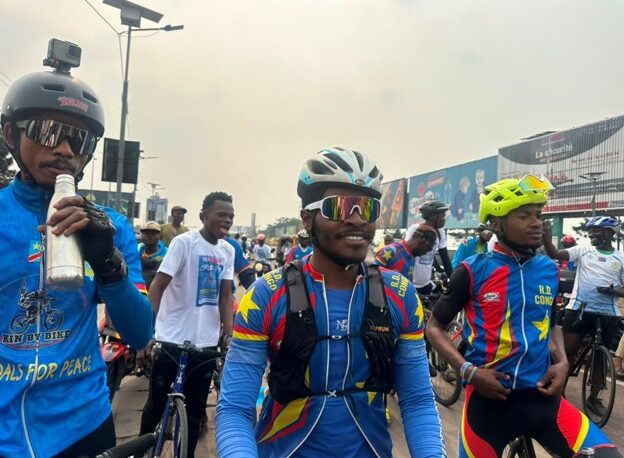
Congolese cyclist Miguel Masaisai, originally from Goma in the east of the Democratic Republic of the Congo (DRC), arrived in Kinshasa on Wednesday 5 August 2026, after more than two months of cycling across the country.

As the driving force behind the ‘Pedals for Peace’ project, this young man from Goma is leading an awareness campaign to promote the return of peace to eastern DRC, a region that has been plagued by armed conflict and persistent security instability for several decades.

‘Since 1 May, every turn of the pedals has brought me closer to this moment. I’ve crossed mountains, braved the sun, the rain, fatigue, breakdowns and doubts. But one thing has remained stronger than anything else: the conviction that peace is worth fighting for,” he wrote in a recent post on his Facebook account, where he is documenting his journey.

For Miguel Masaisai, his arrival in Kinshasa is also the result of the support of the many people he has met and those who have backed his initiative throughout the journey. He believes that his journey offers a different perspective on the DRC, looking beyond the security challenges affecting the eastern part of the country in particular.

“We have shown the world a different side to the DRC. After travelling thousands of kilometers, along roads that were sometimes impassable, over mountains, and through moments of exhaustion when many thought it was impossible, I never gave up,” says the cyclist.

A journey marked by difficulties

Miguel Masaisai’s route was not the one originally planned. His itinerary was due to take him through Angola before reaching Kongo-Central. However, a visa issue forced him to alter his route. The cyclist then passed through Lubumbashi, Kolwezi, Likasi, Kamina, Mbuji-Mayi, Kananga and Tshikapa, before continuing on to Kinshasa.

On his arrival in the capital, he was greeted by cyclists and a number of local residents. The convoy headed for the People’s Palace in Maluku, where he intends to continue the activities linked to his initiative. During his journey, Miguel Masaisai says he has benefited from the solidarity of the people he has met along the way. He also wishes to highlight the welcome and support he has received from several Congolese communities that have backed his initiative.

After Kinshasa, his journey is set to continue to Brazzaville, before crossing several countries in Central and West Africa, with Rabat, in Morocco, as his final destination. Miguel Masaisai intends to continue spreading his message: promoting peace and reminding people that Congolese citizens can also contribute, through civic initiatives, to building a different image of their country.

Written by Victoire Katembo Mbuto

Mambasa: The Bodies Of 47 Victims Abandoned In Mining Areas

The terror wrought by the Allied Democratic Forces (ADF) has reached a new level of horror in the Babila Babombi chiefdom, in the heart of Mambasa territory. More than forty civilians, cowardly massacred between the last week of July and 2 August, still lie on the ground, unburied. The persistent presence of the attackers is preventing any humanitarian intervention.

In the mining areas of Pakwa, Pondo, Longue Histoire and Munguiko, situated within the Bandimboyo village group, the victims’ bodies have been left out in the open. The information was confirmed this weekend by local traditional authorities, who are powerless in the face of the rebels’ firepower.

According to the chief of these communities, Mwami Kiba Mbida Josias, the distribution of the tragedy bears witness to the violence of the criminal attacks. Thirty bodies have been left in the Pakwa mining area, seven victims have been counted in Pondo, and ten bodies have been trapped inside a church in Munguiko.

Human dignity is currently being trampled underfoot by fear. Families and local leaders find themselves completely unable to organize funerals or recover the victims’ remains. The enemy is still lurking, turning the area into a death trap. “I am waiting for the army to escort us so that we can go and bury these bodies, as the enemy is still moving around the area,” warned Mwami Kiba Mbida Josias, issuing an urgent appeal to the Armed Forces of the Democratic Republic of the Congo (FARDC).

Faced with the imminent threat of further clashes and in order to clear the area of human shields, the local authority has ordered the evacuation of the survivors: “I urge the population to leave the area to allow the army to do its job.”

This latest massacre in the mining areas of Mambasa illustrates the growing activity of the ADF, which is stifling the local economy and plunging Ituri into mourning, despite the military operations currently underway in the region.

Written by Azarias Mokonzi

Disarmament of the FDLR: Kinshasa urged to draw up a precise timetable with MONUSCO

The International Contact Group on the Great Lakes Region, chaired by France, welcomes the signing, on 28 July, of a protocol on disarmament, demobilization and cantonment by a faction of the Democratic Forces for the Liberation of Rwanda (FDLR).

It nevertheless urges the Congolese government to adopt “without delay” an operational plan and a precise timetable with a view to the effective neutralization of this armed group, in accordance with the international commitments entered into by the Democratic Republic of the Congo.

In a statement published on Thursday, the eleven member states of the GCI – namely the United States, Belgium, Canada, Denmark, the European Union, France, Germany, the Netherlands, Sweden, Switzerland and the United Kingdom – stated that they take note of this progress. They consider, however, that it will remain insufficient unless it is followed by concrete action on the ground.

The GCI urges Kinshasa to draw up a credible operational framework, in line with the Washington Agreements of 27 June 2025 and the Protocol on the withdrawal of forces and the lifting of defensive measures by Rwanda, known as CONOPS, dated 31 October 2024.

The group also emphasizes the need for the Congolese authorities to clarify the mechanisms for combating impunity set out in the protocol. It further recommends close collaboration with MONUSCO, described as a “key partner” in implementing the process.

The GCI warns against any form of “co-location or operational cooperation” with elements of the FDLR. Such an approach, it stresses, would be “fundamentally incompatible” with the commitments made under the Washington Agreements.

The Contact Group for the Great Lakes Region calls on all parties to the Washington Agreements and the Doha Framework, as well as the various mediation initiatives, notably that of the African Union, to continue their efforts towards the full implementation of the commitments.

It further reiterates the obligation on the warring parties to protect the civilian population, to comply with United Nations Security Council Resolutions 2773 and 2808, and to scrupulously respect the sovereignty and territorial integrity of the DRC. It urges them to “immediately defuse” tensions.

On a more positive note, the GCI welcomes the prisoner exchange agreement concluded between the DRC and the AFC/M23, facilitated by the International Committee of the Red Cross. It regards this gesture as an “essential confidence-building measure” towards a return to calm.

Finally, the GCI urges all parties to the conflict to respect international humanitarian law and to guarantee “full, safe and unimpeded” access to humanitarian aid in order to provide assistance to the affected populations.

By the editorial team

DRC: Several Neighborhoods In Goma Plunged Into Darkness Following A Widespread Power Cut

Several neighborhoods in the city of Goma, in the east of the Democratic Republic of the Congo, have been without electricity since the early afternoon of Sunday 16 August. The power cut mainly affects customers of Virunga Énergies, which supplies the majority of households in the city. However, some residents supplied by the National Electricity Company (SNEL) continue to have power.

On Avenue Osso II, in the Mabanga-Nord neighborhood of the Karisimbi commune, a small crowd gathered at 7 pm on Sunday outside a mobile phone charging point. Some customers were waiting to collect their devices, whilst others had come to charge their phones. The charge for a smartphone is set at 500 Congolese francs and 1,000 for a power bank.

This unusual rush comes after several hours without electricity.

“We’ve had no power since this morning. Usually, the company lets us know before a cut, but today it was sudden,” laments Nicole Kahambu, a local resident.

For professionals whose work depends on electricity, the consequences are immediate. Jonas Kitambala, a journalist with a local TV channel, says he had to cancel a report because he had no power to run his equipment. “We haven’t been able to work since this morning. My camera has now run out of power. This isn’t normal,” he complains.

At the Bingombe entrance, in a hairdressing salon, the atmosphere is just as quiet. Customers who had come to have their hair done eventually had to go home after waiting for several hours.

“We thought it was a communication issue. We believed the power would be back on around 4 or 5 pm. Now it’s 7 pm and we’ve had to go home,” explains Jurès Kasereka.

Small businesses are also being affected. Dieumerci Musafiri, a hairdresser, says he fears a significant drop in his takings, whilst he has to meet regular expenses. “My earnings vary between 10,000 and 20,000 Congolese francs every weekend. That allows me to hand over the takings and pay my commission. Now, I don’t know how I’m going to manage,” he laments.

In small grocery shops, the situation is also a cause for concern, particularly for products that need to be kept chilled. “I sell milk and frozen goods, amongst other things. Today, I’ve had to close early. There are no customers, and I’m also worried that some products might go off,” explains Kakule Bailanda, who runs a small grocery shop.

In several neighborhoods, some residents with solar panels are trying to cope with the power cut by using their systems to charge mobile phones and power a few appliances. Bars and other small businesses that usually operate in the evenings are also running at a reduced pace.

This power cut is therefore disrupting several economic activities and services that rely on electricity. Those affected say they are particularly frustrated by the lack of information regarding the cause of the cut and the timeframe for restoration.

As yet, Virunga Énergies has not issued any official explanation regarding the cause of this power cut or the timeframe for restoration. Customers are still awaiting clarification from the company.

Written by Victoire Katembo Mbuto

Mambasa: In The Face Of The ADF’s Barbarity, The APDEF Calls For International Aid

In the space of just three months, the territory of Mambasa, located in Ituri province, has become the scene of unprecedented violence. Islamist terrorists from the Allied Democratic Forces (ADF) have stepped up their attacks there, plunging the region into an unprecedented security and humanitarian crisis.

According to the shocking revelations made on Thursday 13 August 2026 by Rams Malikidogo, coordinator of the Organization for the Protection of Human Rights (APDEF) in Mambasa, no fewer than 48 attacks were recorded between 6 May and 13 August 2026.

The figures presented by APDEF bear witness to the extreme violence suffered by civilians: 307 people killed by terrorist barbarity, 103 people missing, leaving dozens of families in agonizing limbo, 216 motorbikes set alight, destroying the livelihoods of hundreds of households, and nearly 10,000 displaced, forced to flee their villages to escape the massacres.

Adding to this bleak picture is the systematic looting of the local population’s property, which is draining the region of its meagre economic resources.

For the APDEF coordinator, the scale of these successive tragedies highlights major failings in the system for protecting civilians. “These figures reflect the local authorities’ inability to restore state authority in the area,” lamented Rams Malikidogo.

Faced with this apparent inaction, the civil society leader appeals directly to decision-makers: “It is time for those in charge to take this situation seriously, as their duty is to ensure the safety of the population and their property.”

In the face of imminent danger, APDEF urges the Congolese government to respond immediately and vigorously. The organization is calling for the deployment of a reinforced military response to track down and permanently neutralize the ADF cells that are rampaging across the territory.

At the same time, Rams Malikidogo is making an urgent appeal to the international community and humanitarian organizations to take immediate action on behalf of the thousands of displaced people who are crammed together in conditions of extreme precariousness, deprived of food, healthcare and shelter.

Written by Azarias Mokonzi