
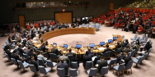
The Permanent Representative of the Democratic Republic of the Congo (DRC) to the United Nations, Zénon Mukongo Ngay, strongly appealed to the Security Council in light of the continuing deterioration of the security situation in the eastern part of the country.
In his address, the Congolese diplomat reaffirmed Kinshasa’s unwavering determination to defend its territorial integrity, while denouncing the “blatant bad faith” of the DRC’s aggressors, directly pointing to the role of Rwanda and the M23 rebel movement.
Ambassador Zénon Mukongo Ngay emphasized that the ongoing insecurity in eastern DRC requires immediate attention from the international community. “These security demands are vital and non-negotiable. No obstacle will deter us from them,” he insisted.
Although firmly committed to a multilateral approach to resolving this crisis, the DRC warns that it will continue to defend its inalienable right to peace and sovereignty by all means necessary.
The representative emphasized that his country scrupulously complies with the resolutions of the United Nations, the African Union, and the various peace agreements. Kinshasa actively supports the Doha process and is cooperating fully with the Joint Verification Mechanism Plus (JVM+), whose first verification missions have already been conducted in Minembwe (South Kivu) and Masisi (North Kivu).
To counter Kigali’s justifications—which regularly cite the threat posed by the Democratic Forces for the Liberation of Rwanda (FDLR) as a reason to intervene in Congolese territory—the ambassador highlighted the concrete progress made in the Washington process.
In addition to the voluntary repatriations already overseen by MONUSCO, on May 30, 2026, the Congolese government signed a historic protocol on the disarmament, demobilization, and cantonment of the FDLR-Foka.
Under this agreement, these combatants commit to laying down their arms at sites designated by Kinshasa before their permanent return to Rwanda.
This demonstration of good faith by the DRC, however, has been severely tested. Zénon Mukongo Ngay has formally denounced a TB2-type drone strike—attributed to the Rwandan army—that targeted a Congolese position in Pinga, killing 5 people and seriously wounding 8 others.
This flagrant violation of the ceasefire comes at the very moment when the DRC is planning an operation to neutralize the FDLR in the “ANI1” operational zone, in accordance with the commitments made in Washington. Kinshasa fears that this aggression will seriously jeopardize the implementation of these operations and demands that a prompt investigation be conducted by the relevant regional mechanisms.
“We condemn this violation of the ceasefire, our sovereignty, and our territorial integrity. It comes as the DRC is preparing the operation to neutralize the FDLR in the ANI1 zone in accordance with its commitments under the Washington Agreement, and risks compromising its implementation.”
The Congolese diplomat concluded his remarks by condemning Kigali’s lack of reciprocity. According to the DRC, the withdrawal of Rwandan forces and the lifting of their so-called “defensive measures” lack transparency regarding the number of troops and their exact locations.
The permanent representative reiterated the strict terms of Security Council Resolution 2773: the M23 must immediately cease hostilities and withdraw from areas under its control, while Rwanda must cease all support for this rebel group and unconditionally withdraw its troops from Congolese territory.
“However, the withdrawal of Rwandan forces and the lifting of their so-called defensive measures cannot be objectively assessed in terms of the exact number and location of such ‘defensive measures.’ Resolution 2773 is, however, unequivocal: The M23 must cease hostilities and withdraw to areas under its control, while Rwandan forces must cease all support for the M23 and withdraw unconditionally from Congolese territory. It is clear that Kigali has largely failed to fulfill these obligations.”
Written by Azarias Mokonzi