No peace in the Congo without justice and reparation

No peace in the Congo without justice and reparation

In 1999, during the First Congo War, the Democratic Republic of the Congo initiated legal actions against the use of its territory as a battleground for other African nations. The DRC initiated proceedings against Burundi, Rwanda, and Uganda “for acts of armed aggression committed . . . in flagrant breach of the United Nations Charter and of the Charter of the Organization of African Unity” and sought reparations from all three countries. Twenty-three years later, some reparations had finally begun to be granted – from Uganda alone. Starting in 2022, after the International Court of Justice had ruled in 2005 that Uganda had violated several international laws in DRC, Uganda has been ordered to pay $325 million to DRC. It has been ordered to do so in yearly instalments of $65 million. However, neither of the two other nations involved in the First Congo War has been ordered to pay reparations or, more importantly, faced any legal repercussions.

The First and Second Congo Wars lasted from 1996 to 2002, resulting from tensions between Rwandan militias that had fled to the DRC, the Congolese government, and the newly formed Rwandan government. The fighting went on and off throughout the six years and even after the fact. The human impacts of the conflict, however, are more numerous than anything reparations could fix on their own. In total, around 5.4 million people were killed in the span of both wars, and 3.4 million people were displaced throughout.

Just like Rwanda has been worsening the current crisis in the Congo by supporting M23 and exploiting Congo’s instability for economic gain, Uganda has been gradually increasing its military presence in the DRC since 2023. Uganda has a substantial number of troops from the Ugandan People’s Defense Force (UPDF) stationed in the DRC. While these troops were initially stationed alongside the Congolese military in a joint defense project, the Congolese government has confirmed that Uganda has increased its presence in the eastern DRC without authorization.

Uganda has played both sides with regard to M23, supporting the rebel group and making efforts to prevent the rebel group from seizing control of more regions in DRC. This position is primarily based on Ugandan interests without any regard for the DRC’s sovereignty. For instance, on one hand, Uganda's army chief, General Kainerugaba, has made statements in support of M23. On the other hand, Ugandan forces have also made some efforts to limit M23's ability to seize more land, primarily in Uganda's regions of influence.

Rwanda’s current government, on top of supporting M23 and continuing its involvement in Congo, comprises many people who were involved in the first Congo War. One notable instance is Rwanda’s current president, Paul Kagame. Kagame, who, before becoming president in 2000, was leader of the Rwandan Patriotic Front (RPF), one of the many Rwandan rebel groups that invaded the DRC.

In fact, the RPF, which would soon after its founding become the leading party within Rwanda, and its military wing were behind many of the atrocities during the First Congo War. On August 24, 1998, for instance, RPF soldiers alongside allied groups brutally killed over 850 civilians in what is known as the Kasika Massacre, burning alive many in the village of Kasika, opening fire on civilians in marketplaces, and even breaking into one Roman Catholic Parish and murdering the priest, nuns, and parishioners. Kagame was part of the leadership of the political wing of the RPF, not its military wing. Regardless, by virtue of these atrocities being sponsored by his party, he is equally complicit.

The international community, aside from the reparations being demanded from Uganda, did little at the time of these atrocities being committed and has done little since. The United States, which took part in training Rwandan forces and providing a good deal of humanitarian aid to the nation, turned a blind eye to the atrocities being committed by Rwandan militias. Lieutenant-Colonel Tom Odom, US Defense attaché in Kigali, said in reference to massacres of refugees in Rwanda, “The deaths were tragic… Compared to the 800,000 deaths of the genocide, the 2,500 deaths were a mere speed bump.”

One survivor of the first Congo War lamented, when speaking to Amnesty International, “My dearest wish was the establishment of courts. This is the wish of the Congolese people. Now we have a sense of frustration in the population. Why were there blockages? It is unclear why crimes that have already been documented have not been tried. Is there nobody emotionally moved by the crimes committed in Congo?” Some, evidently, have been moved, however. Amnesty International, in the press release the above testimony was published, has called for justice from Rwanda and Uganda concerning atrocities in the DRC. Likewise, the fact that Uganda has followed through in paying reparations to the DRC is a start, although efforts for justice shouldn’t stop there. Justice is a continuous process, and we can only hope that that process will continue for the DRC.

Written by Vernon Demir
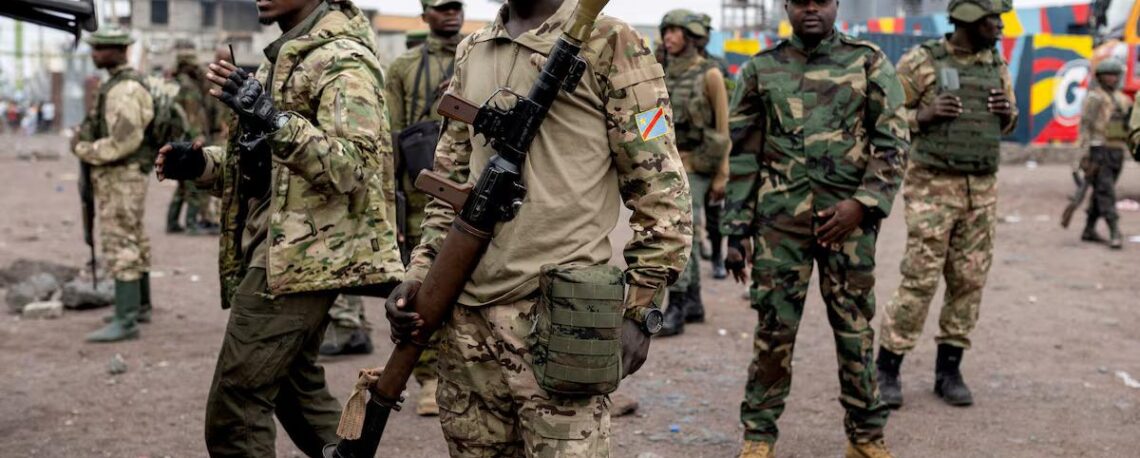
Seeming Never-ending War: Rwandan Involvement in Eastern DRC

Seeming Never-ending War: Rwandan Involvement in Eastern DRC

In November 1994, the world said, once more, “never again”. Following the genocide of nearly one million Tutsi and other Rwandan ethnic groups, the International Criminal Tribunal for Rwanda was founded, and four years later, Rwandan politician Jean-Paul Akayesu became the first person to ever be prosecuted for genocide, setting an example within the nation, as many others from the previous government would be brought to justice. Less than four years later, the new Rwandan government would continue the previous slaughter and displacement of civilians, except in a different location: the Democratic Republic of Congo.

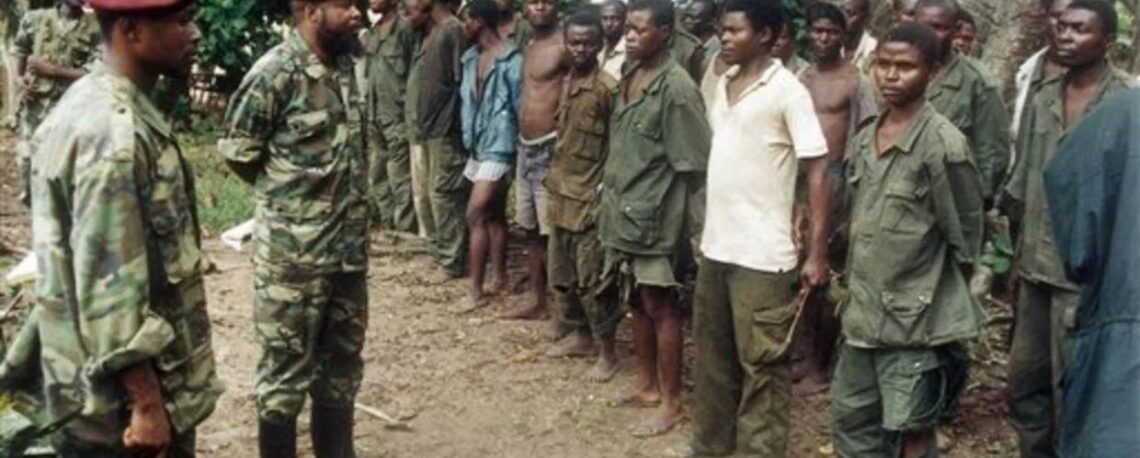
From 1996 to 2003, Rwandan and Ugandan forces invaded and battled within the DRC following tensions remaining from the Rwandan genocide. Two million Congolese were displaced, and 5.4 million people were murdered overall. In 2000, one peak of this war was the six-day war. Throughout Kisangani in the Oriental Province of DRC, hundreds of civilians were killed, and countless villages were bombed. One survivor recalled when speaking to Amnesty International, “I was walking with my grandmother when I was struck by a bomb in my leg. I didn’t know how to get to hospitals; it was dangerous, so we were dealing with the injury at home, but the foot was rotting. On the fifth day, I went to the hospital, but it was too late; they cut off my leg.” Unlike in 1994, however, nobody was prosecuted for their crimes within Congo. With no repercussions and no reparations, these crimes were meant to continue.

Since 2022, Human Rights Watch, Amnesty International, and even the United Nations have all criticized the armed terror group M23 for its attacks on civilians, fueling the rampant human rights abuses within the Democratic Republic of Congo. Since then, over 4.6 million people in North and South Kivu have been internally displaced due to M23 attacks. Equally concerning, 1,500 Congolese people were forcibly transferred by M23 to Rwanda in early 2025.

M23, which stands for the March 23 movement, was formed in 2012, years after the Rwandan genocide. Its origins, however, trace back to the conflict that began around the end of the Rwandan genocide. Hutu militias, constituted by some of the Rwandan refugees, formed to fight back against the newly installed Rwandan government. This conflict, however, continued and intensified, leading to Rwanda invading Congo in what would become the First Congo War in 1996. Both the Congolese state and Rwandan-backed militias continued to fight for control of eastern DRC for the next five years. Skirmishes continued despite various efforts by the Congolese government, which repeatedly shifted heads over the decades, particularly after the assassination of President Laurent-Desire Kabila. Some of those efforts were a 2003 peace agreement. However, another peace accord was signed in 2009, between said militias, the National Congress for the Defense of the People (CNDP), and the DRC government, more successful than the last.

In 2012, those Rwandan-backed militias united, took a new name based on the date of the 2009 peace accord, and tried to take control of eastern Congo. Following years of on-and-off attacks, M23 reorganized in 2022 and began to attempt the capture of the Congolese city of Goma. Despite the rebranding, one thing was the same: their strength and resources came from Rwandan direct support. According to the United Nations, between 3,000 and 4,000 Rwandan military troops were working alongside M23 as of July 2024. For instance, M23 forces have been working alongside the Rwandan Defense Forces in bombing displacement camps and civilians near Goma.

These ties between M23 and Rwanda have exceeded simple support. United Nations experts have reported that Rwanda has deployed "high-tech systems capable of neutralizing air assets" for rebels to use against the Congolese military. Rwanda has, in the meantime, diplomatically defended the M23, arguing that they are merely protecting the minority Tutsi population from the Congolese state.

These attacks, committed by M23 and backed by Rwanda’s government, have had severe impacts on civilians living in eastern DRC. Francine, a farmer from North Kivu, was in the field alongside her family when M23 rebels invaded her village. “We immediately fled. I was carrying my baby on my back, one child in each hand, [with] the other four running in front of me. I lost sight of my husband. We didn't dare rest because we heard the shots all around.”

Rwandan involvement in the Congo has not been exclusively militaristic either. Part of Rwanda’s reasoning for support for M23 has been the ease of access to raw materials such as coltan, which, according to U.N. experts, has been smuggled from DRC to Rwanda. Many Rwandan manufacturing companies and exporting companies have relied on Congolese minerals, including those obtained from smuggling. In June 2025, Rwanda and the DRC signed the ‘Minerals for Security and Peace Deal’, further linking the economies of the two nations, but in favor of Rwanda.

Rwanda has faced much criticism, but minimal genuine pushback, for its involvement in the DRC. While the United Nations Security Council urged Rwanda to stop supporting M23 in February 2025, and the EU has sanctioned three Rwandan generals for their support for M23, sanctions have not been placed on Rwanda as a whole. Most recently, the United States brokered and placed support behind the aforementioned mineral deal, with the U.S. benefitting highly from it.

“Never again” does not currently and has not meant, for the longest time, never again. Outside of Congo, within Sudan, the genocidal Janjaweed militia, which committed various acts of ethnic cleansing across Darfur, after barely being prosecuted, formed the Rapid Support Forces, or RSF. Much like the Janjaweed before them, the RSF has targeted civilians, particularly ethnic minorities, as well as Sudanese cultural landmarks, such as looting and destroying centuries-old artifacts in the National Museum in Khartoum; Raphael Lemkin, the scholar who originated the term ‘genocide’, coined the more specific term “cultural genocide” to refer to acts such as this. Much like M23, supported by Rwanda, the RSF is heavily externally backed, receiving both munitions and supplies from the UAE. With both, the fact that the supporting countries (Rwanda and the UAE) are Western-backed nations has played a part in the lack of repercussions for their crimes.

For international law and human rights law to mean anything, prosecution must mean something. Terror groups and extremist militias like the RSF and M23 must not be allowed to form to begin with. Rwanda is where the first case of genocide was actively prosecuted, but for the ICC, ICJ, and UN to truly show that crimes against humanity do not go unpunished, as they have been in Congo, those acts of prosecution must not be the last.

Written by Vernon Demir

DRC A new terrorist attack leaves people dead and missing

DRC A new terrorist attack leaves people dead and missing

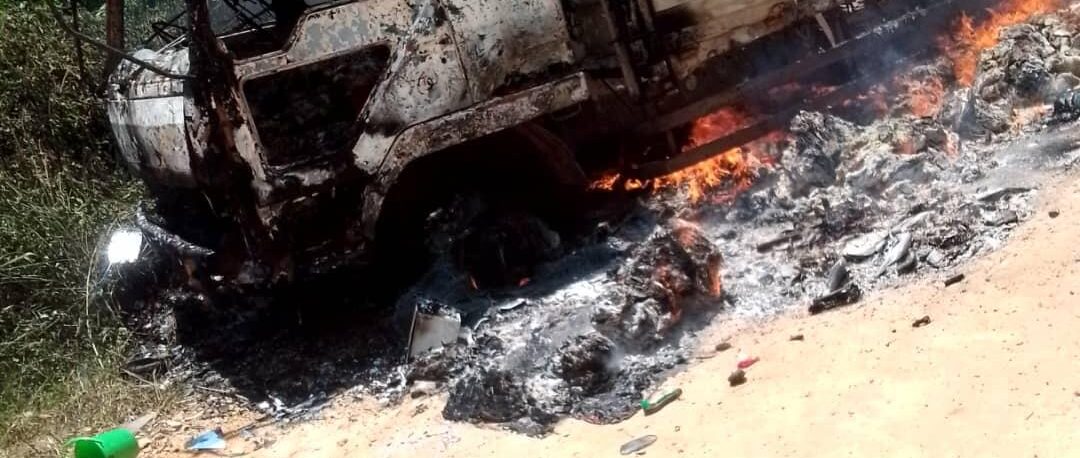
Another terrorist ambush by the ADF on Friday 26 September 2025. The target was a Fuso vehicle on the OÏCHA - MAMOVE road. Local sources say that most of the victims were traders on their way to the weekly market in Mamove. At least 8 people are reported dead, and several are still missing.

All the goods on board were also reduced to ashes. The same applies to 7 motorbikes, whose drivers have still not been found.

"There are still people missing because the vehicle behind was attacked. Those who were more or less in front in the cab escaped. Everyone managed in their own way. That's why some people are still in the bush. We hope they will be able to return" KAMBALE KIBWANA Jean-de-Dieu, deputy mayor of the rural commune of Oïcha. 

This local authority did not hide its desolation at this sad situation and called on the security services to take charge of this issue. "The population really has tears in its eyes, because ever since the enemy has been roaming around in the west of the commune, not a week goes by without recording murders", he added.

Following these massacres, the Oïcha civil society has announced a day of mourning for Saturday 27 September in the commune, which is the capital of the Beni territory.  The ADF (Allied Democratic Forces) are one of the deadliest terrorist groups in Africa.

Founded in Uganda in the 1990s to oust President Yoweri Museveni, accused of mistreating Muslims, the group is responsible for a number of violent attacks in Uganda and eastern DRC.

Written by Akilimali Chomachoma 

DRC: The M23 Invalidates All Travel Documents Issued By Kinshasa, A Road To Balkanization

DRC: The M23 Invalidates All Travel Documents Issued By Kinshasa, A Road To Balkanization

Occupying Goma and Bukavu and large parts of the provinces of North and South Kivu, the Rwandan-backed M23 is moving to a new level of autonomy. It will no longer accept any travel documents issued by the Kinshasa regime to enter the areas under its control.

In a note, Bertrand Bisimwa, the rebel movement's deputy coordinator in charge of political, legal and diplomatic issues, explains this decision, which is due to be implemented by the end of 2025.

He justifies this decision, which is due to come into force on 1 November, "out of a concern for reciprocity", pointing out that it was in February that the Kinshasa regime decided to exclude and no longer recognize administrative documents issued by M23.

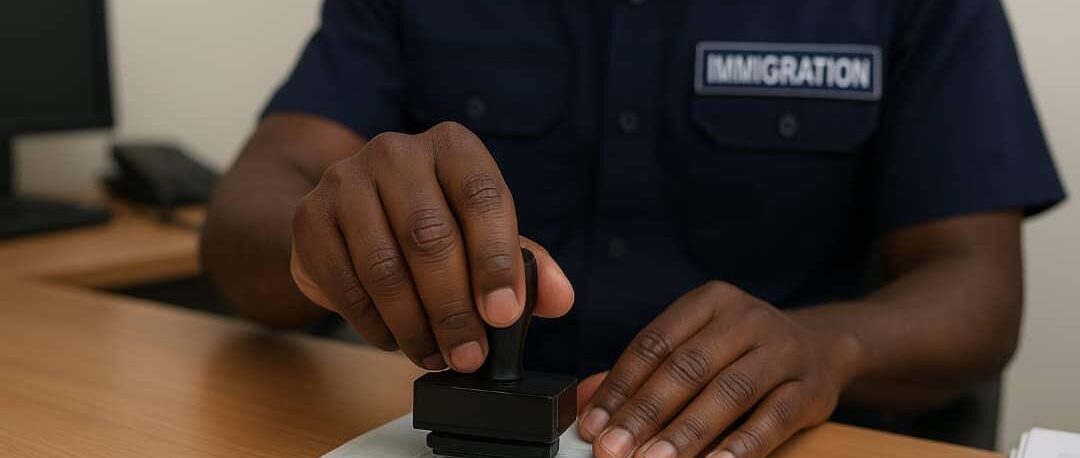
As a result, he points out, "any foreign national wishing to enter the areas occupied by his movement must have a visa issued by the latter".

"Visas issued by Kinshasa, as well as any other travel document intended for entry into the occupied zones, are now considered invalid", he continued, adding that this measure would not apply to people who had obtained their visas before February 2025.

He also pointed out that UN personnel holding a service or official passport, as well as a duly recognized courtesy visa, continue to enjoy free and unconditional access to the occupied areas.

Many observers even see it as a means of legitimizing the balkanization of eastern DRC.

"The Washington and Doha agreements are opium administered to #Kinshasa to put it to sleep, while they speed up the establishment of a Rwandan protectorate through the terrorists of #AFC_M23," says Fortifi Lushima, a pan-African activist and coordinator in the DRC of the organization "Urgence Panafricaine".

"Today, they impose visas on all foreign nationals coming from the occupied territories. What will it be tomorrow? A referendum?" He adds.

Written by Akilimali Chomachoma

DRC- Kisangani: Activist Mabela Jedidia Sentenced

DRC- Kisangani: Activist Mabela Jedidia Sentenced

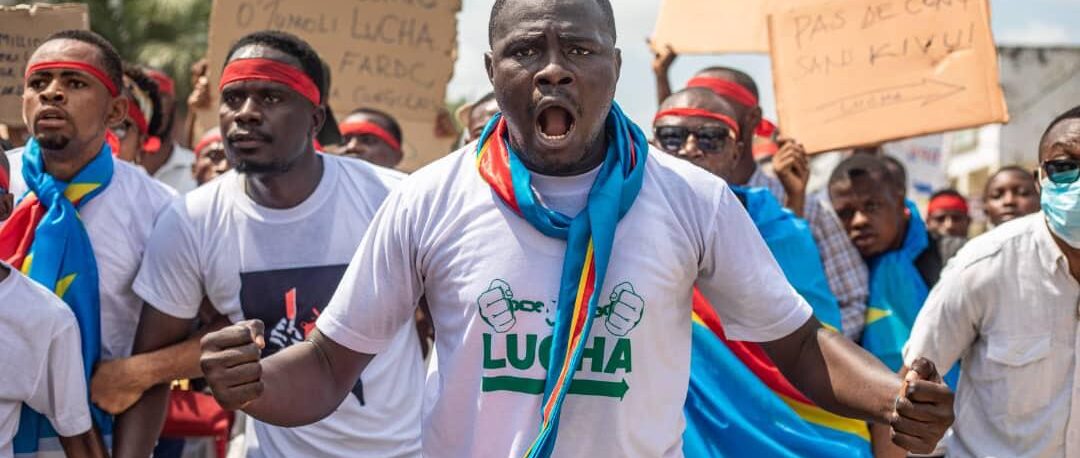
Jedidia Mabela, LUCHA activist and human rights defender, was arrested on Wednesday 1 October, taken to the Public Prosecutor's Office and then to the central prison. This arrest comes in the wake of the bloody crackdown on a sit-in organized by a coalition of citizen movements in front of the Provincial Assembly on Tuesday 30 September. The sit-in took place shortly before the opening of the September 2025 session.

The verdict was handed down on Thursday, 2 October 2025, and it has sent shockwaves through the activist community in Tshopo. Jedija Mabela, an activist with the citizen movement Lutte pour le Changement (LUCHA), was sentenced to six months' imprisonment and fined 1,500,000 Congolese francs in a trial against the provincial governor, Paulin Lendongolia. Mabela's lawyers described the decision as a "unique judgement", denouncing the governor's direct interference in the judicial decision.

Following the judgement handed down by the Kisangani Magistrates' Court, Maître Firmin Yangambi, one of Jedija Mabela's lawyers, did not mince his words. He clearly stated that it was a "judgement dictated by Governor Paulin Lendongolia". Yangambi recalled the governor's career, highlighting his own past role in his rise to power when he was a provincial deputy during a motion of censure against former governor Walle Lofungola.

“We will defend our values to the end. Children like Jedidia are the light of Congo today,” insisted Maître Yangambi, denouncing the governor’s arbitrary actions in using his power to arrest a peaceful citizen. As human rights activists and defenders of freedoms, the lawyers promise fierce opposition: "We will oppose him. Let him know that from now on, we will fight them through all legal channels, and we will bring them down legally."

This trial in flagrante delicto raises serious questions about the independence of the judiciary and freedom of expression in Tshopo province, highlighting the tensions between the provincial authorities and citizen movements demanding more transparent governance that respects fundamental rights.

Written by Akilimali Chomachoma