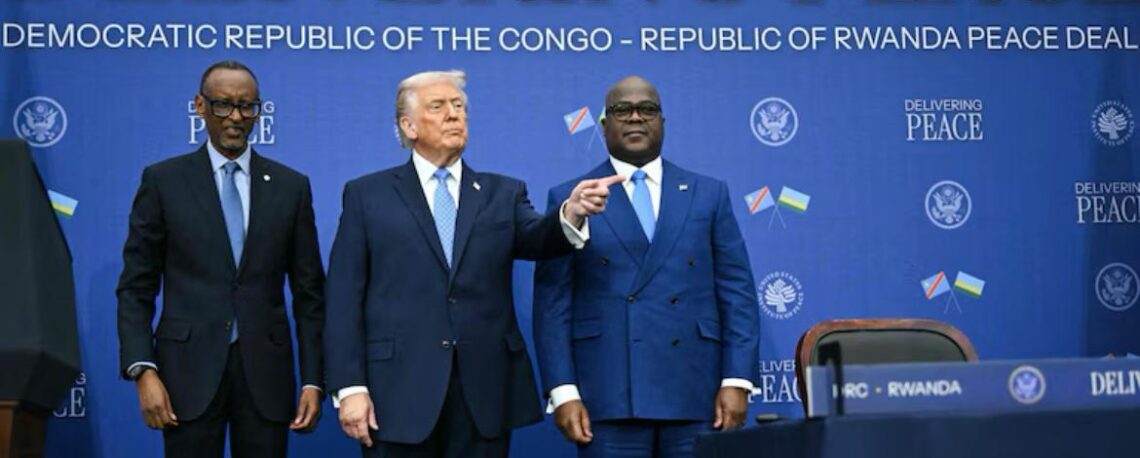
At the instigation of the United States, the presidents of the DRC, Félix Tshisekedi, and Rwanda, Paul Kagame, have just ratified the agreement signed in June and given substance to the regional economic integration framework adopted in early November.
Angolan President João Lourenço, Burundian President Evariste Ndayishimiye, Kenyan President William Ruto, Ugandan Vice President Jessica Alupo, former Nigerian President Olusegun Obasanjo, former Kenyan President Uhuru Kenyatta, and other African officials were present as witnesses to this meeting. In the Democratic Republic of Congo, opinions are divided between those who believe that this will not solve the problem and those who believe that these commitments should be given a chance.
"It seems clear to me that President Félix Tshisekedi is not pursuing peace, but rather his third term in office, using all means to ensure American protection. Paul Kagame, for his part, is only defending his country's economic interests, while Donald Trump is seeking to amass billions in order to preserve his personal financial power and that of the American people, aware that this is his last term in office. America does not want peace in the DRC," believes Daniel Louis Mpela, an executive member of the opposition political party ECIDE.
Others speak of Congo's capitulation with the signing of this agreement. This is the case for Christian Mutaba, a Congolese political analyst. "This is not a peace agreement. It is a capitulation disguised as diplomacy. Goma (January 2025) and Bukavu (February 2025) have fallen into the hands of the M23.
Twenty-three years after Sun City and Pretoria, we are seeing the same thing all over again. History is repeating itself, and it is still the Congo that is bleeding," he says.
Comments on the peace agreement are all over the place, but to sum up the essentials, “Some people are focusing on the Congolese president not opening the document during the photo shoot, the number of people in the delegations, or the gestures and attitudes of the two participating presidents. But in the end, what really matters is the implementation of the agreement. The rest is of little importance.”
These agreements were ratified while fighting between the FARDC and AFC/M23 combatants continued for the fourth consecutive day in several areas of South Kivu, notably in Kaziba, Kamanyola, Lubarika, and Rurambo.
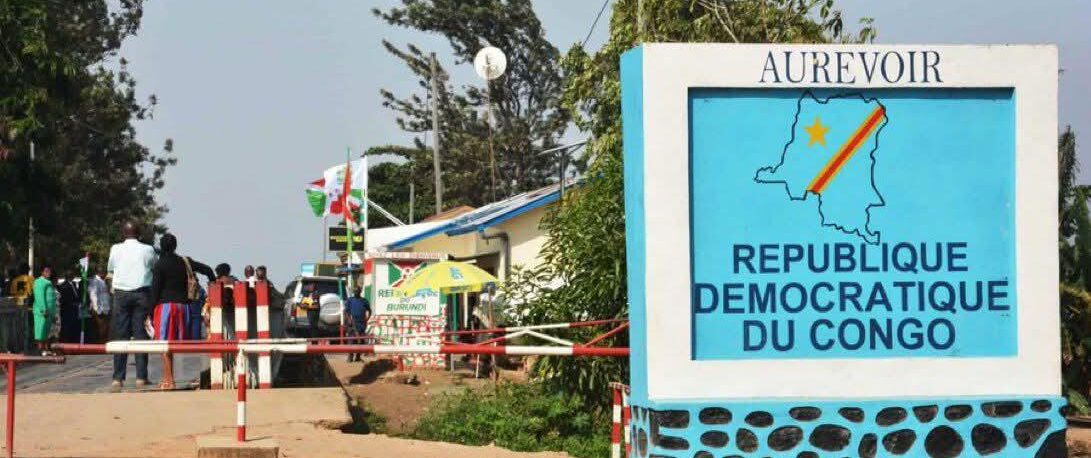
Burundi has closed its main border posts with the Democratic Republic of Congo after the M23, supported by the Rwandan army, entered the strategic town of Uvira, security sources said on Wednesday.
The Gatumba and Vugizo posts have been closed since Tuesday afternoon. "Each post is now considered a military zone," said a Burundian army officer quoted by AFP. Long committed to Kinshasa's side, Burundi has now chosen to withdraw from the conflict to protect its own borders.
The Burundian National Defence Forces (the country's army) had set up one of its most important military bases in Uvira to prevent any rebel breakthrough. But the Burundian army has discreetly left the area, located only about 30 kilometres from its capital. The Burundian authorities now fear a potential advance by the rebels and the Rwandan army into their territory and prefer to take internal measures.
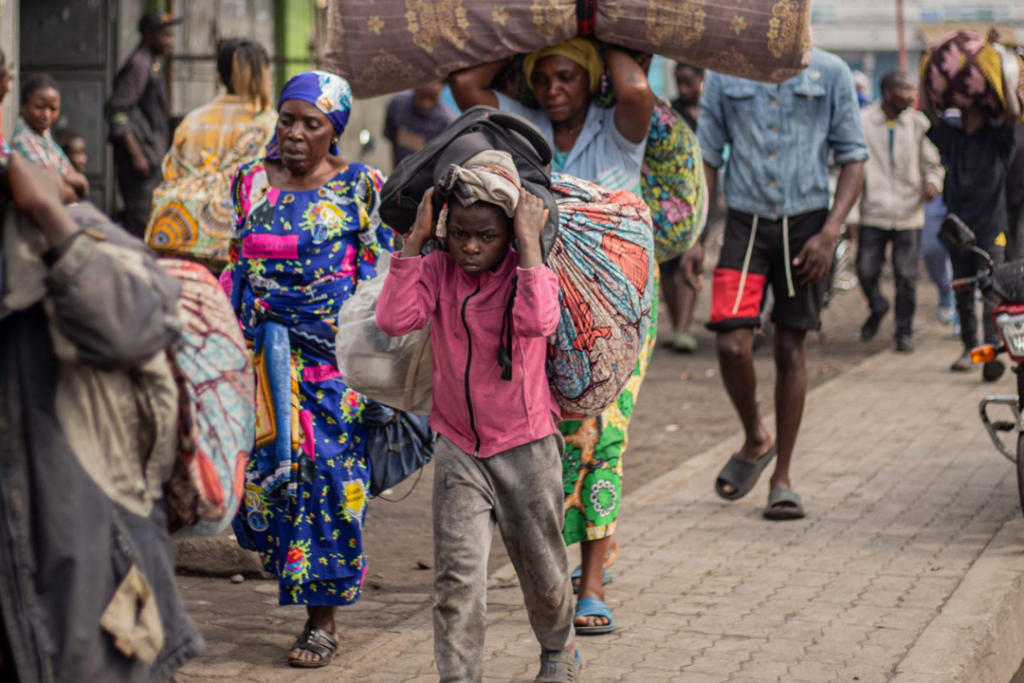
Bujumbura closed its border with the DRC after Uvira was taken by the AFC-#M23. Thousands of civilians are fleeing to Bujumbura, exacerbating the humanitarian crisis. Burundi's border with Rwanda has remained closed since January. The only border open to Burundi is with Tanzania, which exacerbates the situation in the African Great Lakes region, given that Bujumbura, the economic capital, is heavily dependent on imports of basic necessities from the DRC.
The Burundian authorities have not yet made an official statement, but military presence has been reinforced along the border, according to several witnesses in the region.
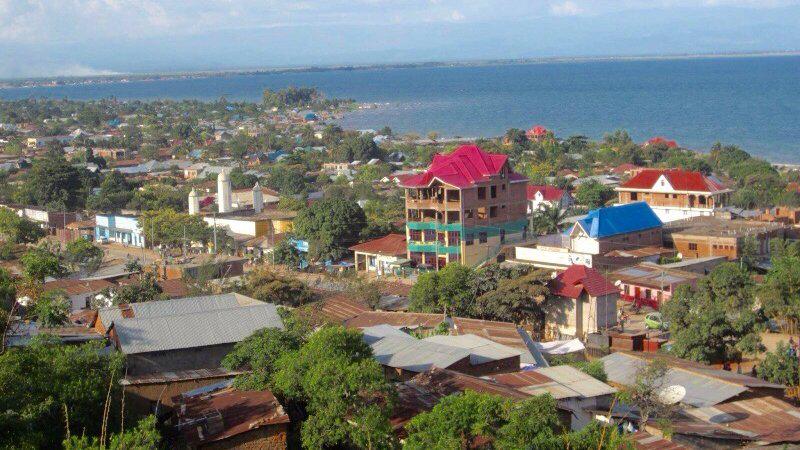
M23 rebels, supported by Rwanda according to several United Nations reports, entered the town of Uvira on Wednesday 10 December 2025, marking a major advance in an increasingly intense conflict in eastern DRC.
The authorities point to the presence of Rwandan special forces and foreign mercenaries operating in flagrant violation of the ceasefire and international agreements in force.
In a special broadcast of "Congolais Telema" on national television RTNC, the Minister of Communication and government spokesperson, Patrick Muyaya, gave an update on the security situation in the east of the country a few hours after the capture of the town of Uvira. "Death machines, kamikaze drones, have been used several times on civilian targets, causing at least a hundred deaths, serious injuries and at least 200,000 displaced persons," he said.
After fleeing Bukavu in the face of the AFC/M23 advance, the provincial authorities of South Kivu were once again forced to abandon Uvira on Tuesday. They retreated to the town of Baraka in Fizi territory, nearly 30km west of Uvira.
"Faced with thousands of deaths and mass displacement, concern is no longer enough. Concrete measures are needed," said Thérèse Kayikwamba Wagner, Congolese Minister of Foreign Affairs.
Located on the shores of Lake Tanganyika, Uvira is not a city like any other: it is home to the provincial government appointed by Kinshasa since the fall of Bukavu last February and serves as a strategic base for loyalist forces. Its capture now opens a corridor for the rebels that could take them even further into South Kivu and beyond.
Local sources report that M23 fighters, engaged in a "sweeping" operation in the heart of the city of Uvira, are shooting several young civilians at point-blank range. According to these testimonies, the victims are being executed on the mere suspicion of belonging to the Wazalendo militias that were helping the FARDC.
The recent fall of the city of Uvira, in South Kivu province, to rebels from the Alliance Fleuve Congo (AFC)/M23 has reignited tensions and sparked strong reactions among Congolese politicians and civil society. Cardinal Fridolin Ambongo, Archbishop of Kinshasa, at the close of the 15th Plenary Assembly of the Association of Episcopal Conferences of Central Africa (ACEAC) on Sunday 14 December 2025, expressed his indignation at this situation, pointing to the limitations of international peace initiatives which, in his view, exclude the Congolese people and trivialize the plundering of the country's resources.The ACEAC brings together the episcopal conferences of the DRC, Burundi and Rwanda.
An "incomprehensible" fall after the agreements
In a strong statement, Cardinal Ambongo questioned the effectiveness and sincerity of the recent peace agreements signed in Washington between the DRC and Rwanda, under the auspices of the United States. The signing of these agreements last week was intended to restore stability in eastern DRC, but the situation on the ground has not improved, quite the contrary."How can we understand that less than a week after the ratification of the Washington agreements, the city of Uvira has fallen under occupation?" exclaimed the Catholic prelate.This question echoes criticism that Rwanda, accused of supporting the M23, violated the terms of the agreement almost immediately after it was signed. US officials, including Senator Marco Rubio, also described Rwanda's actions as a "clear violation" of the commitments made to President Trump, who facilitated the signing.
The limits of "exclusive" peace initiatives
Beyond the chronology of events, Cardinal Ambongo criticized the very substance of these peace initiatives. He sees them as an insidious normalization of the systematic plundering of the natural resources of the DRC, a country rich in minerals but whose population languishes in poverty."How can we fail to see in this collapse the very limitations of agreements and other initiatives that subtly exclude the Congolese people and seek to normalize the systematic plundering of Congo's resources?" he insisted.This statement highlights a sentiment shared by many Congolese: international negotiations often fail to take into account the deep aspirations of the Congolese people and to guarantee their sovereignty and territorial integrity.
Growing up in Eastern Congo, water was never just water, it was a daily struggle.
Imagine standing beside Lake Kivu, one of the great lakes in Africa, yet walking home with an empty jerrycan
The Congo Basin holds approximately 30%-50% of Africa’s freshwater, a region surrounded by water and yet millions struggle to find a clean cup of water to drink. How is this possible?
If we want to understand the crisis, let’s start from the roots It all started with the war of 1996 or what some people call ‘Africa’s World War’ which has been ongoing for decades now. The conflict did more than disrupt the peace, it destroyed the systems that once delivered water, food and basic stability, and since then water has been a rare commodity.
On top of that, population growth, the harsh realities of climate change, and volcanic eruptions (such as the 2021 eruption that displaced 400,000 people) have all played a part in the ongoing water crisis. To make matters worse, Congo water systems are old, exhausted and crumbling. Some of the pipes that carry water today date all the way back to colonial times. Rusted skeletons of a forgotten era. They leak, they burst, they decay and many have never been replaced. For millions of Congolese, the water that should flow into their homes simply …. Doesn’t
Furaha, a 26 young mother living in a city blessed by the vast waters of lake Kivu, yet she rarely sees clean water in her home. Instead, her family survives on whatever source they can find: the lake, the wells, street vendors, rainwater, anything except through the official water system (REGIDESO) that is supposed to serve them.
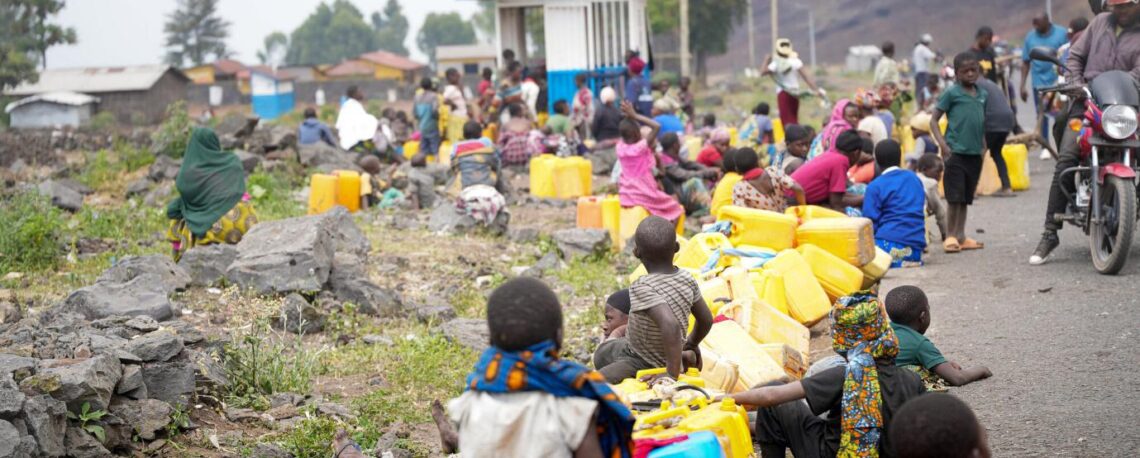
She calls water a luxury, something only the wealthy can access consistently, even in a major urban center like Bukavu. And she’s not alone. Every day, thousands of people wake up before dawn to join queues at water holes, hoping to collect just a few liters of water that is still dirty and contaminated.
In the city of Goma, a young man named Baraka, trying to support his family, faces a different version of the same nightmare. His nearest water point is over 30 minutes away. The lines are endless, the wait unpredictable. He spends more money than he can afford just to buy small quantities of water. When the supply cuts and it often does, he goes home empty-handed. Typhoid fever and other diseases have become so common in his neighbourhood.
Then there is Thomas, a family man in Bukavu’s Muhungu neighborhood, who hasn’t seen reliable running water in so long that he’s stopped expecting water to come out of the taps at all.
Every week, he spends a painful share of his income buying water from vendors.
This is the daily reality of countless Congolese in eastern DRC: a country without peace, in economic decline, and a water crisis that forces people to spend the little money they have on something their land has in abundance
And then there are the rural communities, for many villages, water barely arrives at all. Families rely on rivers and springs, untreated, unprotected and often contaminated. But what other choice do they have? It is either drinking unsafe water or going thirsty. And in places where clinics are distant, under-equipped, or simply unaffordable, the illnesses that follow contaminated water become deadly.
When you listen to these stories, you hear the same message over and over again: We are tired. Tired of queueing. Tired of getting sick. Tired of being ignored. Tired of fighting for something as basic as water which we have plenty
Where are the leaders, what are they doing? And how are they caring for the people they swore to serve?
The collapse of water systems also contributes to plastic waste as households rely on bottled water and small plastic sachets sold by vendors. Thousands of plastic containers end up in rivers and soil every day. The environment absorbs the cost of every broken pipe and every failed policy
In the end, the water crisis is not only making people sick but also damaging the environment and deepening climate vulnerability.
REGIDESO,the official government agency responsible for supplying water in Eastern Congo, has repeatedly sent out water that is salty, foul-smelling and most of the time untreated ,putting millions at risk of communicable diseases such as bacterial infections, skin conditions, digestive problems, typhoid fever ,amebiasis ,urinary tract infections(UTIs),gastrointestinal illnesses and cholera outbreaks (a sad reality the region knows far too well)
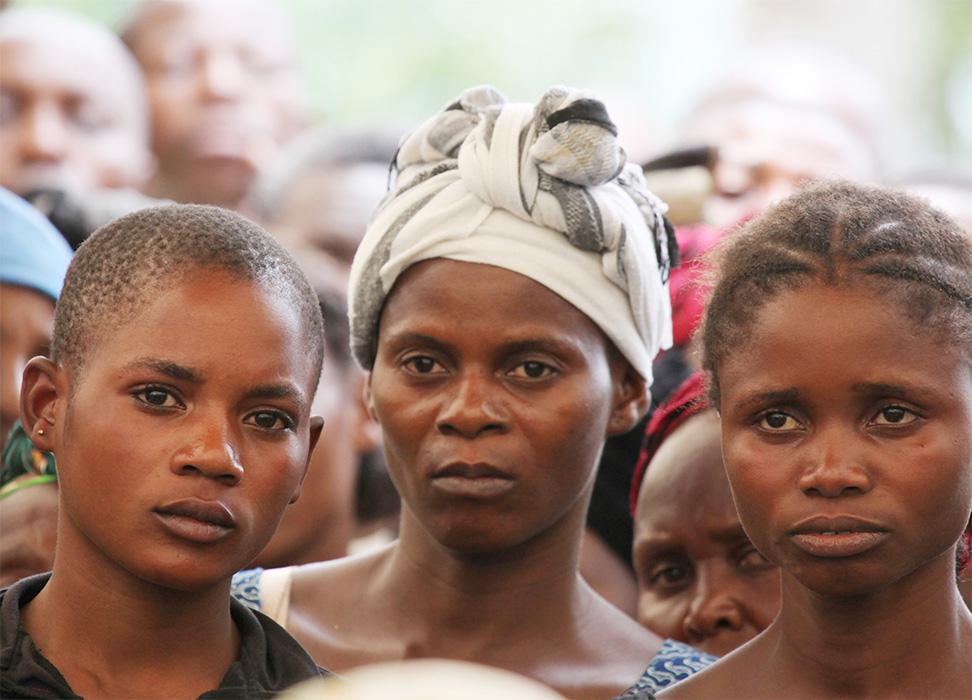
“We are living in conflict but also dying of thirst” said Mapendo from Nyalukemba in Bukavu. The population is suffering in silence while the leaders remain quiet.
Access to clean water shouldn’t be a privilege, not in a region overflowing with freshwater sources. If the funds meant to serve the people were used transparently and effectively, this crisis wouldn’t be their daily reality. But I guess the problem runs deeper than mismanagement
Some support on the ground is provided by:
- UNICEF and MONUSCO who provided 77 000 litres of fuel enabling 5 pumping stations to restart after they were shut down due to powerline cuts, allowing 700 000 people to receive clean water in Goma based on a report of March 2025,
-OXFAM which is working with partners such as AVUDS (Centre de development integral pour L’Enfant rural (or CEIDER- Centre for the integral development of the rural child) and SOPROP (a civil organization promoting peace and social cohesion) by helping and assisting displaced people with clean water
-ICRCR which is also helping through its Goma West resilient Water project which aims to deliver safe, affordable water to people in Goma preventing waterborne diseases
-IRC (International Rescue Committee) which has been in Eastern Congo for decades now and is also helping through emergency aid and provision of safe water
Call To Action
To anyone reading this, make a change and share these stories, support organizations working on water access, advocate for peace because without peace no infrastructure can survive. The people of eastern Congo deserve clean water.
When we talk about Congo, we often think about the eastern part of the country. When we talk about the eastern part of Congo, we think about the ongoing conflict, humanitarian crisis and their physical impacts on the population. But there is another crisis quieter yet devastating, one that people tend to overlook and never makes the headlines: Mental health.
Displaced Population
According to a UNHCR report dated September 8th, 2025, over 100,000 people have fled their homes to find shelter in neighbouring countries. Millions are internally displaced and living in overcrowded camps.
Displaced people have been victims of conflict for decades and continue to suffer from the ongoing humanitarian crisis. They endure the pain of separation from their ancestral lands.
When you spend your whole life in a community, a place that you call home, it is difficult to leave it behind. The pain of leaving your home unwillingly because it has been destroyed, because you have been raped or because conflict has shattered your life, is another kind of pain. It changes who you are socially connected to and leads to stress, anxiety and post-traumatic stress disorder.
GBV Victims
An estimated 48 women are raped every hour in the DRC (UNFPA, 2011)
Girls as young as 9 years old are facing gender-based violence. A mother in the eastern Congo was going to the market and found a 9-year-old girl had been raped. While trying to help her, she was raped herself, and the perpetrator went on and raped an elderly woman. As I write this, I still can’t believe it or wrap my mind around the fact that someone can be so insensitive and lose their humanity to the point of committing these atrocities.
GBV has multiple health impacts on victims such as STIs (Sexually Transmitted Infections), HIV/AIDS and when contracting these they become more susceptible to other diseases since their immune system is already compromised and weakened by pre-existing conditions.
Women who are victims of GBV do not only suffer from physical health issues but also mental health issues such as psychological trauma. Many are usually rejected by their communities, left to fend for themselves. With limited access to healthcare, they feel helpless and abandoned, which creates fear and shame to open up about the assaults and sexual violence they have endured. They think and are convinced that if they say something they will be rejected and stigmatized by their own communities.
Yet, in the face of everything, some women try to speak up, rebuild and teach us that resilience is not just survival; it is refusing to let the pain have the final word.
Community
In September, more than 60 people were left dead in Nyoto, North-Kivu by ADF (Allied Democratic Forces) and some houses were set on fire.
Toward the end of September, 5 young people were kidnapped by Mai-Mai groups in Lubero, North-Kivu, reported actualite.cd. The ongoing conflict has enabled more enemy groups to harm and create fear within communities.
In South-Kivu, Bukavu, people now hesitate to walk through the streets, afraid of being abducted by one of the M23 rebels who use kidnapping as a way to force young men to join them and if they do not comply, they are killed. When a young man goes missing it creates panic in neighbourhoods because they assume he has either been forced into the rebel group or killed.
Even wedding celebrations have changed. Celebrations that once began in the evening are now held during the day, as the streets become too dangerous after dark. The nights that once carried laughter and music now feel heavy and uncertain. What used to feel like home has, for many, become a place of worry instead of comfort.
Daily life has ever since been reshaped by insecurity. People have lost their jobs, the economy has declined, local businesses have been destroyed, and the education system has faced disruptions and delays, leaving dreams on hold.
Communities once vibrant with joy now live under constant fear of rebel attacks and crimes. Many people have normalized living in fear, seeing it as the new normal.
Mental health is not only about mental illness; it is about our emotional and psychological well-being, how we feel and cope with life. Unfortunately, in many African communities especially in many parts of DRC, the topic of mental health is often misunderstood and considered taboo, some see it as a sign of weakness others as witchcraft or divine punishment.
This stigma keeps people silent when what they need most is to be heard and supported.
They are not three separate groups; they are one body living through the same wound. The displaced lose their homes, women victim of GBV lose their dignity and safety, and communities lose their balance but when one finds healing, hope flows back through everyone.
Fu-Kiau, in his book ‘Simba Simbi’ which means to ‘hold up that which holds you up’ is a reminder that even in hardship, life is sustained through our connection to others, to the land, and to do something greater than ourselves.
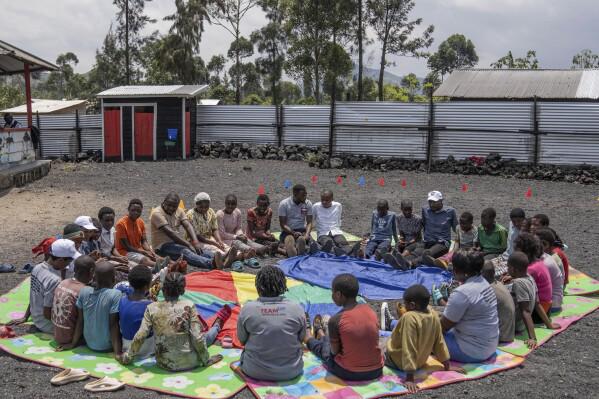
Imagine if in every school, there was space to talk about how we feel. If teachers were trained to recognize trauma. If communities saw mental well-being as just as important as physical health. That kind of awareness could change everything.
When young people learn more about mental health, they grow up understanding that strength isn’t silence. It is speaking up and seeking help. Feeling broken doesn’t mean you are weak; it simply means you are human.
Any Signs Of Hope?
In April 2025, the International Organization for Migration (IOM) under the leadership of the ministry of public health, hygiene and social welfare has launched a 5-year mental health and psychosocial support program for peace project in the DRC. The project supports affected populations and has been deployed in zones such as Nyunzu, Nyemba and Kalemie located in the Tanganyika province. It aims to reach up to 158 000 beneficiaries between 2025 and 2029 through the creation of community centres, mental health training, awareness campaigns and the restoration of social connections.
Organizations and hospitals on the ground such as Heal Africa Hospital, Panzi Foundation, Saint Vincent de Paul hospital and international partners like MSF, UNHCR and so many more are also providing essential psychosocial care to affected communities.
However, despite these efforts, the need for more psychosocial support far exceeds the resources available.
Mental health must not be overlooked. We need to break those myths surrounding it and end the silence. We need to create more awareness programs, more advocacy, more health education (for instance introducing the topic of mental health in the school curriculum, training community volunteers to teach people about mental health and break the stigma), more support for a resilient, stronger and peaceful Congo.
After more than 50 hours of travel, this second cohort arrived on Congolese soil on Tuesday 9 December 2025, ahead of its official presentation to stakeholders and the press on Wednesday 10 December. These animals will reinforce the group reintroduced two years ago as part of a vast program to restore this species. Garamba National Park has reached a new milestone with the arrival of 24 new southern white rhinos.
The transfer, which covered several thousand kilometres from the Munywana reserve in South Africa, was orchestrated in three carefully planned stages. The operation mobilized veterinarians, logisticians, wildlife experts and security partners, ensuring the animals' well-being throughout the journey.
According to Philippe Decoops, managing director of Garamba National Park, this operation represents a major step forward in the reintroduction of an iconic species that had disappeared from the country for several decades. He said he was satisfied with the results achieved so far, particularly with the birth of a baby rhino in the first group.
"It has now been three months since the first rhino was born in the wild in the Democratic Republic of Congo, a first in more than twenty years. A month earlier, another birth had taken place: the calf was in perfect health, but unfortunately its mother died during the birth. We want to make it clear that the more we invest in conservation, the more we reap the benefits," he said.
For the provincial government, represented by Mines Minister Didier Meduama Yolo, this new wave reinforces the actions already taken to preserve the park and its species.
"The province of Haut-Uele has not stood aside in improving the conditions and operationality of our park. Road maintenance is proof of this: it facilitates intervention when there is a problem. We encourage peaceful coexistence with the park so that the population understands the importance of this major project to better protect the species that live there," he emphasized.
Garamba National Park, a UNESCO World Heritage Site, provides an environment conducive to the survival of rhinos: enhanced security, rigorous management, community support and exceptional biodiversity. This new group reinforces an already growing founding population, with the hope of creating a sustainable stronghold for the species in the region. A third batch of rhinos is planned for January 2026.
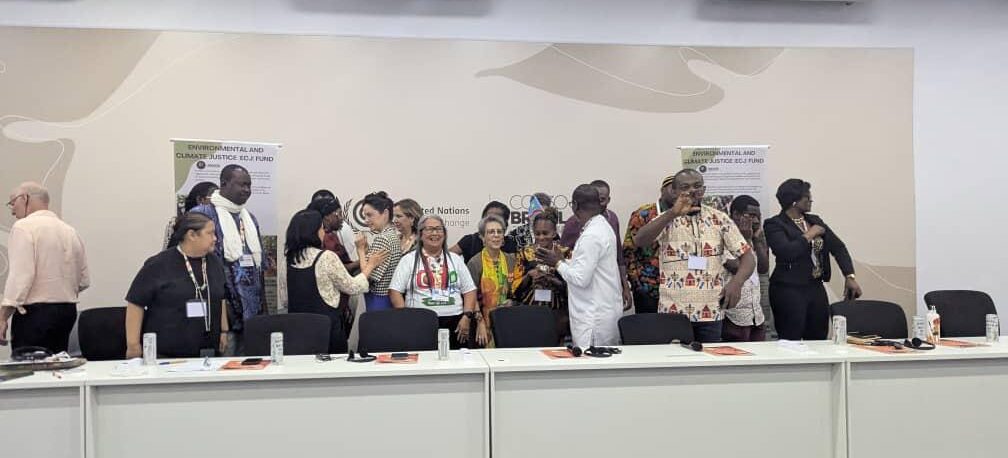
The Congo Basin Fund will be launched on Wednesday 19 November 2025 in Belém, Brazil, where COP30 is being held. Launched by environmental civil society organizations, this fund aims to support local communities in protecting the forest and marine ecosystem.
"We must do this because it is the right thing to do, because doing so means supporting the communities that pay the highest price for deforestation and other consequences," says Maman Dorothée Lisenga, one of the indigenous women environmental activists from the Democratic Republic of Congo.
This panel brings together leaders of local funds and key representatives working in the world's major forests—the Amazon, Congo, and Indonesia—to share concrete experiences of direct support for nature-based, community-led solutions whose primary goal is to keep the forest standing.
After the launch, several other community and environmental fund managers exchanged views with the stakeholders of these new funds. Maria Amália Souza, Founder and Director of Global Philanthropy Strategies, Fundo Casa Socioambiental, a fund dedicated to the Amazon rainforest, believes that this new fund must fight to ensure its success while maintaining the philosophy of local communities:
"It's like this front that we're going to there. Well, there's going to have to be re-accommodation of systems here, and that's what we're trying, embedding it, and just going and being places like this and bringing partners and creating direct voices."
With an annual absorption of around 1.1 billion tons of carbon dioxide, or around 4% of global emissions, Central Africa is one of the regions of the world with the most positive differential between carbon absorption and emissions, with a net flow of around 600 million tons of carbon dioxide.
The region has a sequestered carbon stock of approximately 60 billion tons, 30 billions of which are found in its peatlands, which represent the largest tropical peatland forest complex in the world. These forests are also the world's most efficient ecosystem for carbon capture.
A fire broke out in the "Blue Zone" pavilion of the COP30 venue in Belém, Brazil, on the afternoon of Thursday, November 20, 2025. If the area was closed in the afternoon, official sources said mum.The fire occurred in one of the pavilions in the Blue Zone, the restricted area where official negotiations between countries take place. The fire has been contained, and there are no reports of any injuries said the Brazilian authorities here at the site. In an official communication, the UN said that the situation is under control of Brazil government, and the local authorities will give an update at 4:00 PM local time."13 individuals were treated on site for smoke inhalation. Their condition is being monitored, and appropriate medical support has been provided" said local authorities in Belem.The organizer, United Nations Framework Convention on Climate Change (UNFCCC) confirmed in an email sent to participants that : "Following a comprehensive safety assessment, we confirm that the venue has been thoroughly inspected and deemed fully safe".The entire Blue Zone was temporarily closed for a safety assessment, causing a pause in the negotiations which were in their final stages. The Blue Zone was re-opened around 8:40 PM local time the same day for negotiations to resume, though the specific affected area remains isolated until the conference ends said UN source. Belém is the capital of the state of Pará, in the northern region of Brazil. It is a major gateway to the Amazon River, known for its rich history, unique culture influenced by indigenous, African, and European traditions, and distinctive cuisine. The choice serves to focus international attention on the rainforest's existential danger and Brazil's role in forest preservation and climate leadership. This location is also a symbolic contrast to previous host countries with fossil fuel-based economies. To be continued
"Cheated! The rush for critical minerals in the DRC." This is the title of the report just published by the Oakland Institute, an independent American think tank that aims to contribute to major social, economic and environmental issues. The Congolese press has produced articles on this report.
Actualite.cd begins with the context of the signing after the fall of the cities of Goma and Bukavu to M23 rebels supported by Rwanda.
"In the aftermath of the fall of Goma and Bukavu and after the failure of the Luanda process, the Washington agreement and the Doha process are the two complementary parts of major diplomatic initiatives aimed at ending the persistent conflicts in eastern DRC, particularly those involving Rwanda and armed groups such as the M23," according to this online newspaper.
"While US President Donald Trump hailed the 'peace' agreement between Rwanda and the Democratic Republic of Congo (DRC) as the end of a deadly three-decade war, a new report from the Oakland Institute casts a shadow over this announcement," states the opinion news website.
"Entitled Shafted: The Scramble for Critical Minerals in the DRC, the document asserts that this diplomatic initiative primarily conceals a US strategy aimed at consolidating control over critical Congolese minerals," adds Opinion Infos.
For researchers at the Oakland Institute, this diplomatic agreement is not a step towards peace, but rather a "win-lose deal," according to the Kinshasa-based media outlet.
The report acknowledges that formalising trade through the Washington agreement "may reduce these losses", but stresses that "with its much larger mineral deposits, the DRC will continue to be the site of extraction, with enormous social and environmental costs, while Rwanda will benefit from the processing and export of minerals around the world," according to DeskEco.com.
The report acknowledges that formalising trade through the Washington agreement "may reduce these losses", but stresses that "with its much larger mineral deposits, the DRC will continue to be the site of extraction, with enormous social and environmental costs, while Rwanda will benefit from the processing and export of minerals around the world," according to DeskEco.com.
The report acknowledges that formalising trade through the Washington agreement "may reduce these losses", but stresses that "with its much larger mineral deposits, the DRC will continue to be the site of extraction, with enormous social and environmental costs, while Rwanda will benefit from the processing and export of minerals around the world", according to DeskEco.com.
"According to the study, the United States turned a blind eye to massive exports of tantalum, a metal extracted from coltan, from Rwanda," reports lafortune.net, a media outlet focusing on economic trade issues. It goes on to add that "At its peak, more than half of US tantalum imports came from Rwanda, despite its limited mining production."
Finances Entreprises focused directly on the plundering of Congolese mineral resources by Rwanda with the tacit agreement of the United States. "The analysis of historical coltan trade data presented in the report shows that the United States played a central role in laundering Congolese minerals smuggled by Rwanda. Total exports of tantalum (extracted from coltan) from Rwanda to the United States increased 15-fold between 2013 and 2018," the daily newspaper reports.