As a Congolese citizen, my comments today are not aimed at any particular community. This is not about stigmatization, but rather a clear-headed analysis of the facts that threaten the integrity of our nation. For some time now, my research has revealed a brutal truth: the war in eastern DRC, involving the M23 in particular, goes far beyond the scope of a simple internal rebellion or rejection of the current government.
It is now clear that this conflict does not stem solely from President Tshisekedi's management, which we criticize on a daily basis. For more than thirty years, the DRC has been plagued by cycles of violence. In the past, Presidents Laurent-Désiré Kabila and Joseph Kabila faced similar challenges. This suggests that the pretexts put forward to justify the conflicts are complex and that the root causes are manifold.
An analysis of the dynamics of the conflict
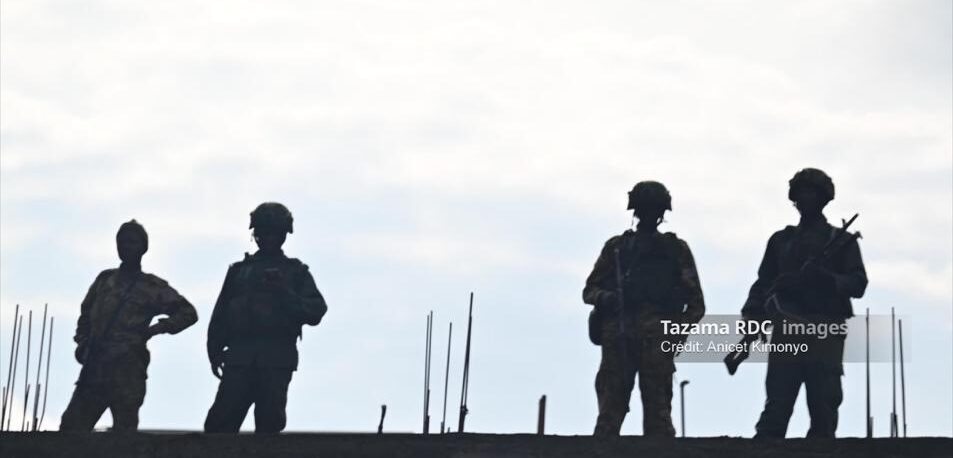
The findings of numerous observers, including the June 2025 UN expert report, highlight a possible expansionist dynamic, perceived as a war of conquest and territorial occupation. The report suggests that certain actors are seeking to extend their influence and control over territories in the DRC. To conceal this ambition from the international community, it would appear that strategies are being put in place to weaken the country from within by supporting armed groups composed of Congolese nationals.
I personally witnessed a revealing conversation. In December 2023, in Kigali, during a conference on international humanitarian law, my questions about the legal nature of the conflict in the East provoked an intense reaction from one person present, who identified themselves as having been involved in the situation in Congo since the time of the AFDL and still active alongside the AFC-M23.
During a break, this person approached me with disconcerting frankness. They confided that, from their perspective, the conflict was "justified", arguing that certain Congolese territories historically belonged to other entities.
She also expressed concerns about the treatment of the Congolese Tutsi populations, presenting them as marginalized, and insisted, taking me for someone close to the government, that I convey a message to the Head of State: if a solution was not found for these populations, there would be a risk of these lands being annexed in order to 'protect' them. At the time, I underestimated this threat, thinking that the motivations for the conflict were mainly economic. Recent developments have shown that territorial issues are also an important factor. Recent history has shown me the complexity of the situation.
Later, this discourse found a disturbing echo. International figures relayed the theory that certain actors were fighting to reclaim land. This theory, far from being isolated, seems to be integrated into certain narratives and has been publicly mentioned by leaders.
The urgency of a unified approach
Faced with this complex situation and the risks of territorial integrity being compromised, our collective naivety, internal divisions and betrayals weaken our position. The risk of balkanization is real. I call on our political leaders to act responsibly. If we want to preserve the legacy of our borders, it is imperative that we put aside our differences. A power that seeks to impose itself by force without consideration for the people and the territory compromises stability. Similarly, an opposition that seeks the president's departure by any means, at the risk of leading a country stripped of its sovereignty, would be tragically blind.
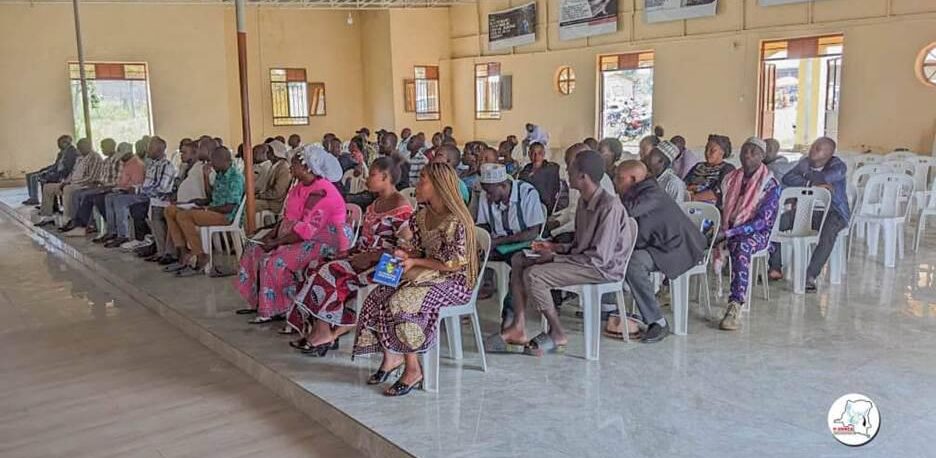
Today, everyone seems to be fighting for their own interests, which weakens the national position. That is why the dialogue initiated by the Catholic prelates must not be a mere sharing of positions, but a historic opportunity to speak with one voice on the fundamental issues of sovereignty and territorial integrity.
In a serious nation, when sovereignty is at stake, internal quarrels should give way to the higher interests of the nation. It is possible to continue to criticize governance, but it is essential to maintain a united front in the face of external threats. Above all, it is a matter of preserving the land of our ancestors.
Written by Azarias Mokonzi
Azarias Mokonzi is an investigative journalist and independent political analyst (columnist). His research focuses on domestic and international law. He is the founder of the "Réveil Citoyen" movement, a think tank and awareness-raising organization based in Beni that combats the anti-values that plague Congolese society by promoting civic engagement.