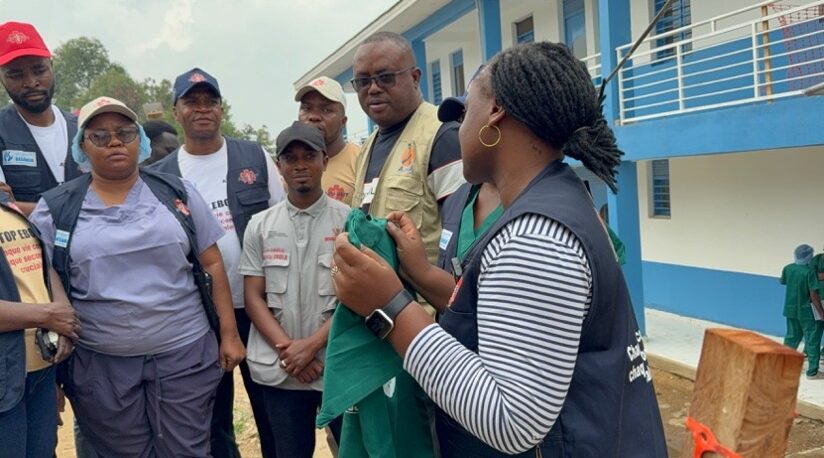
A clinical trial evaluating two treatments against the Bundibugyo strain, a rare variant of the Ebola virus, officially began on Thursday, July 2, in the Democratic Republic of the Congo. The launch ceremony took place at the Evangelical Medical Center (EMC). These first treatment candidates come as the virus continues to spread rapidly across this part of the country.
By Akilimali Chomachoma, in Bunia
This scientific study aims to assess the effectiveness of two potential drug candidates against the country's 17th Ebola outbreak, which has already claimed the lives of several hundred people nationwide.
"As you know, during this outbreak we also had to conduct research to identify specific drug molecules capable of treating this Ebola virus disease," said Dr. Dieudonné Mwamba Kazadi, Director General of the National Institute of Public Health (INSP). He added, "This clinical trial will help determine which drug or molecule is the most effective and can be used to treat Ebola patients."
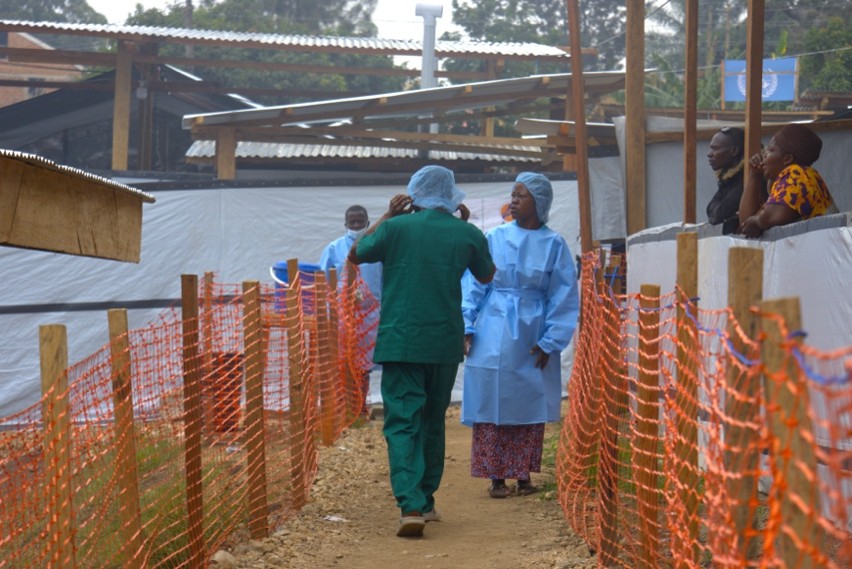
Although many questions remain about these clinical trials, healthcare workers see them as a source of hope. Baraka Bulambula, a nurse who has worked for several years at the Evangelical Medical Center (EMC) in Bunia, contracted Ebola while carrying out his professional duties in the middle of may. After spending several weeks at an Ebola Treatment Center, he became one of the first patients officially declared cured of the disease on June 1, 2026.
For him, these clinical trials are "good news. They will certainly help stabilize the situation, and we need many more survivors like me." The trial will evaluate a monoclonal antibody against the virus, MBP134, as well as the antiviral drug remdesivir. "We will also continue providing supportive care. Therefore, the study will include four treatment arms," explained Dr. Dieudonné Mwamba Kazadi.
MBP134 is an experimental cocktail of monoclonal antibodies currently being evaluated in clinical trials involving patients infected with the Bundibugyo strain of Ebola virus disease. It was developed by Mapp Biopharmaceutical.
Remdesivir is a broad-spectrum nucleotide analogue antiviral prodrug administered intravenously. Originally discovered and developed by Gilead Sciences, it was created in the early 2010s in response to emerging viral threats, building on more than a decade of research.
These drug candidates will be administered either individually or in combination to evaluate their effectiveness and safety against this specific Ebola variant, for which no approved treatment has previously been available in the Democratic Republic of the Congo.
However, according to researchers from the National Institute for Biomedical Research (INRB), it may take at least several months before an approved treatment becomes available. "We expect these clinical trials to last between three and six months. This will depend on how the outbreak evolves and on the number of patients enrolled during the trial," explained Professor Placide Mbala Kingebeni, Director of the Bundibugyo Ebola Laboratories.
From an organizational standpoint, the clinical trial is coordinated by the National Institute for Biomedical Research (INRB). The Congolese institution is supported technically and logistically by a coalition of international partners, led by the World Health Organization (WHO), while working closely with the affected local communities.
"The launch of this clinical trial evaluating two drug candidates for the treatment of Bundibugyo strain Ebola virus disease brings us great relief and genuine hope. We are delighted by this scientific progress and eagerly await the results to determine whether these molecules can improve patient care," said Dr. Patient Mazirani, Medical Director of the Universal Clinic.
"Patients participating in the trial will receive comprehensive supportive care and close monitoring. We are also committed to ensuring they have access to these two medicines if they prove to be safe and effective during the study," added Tedros Adhanom Ghebreyesus, Director-General of the WHO.
To obtain reliable results, specialists estimate that at least 500 participants will be required. "This will allow us to thoroughly analyze which treatment performs best. It will better equip us to treat Ebola patients more effectively and to prepare for future outbreaks," concluded Professor Placide Mbala Kingebeni.
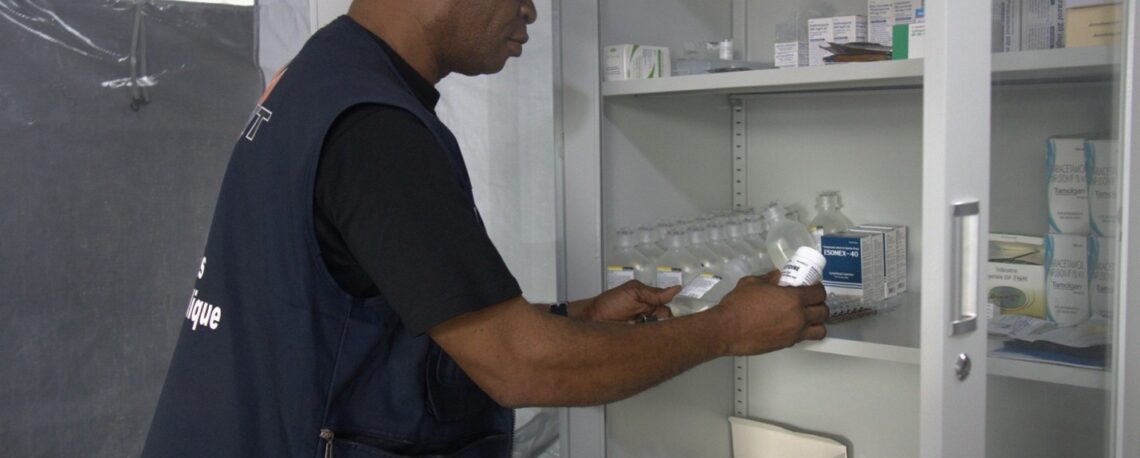
Caption: One of the pharmacists at the Ebola Treatment Center "CME" in Bunia responding to a medical prescription. Photo by Akilimali Chomachoma