North Kivu: 535 candidates absent from the ENAFEP in the Rutshuru 2 educational district; insecurity cited as the cause

North Kivu: 535 candidates absent from the ENAFEP in the Rutshuru 2 educational district; insecurity cited as the cause

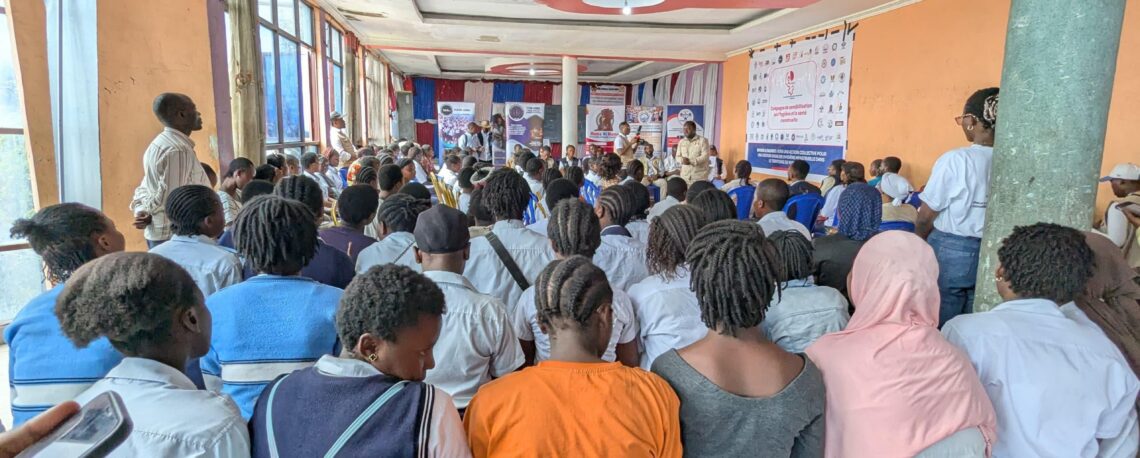
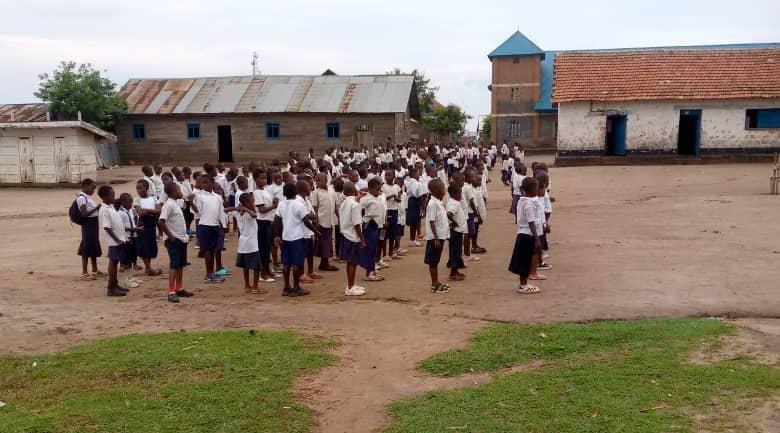
In the Rutshuru 2 educational sub-division, in North Kivu, 535 candidates did not sit the National Primary School Leaving Examination (ENAFEP), held on 4 and 5 June. Education authorities attribute this situation to the deteriorating security situation and the financial difficulties faced by many families.

Of the 3,498 pupils registered at the 15 examination centers, only 2,963 sat the exams, representing a participation rate of 85 per cent. The 535 absentees represent a dropout rate of 15 per cent, according to statistics provided by the Provincial Education Directorate.

For Henry Tunga Gisamonyo, Provincial Director of Education (PROVED), the persistent insecurity in several areas of Rutshuru, notably Mirangi, Ivuya, Kashuga, Birambizo and Karimbi, has disrupted school attendance and prevented many pupils from completing their primary education under normal conditions.

“We recorded 3,498 registered candidates. Of these, 2,963 actually sat the exams, representing a participation rate of 85%, compared with a dropout rate of 15%. Our observations show that this situation is mainly due to the insecurity affecting certain areas. We have also noted that the fees charged by some primary schools have contributed to school dropout rates, even though participation in the ENAFEP is supposed to be free,” he said.

The education official also highlighted the economic difficulties faced by households and the impact of school fees charged by some primary schools. In light of this situation, he called for a reduction in the financial burden on families, particularly in schools where teachers are already paid by the state. In his view, this measure would help to reduce school dropout rates in a context marked by population displacement and economic insecurity.

‘In North Kivu, school fees have been introduced in some primary schools. Normally, these fees should be set in consultation with parents. However, we have observed that some schools charge them whilst others do not. This disparity contributes to pupils dropping out of school, particularly in the final year. Given the current security and socio-economic context, it would be desirable to ease the financial burden on parents. In schools where all teachers are already paid by the state, a waiver of school fees could be considered,” he added.

It should be noted that a decree published on 30 August 2025 by the administrative authorities of North Kivu under the control of the AFC/M23 had introduced compulsory payment of school fees of up to 30,000 Congolese francs per pupil per term. According to this decree, these contributions were intended for the running of state schools, social support for teachers and the management costs of the institutions.

Reacting to this decision at a press briefing held on 2 September 2025, the Congolese Minister of the Interior, Jacquemain Shabani, had expressed his concerns, arguing that this measure ran counter to the national policy of free primary education.

As a reminder, since 2019, the DRC government has introduced free primary education in state schools. This reform aims to guarantee equitable access to education for all children, regardless of their socio-economic situation. However, in several areas affected by armed conflict, its implementation continues to face numerous challenges, including insecurity, population displacement and a lack of funding for the education sector.

Written by Mukongo – Pseudonym
Lualaba: In Kolwezi, children exposed to mining hazards in Kamilombe; the mayor of Dilala calls on the CMDS cooperative

Lualaba: In Kolwezi, children exposed to mining hazards in Kamilombe; the mayor of Dilala calls on the CMDS cooperative

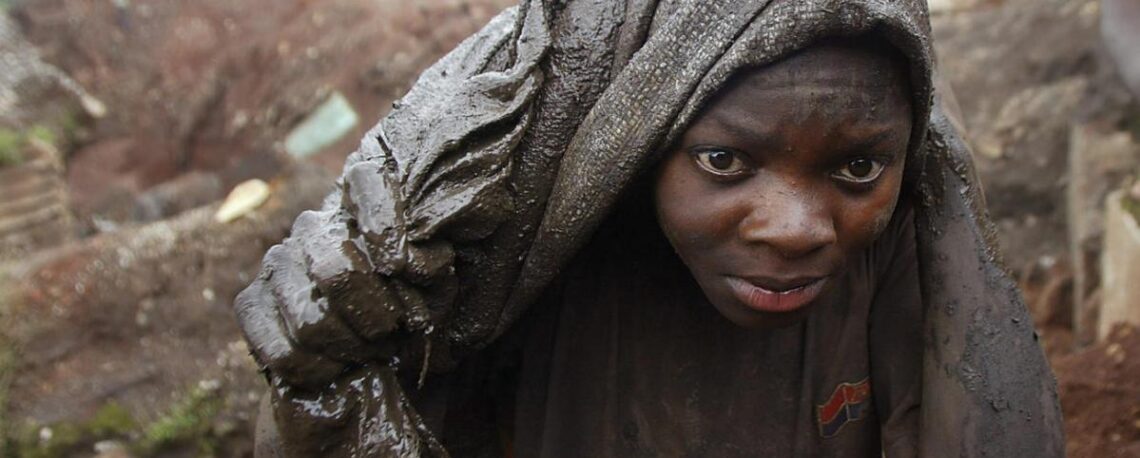
In Kamilombe, in the Kapata district of Kolwezi, children can still be seen on the mining spoil heaps where artisanal miners work daily in search of copper and cobalt. This situation is viewed with concern by the mayor of the Dilala commune, who condemns not only a violation of children’s rights but also serious risks to their safety.

On the Kamilombe spoil heaps, activity shows no sign of abating. Every day, women, young people and artisanal miners dig through the earth in the hope of finding a few kilograms of ore. But amidst this intense mining activity, one presence stands out: that of children operating in an environment known to be dangerous.

For the local authorities, this situation cannot be trivialized. During a visit to the site, the Mayor of Dilala, Françoise Mangweji Kuwaha, sounded the alarm over the presence of minors in this artisanal mining area.

The local authority has called on the women present at the site, as well as the managers of the CMDS mining cooperative, to fulfil their responsibilities in protecting children and to ensure that their fundamental rights are respected.

Beyond the issue of child labor or the presence of children on the site, the mayor warns of the many dangers to which they are exposed. With open pits, earthworks, machinery and the risk of landslides, the mining spoil heaps constitute a particularly hostile environment for children.

But the concerns do not end there. The authorities are also warning of the consequences of unauthorized digging carried out near the electricity pylons that cross the area. According to Françoise Mangweji Kuwaha, this work weakens the infrastructure and could cause certain structures to collapse.

Such a situation would not only expose artisanal miners to potentially fatal accidents, but could also leave part of the Kapata neighborhood without electricity.

In light of these threats, the mayor of Dilala is calling for more responsible mining practices that comply with safety standards and respect the rights of the most vulnerable communities.

Her intervention also highlights the role expected of the CMDS cooperative in overseeing activities carried out on the site. As the authorities issue repeated warnings, the issue of child protection and compliance with safety measures remains more pressing than ever.

In Kamilombe, artisanal mining continues to provide a livelihood for many families. But for the local authorities, no economic imperative can justify exposing children to dangers that could jeopardize their safety, health and future.

Written by Noé KALEMEKO

Nyiragongo: The Sexual and Reproductive Health Consortium raises awareness among young girls about menstrual hygiene

Nyiragongo: The Sexual and Reproductive Health Consortium raises awareness among young girls about menstrual hygiene

On Thursday 4 June 2026, around 100 young girls from four schools in the village of Kiziba 2, in the Nyiragongo territory of North Kivu, took part in an awareness-raising session on menstrual hygiene and health organized by the Nyiragongo Sexual and Reproductive Health Consortium. This initiative, led by several organizations defending the rights of women and young girls, aims to help break down the taboos that still surround menstruation in many families in eastern DRC.

“We spoke with the students about menstrual hygiene and the challenges they face during their periods. We encouraged them to talk freely about this issue, without shame or stigma. We also gave them practical advice on how to manage their menstrual hygiene effectively,” explains Aurélie Maliro, program assistant at Woman Power DRC, one of the consortium’s member organizations.

Mutumayi Kezie, Miss Independence DRC 2025, who was invited to the event, emphasized the need to change society’s perception of menstruation.

“It was important for me to take part in this event. Menstruation should no longer be seen as a weakness or a reason for discrimination. This kind of initiative helps to boost young girls’ confidence and helps them understand their bodies better. I encourage the organizers to extend this awareness-raising beyond schools, into villages, as many girls still lack information on this issue,” she said.

The participants welcomed this initiative, feeling that it had enabled them to gain useful knowledge for their health and well-being. They pledged to share the messages they had received with their classmates and loved ones.

“We learnt how to look after our hygiene during our periods and how to use reusable sanitary pads properly. Now we understand that periods are nothing to be ashamed of. We can talk about them openly and, in turn, raise awareness among other girls,” says Dorcas Sibalingene, one of the beneficiaries.

It is worth noting that at the end of this activity, around 100 young girls received menstrual hygiene kits to help them manage their periods. This campaign is part of the efforts of the Nyiragongo Sexual and Reproductive Health Consortium to promote menstrual health, the education of young girls and their fulfilment within Congolese society.

Written by Victoire Katembo Mbuto

DRC: Eco-guard killed near Kahuzi-Biega National Park

DRC: Eco-guard killed near Kahuzi-Biega National Park

An eco-guard from Kahuzi-Biega National Park was killed by armed men on Sunday 31 May in the village of Kafulumaye, in Kabare territory, South Kivu, the park’s management announced in a statement.

The conservation officer, identified as Nziyunvira Juhudi Prince, was shot whilst attempting to assist a woman who had been injured during armed clashes in the village.

According to the park management, he had initially taken shelter at a local woman’s home before venturing out during an apparent lull in the fighting to assist the victim. It was at this point that he was reportedly targeted and killed.

The exact circumstances of the incident remain unclear. Park authorities state that, at this stage, there is no evidence to establish a direct link between the ranger’s death and his duties within the protected area.

In its statement, the management of Kahuzi-Biega National Park condemned the attack and called on its staff to remain extra vigilant. It also reiterated that the eco-guards are bound by a principle of neutrality and do not take part in any armed conflict.

This latest loss highlights the ongoing deterioration of the security situation in eastern Democratic Republic of the Congo, where biodiversity conservation officers operate in an environment marked by the presence of numerous armed groups. A few weeks earlier, two rangers from Virunga National Park were killed during an attack on a surveillance post on the southern shore of Lake Edward.

Researchers have been warning for several years about the consequences of this insecurity for nature conservation. In a study published in January 2026 in the International Journal of Scientific Research, researchers highlight that conflicts over land use, the overlap between customary lands and protected areas, and the presence of armed groups are contributing to the weakening of governance in the country’s eastern protected areas, particularly in the Virunga, Kahuzi-Biega and Lomami landscapes.

Listed as a UNESCO World Heritage Site since 1980, Kahuzi-Biega National Park is one of the main refuges for the eastern lowland gorilla, an endangered species whose survival depends largely on conservation efforts in this vast forest in South Kivu.

Written by Victoire Katembo Mbuto

(Image provided by Kahuzi-Biega National Park with its kind permission)

Beni: Yet another massacre in a terrorist attack

Beni: Yet another massacre in a terrorist attack

The provisional capital of North Kivu, the town of Beni, which houses the provincial institutions, was the target of an attack attributed to ADF (Allied Democratic Forces) terrorists during the night of Saturday 30 May to Sunday 31 May, in the Ngadi district.

The death toll stands at 11 people killed with bladed weapons, including the Pygmy actor Shukurani Nzanzu Mangese, who was very popular in the region. Others were abducted, but the exact number is not yet known.

According to local sources, the rebels attacked the indigenous people’s camp, known as the ‘Pygmy camp’.

The mayor of Ruwenzori commune also stated that a soldier from the Armed Forces of the DRC (FARDC) was killed during the clashes whilst attempting to protect the population from the attackers’ incursion. Several civilians remain missing.

On Sunday morning, tensions remained high in several neighborhoods of Beni. Residents, carrying the bodies of the victims on makeshift stretchers, converged on the town center in an atmosphere of anger and despair. According to witnesses, they intended to hand over the bodies to the local authorities in order to demand answers.

This latest attack has once again reignited security concerns in a city that currently serves as the provisional capital of North Kivu province, against a backdrop of persistent armed violence in the east of the Democratic Republic of the Congo.

Before arriving in the Ngadi district of Beni, the ADF had just killed several people in their fields near Vemba-Mavivi and Mayangose. According to some survivors, there are reportedly several bodies of civilians in the Vemba and Mayangose areas.

Seven more bodies of civilians have been discovered along the Kinyamusehe road east of Beni. For his part, Professor Jaribu Muliwavyo, a political science researcher at the University of Goma, has warned of several post-attack scenarios, including a further breakdown of trust between the population and the authorities, with a risk of local self-defense groups emerging.

MP Enock Batsotsi Nyamwisi has expressed his outrage at the deaths of around ten civilians on Sunday during an incursion by ADF rebels into the town of Beni and part of the territory bearing the same name.

In the face of this tragedy, the elected representative questions the role and concrete results of the ongoing military operations. The MP also regrets the shelving of the Integrated Provincial Plan to combat the ADF, a document that emerged from the Peace Forum dedicated to this issue last February.

Written by Akilimali Chomachoma