North Kivu: 535 candidates absent from the ENAFEP in the Rutshuru 2 educational district; insecurity cited as the cause

North Kivu: 535 candidates absent from the ENAFEP in the Rutshuru 2 educational district; insecurity cited as the cause

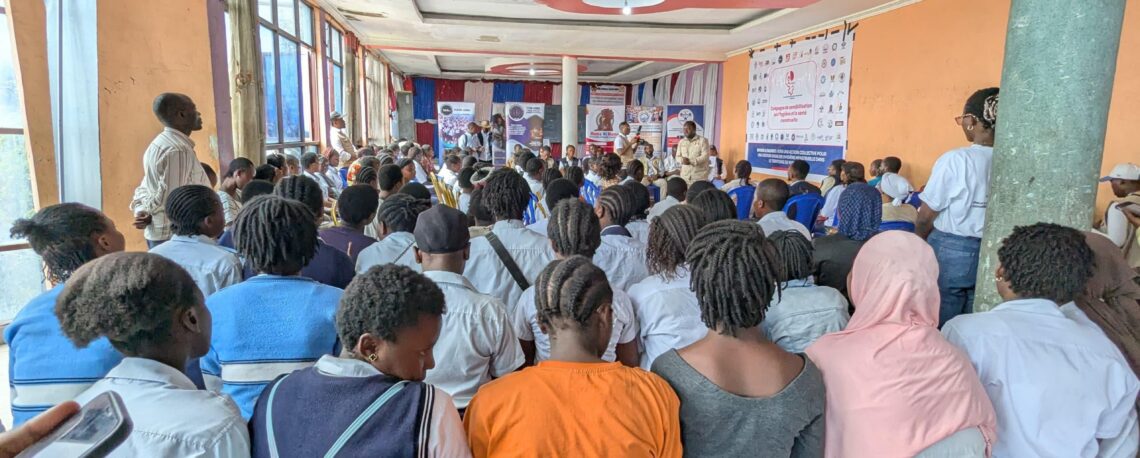
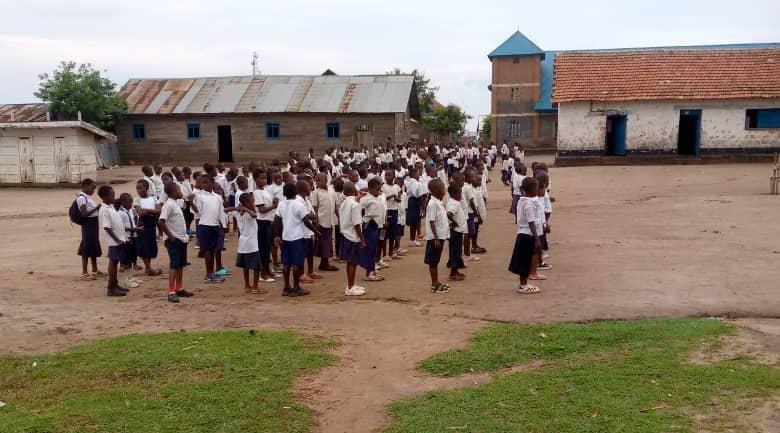
In the Rutshuru 2 educational sub-division, in North Kivu, 535 candidates did not sit the National Primary School Leaving Examination (ENAFEP), held on 4 and 5 June. Education authorities attribute this situation to the deteriorating security situation and the financial difficulties faced by many families.

Of the 3,498 pupils registered at the 15 examination centers, only 2,963 sat the exams, representing a participation rate of 85 per cent. The 535 absentees represent a dropout rate of 15 per cent, according to statistics provided by the Provincial Education Directorate.

For Henry Tunga Gisamonyo, Provincial Director of Education (PROVED), the persistent insecurity in several areas of Rutshuru, notably Mirangi, Ivuya, Kashuga, Birambizo and Karimbi, has disrupted school attendance and prevented many pupils from completing their primary education under normal conditions.

“We recorded 3,498 registered candidates. Of these, 2,963 actually sat the exams, representing a participation rate of 85%, compared with a dropout rate of 15%. Our observations show that this situation is mainly due to the insecurity affecting certain areas. We have also noted that the fees charged by some primary schools have contributed to school dropout rates, even though participation in the ENAFEP is supposed to be free,” he said.

The education official also highlighted the economic difficulties faced by households and the impact of school fees charged by some primary schools. In light of this situation, he called for a reduction in the financial burden on families, particularly in schools where teachers are already paid by the state. In his view, this measure would help to reduce school dropout rates in a context marked by population displacement and economic insecurity.

‘In North Kivu, school fees have been introduced in some primary schools. Normally, these fees should be set in consultation with parents. However, we have observed that some schools charge them whilst others do not. This disparity contributes to pupils dropping out of school, particularly in the final year. Given the current security and socio-economic context, it would be desirable to ease the financial burden on parents. In schools where all teachers are already paid by the state, a waiver of school fees could be considered,” he added.

It should be noted that a decree published on 30 August 2025 by the administrative authorities of North Kivu under the control of the AFC/M23 had introduced compulsory payment of school fees of up to 30,000 Congolese francs per pupil per term. According to this decree, these contributions were intended for the running of state schools, social support for teachers and the management costs of the institutions.

Reacting to this decision at a press briefing held on 2 September 2025, the Congolese Minister of the Interior, Jacquemain Shabani, had expressed his concerns, arguing that this measure ran counter to the national policy of free primary education.

As a reminder, since 2019, the DRC government has introduced free primary education in state schools. This reform aims to guarantee equitable access to education for all children, regardless of their socio-economic situation. However, in several areas affected by armed conflict, its implementation continues to face numerous challenges, including insecurity, population displacement and a lack of funding for the education sector.

Written by Mukongo – Pseudonym
Lualaba: In Kolwezi, children exposed to mining hazards in Kamilombe; the mayor of Dilala calls on the CMDS cooperative

Lualaba: In Kolwezi, children exposed to mining hazards in Kamilombe; the mayor of Dilala calls on the CMDS cooperative

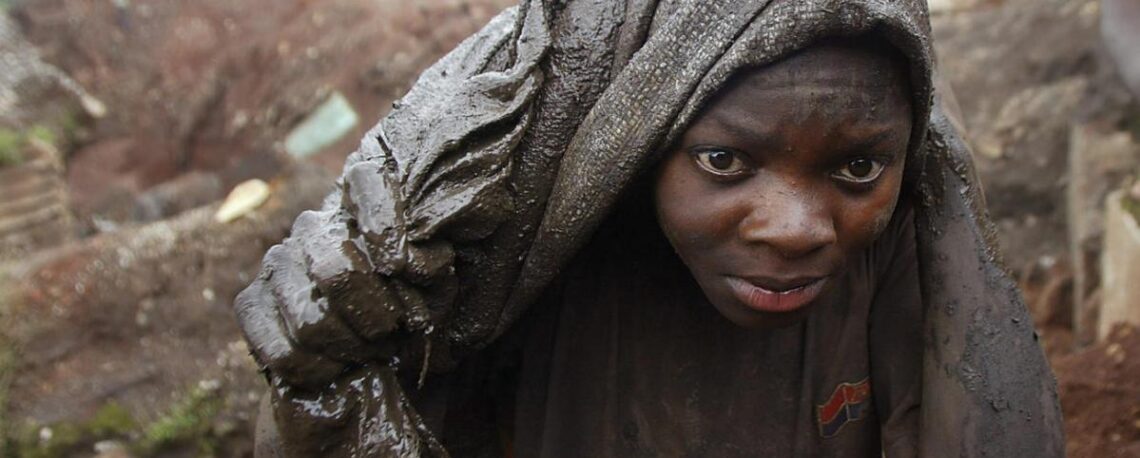
In Kamilombe, in the Kapata district of Kolwezi, children can still be seen on the mining spoil heaps where artisanal miners work daily in search of copper and cobalt. This situation is viewed with concern by the mayor of the Dilala commune, who condemns not only a violation of children’s rights but also serious risks to their safety.

On the Kamilombe spoil heaps, activity shows no sign of abating. Every day, women, young people and artisanal miners dig through the earth in the hope of finding a few kilograms of ore. But amidst this intense mining activity, one presence stands out: that of children operating in an environment known to be dangerous.

For the local authorities, this situation cannot be trivialized. During a visit to the site, the Mayor of Dilala, Françoise Mangweji Kuwaha, sounded the alarm over the presence of minors in this artisanal mining area.

The local authority has called on the women present at the site, as well as the managers of the CMDS mining cooperative, to fulfil their responsibilities in protecting children and to ensure that their fundamental rights are respected.

Beyond the issue of child labor or the presence of children on the site, the mayor warns of the many dangers to which they are exposed. With open pits, earthworks, machinery and the risk of landslides, the mining spoil heaps constitute a particularly hostile environment for children.

But the concerns do not end there. The authorities are also warning of the consequences of unauthorized digging carried out near the electricity pylons that cross the area. According to Françoise Mangweji Kuwaha, this work weakens the infrastructure and could cause certain structures to collapse.

Such a situation would not only expose artisanal miners to potentially fatal accidents, but could also leave part of the Kapata neighborhood without electricity.

In light of these threats, the mayor of Dilala is calling for more responsible mining practices that comply with safety standards and respect the rights of the most vulnerable communities.

Her intervention also highlights the role expected of the CMDS cooperative in overseeing activities carried out on the site. As the authorities issue repeated warnings, the issue of child protection and compliance with safety measures remains more pressing than ever.

In Kamilombe, artisanal mining continues to provide a livelihood for many families. But for the local authorities, no economic imperative can justify exposing children to dangers that could jeopardize their safety, health and future.

Written by Noé KALEMEKO

Nyiragongo: The Sexual and Reproductive Health Consortium raises awareness among young girls about menstrual hygiene

Nyiragongo: The Sexual and Reproductive Health Consortium raises awareness among young girls about menstrual hygiene

On Thursday 4 June 2026, around 100 young girls from four schools in the village of Kiziba 2, in the Nyiragongo territory of North Kivu, took part in an awareness-raising session on menstrual hygiene and health organized by the Nyiragongo Sexual and Reproductive Health Consortium. This initiative, led by several organizations defending the rights of women and young girls, aims to help break down the taboos that still surround menstruation in many families in eastern DRC.

“We spoke with the students about menstrual hygiene and the challenges they face during their periods. We encouraged them to talk freely about this issue, without shame or stigma. We also gave them practical advice on how to manage their menstrual hygiene effectively,” explains Aurélie Maliro, program assistant at Woman Power DRC, one of the consortium’s member organizations.

Mutumayi Kezie, Miss Independence DRC 2025, who was invited to the event, emphasized the need to change society’s perception of menstruation.

“It was important for me to take part in this event. Menstruation should no longer be seen as a weakness or a reason for discrimination. This kind of initiative helps to boost young girls’ confidence and helps them understand their bodies better. I encourage the organizers to extend this awareness-raising beyond schools, into villages, as many girls still lack information on this issue,” she said.

The participants welcomed this initiative, feeling that it had enabled them to gain useful knowledge for their health and well-being. They pledged to share the messages they had received with their classmates and loved ones.

“We learnt how to look after our hygiene during our periods and how to use reusable sanitary pads properly. Now we understand that periods are nothing to be ashamed of. We can talk about them openly and, in turn, raise awareness among other girls,” says Dorcas Sibalingene, one of the beneficiaries.

It is worth noting that at the end of this activity, around 100 young girls received menstrual hygiene kits to help them manage their periods. This campaign is part of the efforts of the Nyiragongo Sexual and Reproductive Health Consortium to promote menstrual health, the education of young girls and their fulfilment within Congolese society.

Written by Victoire Katembo Mbuto

DRC: Eco-guard killed near Kahuzi-Biega National Park

DRC: Eco-guard killed near Kahuzi-Biega National Park

An eco-guard from Kahuzi-Biega National Park was killed by armed men on Sunday 31 May in the village of Kafulumaye, in Kabare territory, South Kivu, the park’s management announced in a statement.

The conservation officer, identified as Nziyunvira Juhudi Prince, was shot whilst attempting to assist a woman who had been injured during armed clashes in the village.

According to the park management, he had initially taken shelter at a local woman’s home before venturing out during an apparent lull in the fighting to assist the victim. It was at this point that he was reportedly targeted and killed.

The exact circumstances of the incident remain unclear. Park authorities state that, at this stage, there is no evidence to establish a direct link between the ranger’s death and his duties within the protected area.

In its statement, the management of Kahuzi-Biega National Park condemned the attack and called on its staff to remain extra vigilant. It also reiterated that the eco-guards are bound by a principle of neutrality and do not take part in any armed conflict.

This latest loss highlights the ongoing deterioration of the security situation in eastern Democratic Republic of the Congo, where biodiversity conservation officers operate in an environment marked by the presence of numerous armed groups. A few weeks earlier, two rangers from Virunga National Park were killed during an attack on a surveillance post on the southern shore of Lake Edward.

Researchers have been warning for several years about the consequences of this insecurity for nature conservation. In a study published in January 2026 in the International Journal of Scientific Research, researchers highlight that conflicts over land use, the overlap between customary lands and protected areas, and the presence of armed groups are contributing to the weakening of governance in the country’s eastern protected areas, particularly in the Virunga, Kahuzi-Biega and Lomami landscapes.

Listed as a UNESCO World Heritage Site since 1980, Kahuzi-Biega National Park is one of the main refuges for the eastern lowland gorilla, an endangered species whose survival depends largely on conservation efforts in this vast forest in South Kivu.

Written by Victoire Katembo Mbuto

(Image provided by Kahuzi-Biega National Park with its kind permission)

Beni: Yet another massacre in a terrorist attack

Beni: Yet another massacre in a terrorist attack

The provisional capital of North Kivu, the town of Beni, which houses the provincial institutions, was the target of an attack attributed to ADF (Allied Democratic Forces) terrorists during the night of Saturday 30 May to Sunday 31 May, in the Ngadi district.

The death toll stands at 11 people killed with bladed weapons, including the Pygmy actor Shukurani Nzanzu Mangese, who was very popular in the region. Others were abducted, but the exact number is not yet known.

According to local sources, the rebels attacked the indigenous people’s camp, known as the ‘Pygmy camp’.

The mayor of Ruwenzori commune also stated that a soldier from the Armed Forces of the DRC (FARDC) was killed during the clashes whilst attempting to protect the population from the attackers’ incursion. Several civilians remain missing.

On Sunday morning, tensions remained high in several neighborhoods of Beni. Residents, carrying the bodies of the victims on makeshift stretchers, converged on the town center in an atmosphere of anger and despair. According to witnesses, they intended to hand over the bodies to the local authorities in order to demand answers.

This latest attack has once again reignited security concerns in a city that currently serves as the provisional capital of North Kivu province, against a backdrop of persistent armed violence in the east of the Democratic Republic of the Congo.

Before arriving in the Ngadi district of Beni, the ADF had just killed several people in their fields near Vemba-Mavivi and Mayangose. According to some survivors, there are reportedly several bodies of civilians in the Vemba and Mayangose areas.

Seven more bodies of civilians have been discovered along the Kinyamusehe road east of Beni. For his part, Professor Jaribu Muliwavyo, a political science researcher at the University of Goma, has warned of several post-attack scenarios, including a further breakdown of trust between the population and the authorities, with a risk of local self-defense groups emerging.

MP Enock Batsotsi Nyamwisi has expressed his outrage at the deaths of around ten civilians on Sunday during an incursion by ADF rebels into the town of Beni and part of the territory bearing the same name.

In the face of this tragedy, the elected representative questions the role and concrete results of the ongoing military operations. The MP also regrets the shelving of the Integrated Provincial Plan to combat the ADF, a document that emerged from the Peace Forum dedicated to this issue last February.

Written by Akilimali Chomachoma

Uvira: First wave of Congolese refugees returning from Burundi following the capture of the town by Congolese forces

Uvira: First wave of Congolese refugees returning from Burundi following the capture of the town by Congolese forces

A first wave of 470 Congolese refugees from Burundi arrived on Thursday 23 April 2026 in Uvira, in South Kivu province, marking the launch of a voluntary repatriation operation organized by the authorities and humanitarian partners.

According to the United Nations High Commissioner for Refugees (UNHCR) in Burundi, the convoy left the Busuma camp, located in Ruhigi province, early in the morning. The returnees are due to cross the border at the Kavimvira checkpoint before reaching the town of Uvira, where they are expected to arrive between 3.30 pm and 4 pm local time.

This process includes registration, essential medical assistance and referral to support services.

This return is part of a humanitarian process aimed at ensuring the voluntary, dignified and safe repatriation of Congolese refugees living in Burundi.

It comes at a time of increased coordination efforts between the authorities of both countries and international agencies to promote durable solutions to the crisis affecting displaced persons.

The UNHCR representative in Burundi, Brigitte Eno, explained that support mechanisms have been put in place to facilitate the reintegration of returnees once they are on Congolese soil, particularly in terms of social assistance and logistical support.

Further convoys could follow in the coming days as part of this phased operation to return Congolese refugees living in Burundi.

For his part, the Deputy Governor of South Kivu, Jean Jacques Elakano, states that all necessary arrangements have been made to ensure this return takes place peacefully. He assures that security is guaranteed in the areas of return.

Following the occupation of the town of Uvira (South Kivu) by AFC/M23 rebels in early December 2025, between 60,000 and 65,000 Congolese sought refuge in Burundi within a ten-day period, according to UN humanitarian agencies, notably the UNHCR and the IOM.

It should be noted that these families crossed the border into Burundi in December 2025, at the height of the insecurity caused by the advance of M23/AFC rebels in several localities in South Kivu, notably Uvira, Sange, Luvungi and Kamanyola.

Thousands of civilians had then sought refuge in Burundian transit camps, living for several months in difficult humanitarian conditions.

Written by Akilimali Chomachoma

DRC: Resurgence of looting reported in the vicinity of Mabenga

Unidentified armed men attacked traders and motorists on National Road No. 2 in the vicinity of Mabenga, in Rutshuru territory, in the heart of Virunga National Park in the east of the Democratic Republic of the Congo, on the morning of Friday 24 April 2026.

According to local sources, at least ten motorcycles and a Fuso lorry were targeted by the attackers in an area currently under the control of the AFC/M23 movement. The attack, which reportedly lasted around 30 minutes from 10.20 am to 10.50 am, is said to have taken place without any intervention from the security forces. Several valuable items, including goods, cash and mobile phones, were taken.

“Unidentified armed men systematically attacked and looted business owners and road users. Several items were taken,” Ngav’we Bin Kun warned in a message shared on social media. According to this account, a trader reportedly lost an estimated $150, an Android phone, five boxes of Thomson fish, ten boxes of wine, and five bags containing goods belonging to the Uwaze women’s association in Vitshumbi.

Other corroborating sources indicate that these acts of looting have been on the rise in the region for several months. “Hardly a day goes by without a new incident being reported,” says a local source. This situation is having a particularly severe impact on small traders, especially those operating in the Vitshumbi fishing village.

In the face of this persistent insecurity, Ngav’we Bin Kun is calling for security measures to be stepped up. “The relevant authorities must urgently strengthen security in this area to protect the local population and road users. The people of Vitshumbi, who are mainly fishermen and small traders, are currently living in a state of alarming insecurity,” he laments.

It should be noted that, a few months earlier, an association of vehicle owners had called a strike to protest against this security situation. However, the strike was called off without achieving the desired result.

However, to date, no official statement has yet been issued on this matter. Nevertheless, in a letter addressed to the provincial director of the Congolese Institute for Nature Conservation (ICCN), a copy of which was sent to the head of the Vitshumbi locality, new guidelines regarding the so-called ‘Salongo’ community works were outlined, with a view to strengthening security within the park.

“During the security meeting, it was decided to clear a 10-metre strip on either side of the road in order to neutralize the enemy operating in the area covering Mabenga–Rwindi–Vitshumbi–Kibirizi–Kanyabayonga,” reads the letter from the administrator of the Rutshuru territory of the AFC/M23 movement, dated 20 April.

“We hereby inform you that from this Saturday, 25 May 2026, our men from the relevant units will carry out this community work,” the same document states.

Written by OSL (pseudonym)

US–Congo strategic minerals deal: Congolese sovereignty in question

US–Congo strategic minerals deal: Congolese sovereignty in question

“The Congo no longer has the power to decide on its strategic minerals on its own; it must now do so together with the United States.” With this statement, Jean-Marie Kalonji, coordinator of Quatrième Voie movement and a member of the plaintiffs’ collective, set the tone for a press conference held on Monday, April 27, 2026, at the Andrée Blouin Cultural Center.

At the heart of the discussions was an agreement described as opaque and deeply unbalanced, concluded between the Democratic Republic of the Congo and the United States over strategic minerals such as cobalt, coltan, and lithium—key resources for the global energy transition and the technology industry. For civil society actors present, this agreement reflects a long-standing pattern of extractivism, whereby raw materials leave the country with little added value, benefiting foreign industrial powers, particularly the United States.

From a legal standpoint, the challenge is unequivocal. On January 21, 2026, a collective of lawyers filed a petition before the Constitutional Court seeking to have the agreement declared unconstitutional, arguing that it commits national sovereignty without genuine democratic debate or effective parliamentary oversight. Yet, three months after the filing, no ruling has been issued.

Despite a follow-up request submitted on April 17, 2026, calling for the scheduling of a hearing, the high court remains silent. The plaintiffs interpret this silence as a denial of justice and a sign of the fragility of the rule of law in the face of prevailing geostrategic and economic interests.

“We intend to refer the matter to the International Council for Human Rights as well as other international bodies, as domestic remedies have now been exhausted,” said attorney Valentin Ketshi. This move reflects a growing loss of confidence in national mechanisms for regulation and rights protection.

Beyond the legal dimension, the broader question of the Congolese economic model is being raised. With over 70% of the world’s cobalt reserves, the DRC holds a central position in global supply chains. Yet, the economic benefits for the population remain minimal: limited local industrialization, dependence on raw exports, and rent capture by a small group of actors.

For the initiators of the legal action, this agreement risks deepening these structural imbalances. “This is not merely a legal text, but a political choice that will shape the future of several generations,” they stressed. They are calling for national reappropriation of natural resources through policies promoting local processing, transparency, and accountability.

In this context, their struggle aims to ensure that “the law is upheld in favor of the Congolese people,” whom they believe are once again being sidelined in a decision-making process removed from their fundamental interests.

Written by Pascal Muteba

Jacquemain Shabani, Minister of the Interior, saved by a ruse to avoid a parliamentary vote

Jacquemain Shabani, Minister of the Interior, saved by a ruse to avoid a parliamentary vote

The National Assembly rejected the motion of no confidence targeting the Deputy Prime Minister in charge of the Interior, Security, Decentralization and Customary Affairs, Jacquemain Shabani Lukoo, following a procedural motion. A procedural motion tabled by MP Gary Sakata prevented the motion of no confidence against the Deputy Prime Minister for the Interior from being considered.

During the debate on the admissibility of the motion of no confidence in the National Assembly, MP Gary Sakata strongly criticized the procedural form, calling for the outright rejection of the motion. His stance was part of a strategy aimed at undermining the motion even before its formal consideration. 

A procedural motion tabled by MP Gary Sakata and approved by the plenary session has led to the suspension of the debate on the motion of no confidence against the Deputy Prime Minister for the Interior and Security. He is challenging the admissibility of the motion of no confidence targeting Deputy Prime Minister for the Interior Jacquemin Shabani Lukoo. According to the MP, at least six of the names listed among the signatories are problematic. He cited the inclusion of individuals who do not hold the status of national MP, as well as spelling errors that could call into question the authenticity of the document. These factors, he argued, undermine the motion’s credibility and justify its inadmissibility.

If confirmed, these irregularities prevent the majority from proceeding with the motion without first holding a plenary vote.

“By this vote, the incidental motion raised by the Honorable Sakata is adopted. The approval of this incidental motion thus brings the consideration of the motion of no confidence to an end. It is therefore not appropriate to proceed with either a debate or a vote on it,” declared Aimé Boji, Speaker of the lower house of Parliament.

Tabled by MP Laddy Yangotikala, the motion of no confidence targeted Jacquemain Shabani over his handling of the growing insecurity in the DRC’s major cities and his interventions in provincial affairs, which were deemed unlawful. Although the Assembly’s bureau had initially validated the motion, its rejection via an incidental motion was interpreted by some observers as a form of political protection within the Union Sacrée majority.

This episode could well mark a turning point in parliamentary strategies, where form sometimes takes precedence over substance, redefining the rules of the political game in the Democratic Republic of the Congo. This episode once again illustrates the persistent tensions within the Congolese political scene, where procedural battles become decisive weapons. Thanks to this rejection, Jacquemain Shabani retains his post within the government of the Democratic Republic of Congo.

Written by Akilimali Chomachoma

Joseph Kabila, former Congolese president subject to US sanctions

Joseph Kabila, former Congolese president subject to US sanctions

Former Congolese president Joseph Kabila, who was in power from 2001 to 2019, is now on the US blacklist. The Office of Foreign Assets Control (OFAC) has announced economic sanctions against him, accusing him of playing a role in the ongoing instability in the east of the Democratic Republic of the Congo.

This decision marks a significant hardening of the US stance towards those suspected of fueling security instability. Joseph Kabila’s assets within US jurisdiction have been frozen.

US authorities accuse Joseph Kabila of links to the Alliance Fleuve Congo (AFC) and the M23, both implicated in recurring armed violence.

“Kabila has provided financial support to the AFC in order to influence the political situation in eastern DRC. Kabila has encouraged Armed Forces of the DRC (FARDC) troops to defect and join AFC forces in eastern DRC in order to generate additional support for the AFC,” states the Treasury Department’s press release.

They also prohibit any person or entity based in the United States from conducting financial or commercial transactions with him, thereby reinforcing his isolation on the international stage.

Furthermore, Washington says it is “firmly committed to ensuring that all parties honor their commitments under the peace agreements between the DRC and Rwanda” signed under its mediation, as well as the Doha Framework Agreement.

“This decision, which follows the sanctions imposed on 2 March 2026 against the RDF and senior Rwandan officers, constitutes another significant step in the fight against impunity, the respect for sovereignty and the accountability of all actors involved in the ongoing destabilization of the Democratic Republic of the Congo,” states the Congolese government, whose courts have sentenced him to death.

On 30 September 2025, the Congolese courts sentenced Joseph Kabila to death in absentia for ‘complicity’ with the M23.

Joseph Kabila and members of his entourage have not yet commented on this US decision.

Written by Akilimali Chomachoma