In Goma, Unexpected Power Cuts By Virunga Énergies Are Causing Concern Among Customers

In Goma, Unexpected Power Cuts By Virunga Énergies Are Causing Concern Among Customers

For nearly two weeks, the electricity supply provided by Virunga Énergies has been severely disrupted in the city of Goma. Residents are facing unexpected and repeated power cuts, without warning, breaking with the relative stability seen previously. This situation is causing concern and frustration among the population.

“We’re experiencing power cuts at any time. We’re worried about the safety of our appliances. Before, we were informed in advance of scheduled outages, but now everything happens unpredictably,” says Israël Kasereka, owner of a café located at the Trois Lampes entrance in the Mabanga-Nord district.

Once seen as a company providing a relatively stable service, Virunga Énergies is now facing growing criticism. Power cuts occur at various times of the day – in the morning, afternoon or evening – and last anywhere from a few minutes to around thirty minutes, causing considerable disruption to economic activity in the city.

Businesses are calling for a swift return to normality. “Virunga is our main source of energy. The current situation worries us greatly. We depend entirely on electricity to work. Solutions must be found urgently,” emphasizes Trésor Kazi, owner of a secretarial agency on the Mutinga–Afia Bora road. He also states that on some days there can be up to three successive power cuts.

To date, no official statement has been issued by the management of Virunga Énergies, an organization spun off from the Virunga Foundation, an initiative linked to Virunga National Park. This lack of explanation is fueling further speculation among users as to the causes of these repeated disruptions.

Written by Victoire Katembo Mbuto

DR Congo: Start of the supplementary State Examination papers

DR Congo: Start of the supplementary State Examination papers

The official launch took place at the Les Loupiots School Complex, in the Ngaliema district of Kinshasa. The Minister for National Education, Raïssa Malu, launched the essay exam on Monday in Kinshasa, which counts towards the 2026 State Examination sitting. This marks the start of the certification exams for over a million final-year students across the Democratic Republic of the Congo.

The ceremony featured the symbolic opening of the trunk containing the exam papers, followed by the distribution of the papers to the candidates.

Held across the entire country, this exam paves the way for the other assessments scheduled as part of the supplementary session, notably the oral and practical exams. This stage marks the start of the certification assessments for over a million final-year students across the country.

Candidates began the exams with the essay, the first stage in a series of tests comprising technical tests, the French oral exam and the practical assessment. According to the official timetable, the essay takes place on 4 May, the technical tests on 5 May, the French oral exam from 6 to 9 May, whilst the practical assessment is scheduled for 11 to 18 May. The regular session of the State Examination will take place from 22 to 25 June 2026.

Regarded as a significant stage in pupils’ educational journey, this examination enables them to demonstrate their ability to think critically, their intellectual creativity and their sense of responsibility, within an atmosphere of discipline and integrity. In a context where discipline and integrity are strongly emphasized, pupils are invited to demonstrate the maturity they have acquired throughout their school career.

For the 2026 session, there are exactly 1,079,675 candidates registered for the long-form essay exam. Of these, 482,557 are girls, accounting for 44.7 per cent, and 597,118 are boys, representing 55.3 per cent of the candidates.

“For this 59th edition, candidates are spread across 3,268 examination centers, an average of 330 candidates per center,” the Minister stated at the official launch.

This essay marks the first stage of the certification exams, ahead of the regular session scheduled for next June. Those who pass both sessions will have the opportunity to pursue further education at higher and university level.

Written by Akilimali Chomachoma

A GENDER LENS OF CLIMATE CRISIS: EVIDENCE FROM CONGO

A GENDER LENS OF CLIMATE CRISIS: EVIDENCE FROM CONGO

April 17th, 2026

Climate change is often talked about in terms of rising temperatures, melting glaciers, wildfires, disappearing forests, but rarely in terms of who suffers the most. Yet at its core, climate change is not just an environmental issue, it’s a deeply social one, with women bearing a disproportionate burden.

Gender justice, which seeks to end inequalities between men and women, is inseparable from climate justice, because the impacts of climate change are not felt equally. As Geraldine Terry, a gender and development researcher, argued in her 2009 article, there is no climate justice without gender justice.

DRC is home to around 60% of the Congo basin, the second-largest rainforest on the planet with the world largest tropical peatland, the cuvette centrale. And together these ecosystems play a role in regulating global climate, with the Congo basin acting as a major carbon sink that absorbs more carbon than it releases. The Congo basin sequester six times more carbon than the amazon rainforest

Yet despite this ecological wealth, the vast majority of the DRC’s greenhouse gas emissions come from land-use change. Activities such as agriculture and charcoal production continue to fuel deforestation.

Now with all of these facts, one would think that a country like this might be doing well climate change wise, but with weak environmental regulations , and infrastructures making them more and more vulnerable to pollution and climate disasters this assumption quickly falls apart. In reality, the DRC remains one of the countries most vulnerable to climate change, facing floods, landslides, and rising temperatures.

While the DRC contributes relatively little to global emissions, its population bears a disproportionate burden of climate change impacts, especially women.

These impacts are intensified by socially defined roles such as fetching water, gathering food, and managing day to day household activities placing them at the frontline of environmental change and increasing their exposure while limiting their access to resources, decision-making power and protection.

Understanding this imbalance requires looking beyond the environment alone. Decades of political instability, economic mismanagement, corruption and conflict have shaped the country’s development path , weakening its ability to respond effectively to climate challenges. In this context, climate change is not just an environmental issue, it is a question of justice, deeply intertwined with gender, power and inequality.

Across the DRC, climate change isn’t experienced the same way by everyone and for many women, it is felt first and hardest. In rural communities, women are at the centre of daily survival. They fetch water, grow food, manage household supplies, and make sure their families eat. But as the climate turns more unpredictable with heavier rains and rising temperatures, harvests suffer and water sources become a distant struggle. What used to be manageable is now exhausting. Women are forced to work long hours for less, all while trying to hold the household together.

As floods wipe away infrastructures, contaminate nearby rivers and water sources, the responsibility of water gets harder. Women and girls walk longer distances, sometimes multiple times a day. And that extra time comes at a cost: missed school for girls, lost income opportunities for women and less space to take part in decision-making talks.

But this isn’t just a rural issue. In a city like Kinshasa, climate change shows up differently but just as brutally. In April 2025, heavy rains triggered floods and landslides that displaced more than 7000 people and affected over 60 000 others. Homes were swept away, roads cut off, infrastructures destroyed and entire communities left struggling to recover. And this is not the only case Kinshasa has registered extreme climate events like floods. When disasters like this hit, it’s often women who are left to navigate overcrowded shelters, care for children.

In the same month, severe flooding in Tanganyika province displaced thousands of people, the Rugumba River burst its banks, flooding areas such as Kalemie and Nyunzu territories.

Homes, schools and agricultural land were destroyed leaving thousands without shelter.

Heavy rains leading to floods put especially pregnant women in danger because of their nutritious needs and medical check-ups. And when healthcare systems are destroyed, food insecurity worsened ,their condition becomes more critical.

On the other side, during periods of warmer temperatures, diseases like malaria spread more rapidly, putting pregnant women at greater risk. At the same time, floods and water shortages increase outbreaks of diseases like cholera. For many women, especially in underserved areas, accessing healthcare services is already difficult. Climate change only makes it worse.

And when disaster strikes, the response often comes too late. There’s still far more focus on reacting after floods or displacement than on preparing communities before they happen. In that gap, women end up carrying the heaviest burden. To make matters worse, the lack of gender-specific data shows a clear structural invisibility. Policies that promise inclusion exist but in reality, they don’t always reach the women who need them most.

Call to Action

Several organizations such as Green Congo, Climate Change Africa Opportunities (CCAO), Oxfam play a role in strengthening communities' resilience against climate change through sustainable livelihoods, encouraging reforestation efforts and climate adaptation projects but it is not enough on its own.

Addressing climate change events and inequalities in the DRC requires more than emergency responses, it is all about inclusion of those communities most affected by climate change impacts. Women must be placed at the centre of climate action, not only as victims but as key agents of change. This means investing in community-based adaptation programs, improving access to education and healthcare, promoting financial literacy and ensuring they have a voice in decision-making processes at all levels.

There is also an urgent need to move from reacting to disasters to preventing them through resilient infrastructure, supporting sustainable practices and implementing early warning systems.

Climate change in the DRC is not just about rising waters or failing crops. It is also about inequalities when it comes to environmental destruction. And until that inequality is addressed, the burden will continue to fall on those least responsible but most affected.

Written by Vanessa Mukanire

How the war in Iran is affecting copper production in the DRC

How the war in Iran is affecting copper production in the DRC

Although initially spared, the African mining sector is now also feeling the effects of the war in Iran. This is due to disruptions in the Strait of Hormuz, through which nearly 20% of the world’s hydrocarbon production passes, which are jeopardizing the supply of certain chemical inputs such as sulfuric acid and sulfur, essential to the copper processing industry.

According to an analysis by investment bank Goldman Sachs, cited by Jeune Afrique, the DRC “could be forced to reduce its production by around 125,000 tons in 2026 if the logistical disruptions persist”.

"Around 20% of the global copper supply depends on a process that uses sulfuric acid to leach copper from oxidized ores. With around 50% of the global supply of sulfur transported by sea cut off, particularly in the Strait of Hormuz, the sulfur and sulfuric acid markets are becoming extremely tight,” said Robert Friedland, executive co-chairman of Ivanhoe Mines, a Canadian mining company that mines copper at the Kamoa-Kakula site, in a statement last April.1

However, China, which accounts for 45% of global sulfuric acid production and is the world’s largest consumer, suspended its exports at the beginning of May until further notice. Beijing is now prioritizing domestic demand as the conflict in the Middle East intensifies.

Sulfuric acid is produced from sulfur. However, the price of this product has already risen by 50% on the Chinese market since the outbreak of war in Iran at the end of February.

Sulfuric acid: essential for copper

To understand what is at stake, one must grasp the central role that sulfuric acid plays in copper extraction. Around 20% of global production of the red metal relies on a hydrometallurgical process known as leaching, in which the acid is poured over oxidized ores to extract the copper. No acid, therefore, means no copper – at least for this category of deposits, which accounts for a significant share of Congolese production. 

A solution on Congolese soil, but insufficient:

This situation could be put to good use by the new Kamoa-Kakula smelter, a copper production mining complex based in Lualaba. Having only come on stream at the end of December 2025, it has been producing high-strength sulfuric acid at an average rate of 1,350 tons per day since the start of 2026, as announced in a press release on 13 April by Ivanhoe Mines, a Canadian company specializing in copper production. This volume of sulfuric acid produced represents the equivalent of 480,000 tons on an annual basis.

At full capacity, its sulfuric acid production is expected to be higher, between 600,000 and 700,000 tones.

However significant these volumes may be, they cannot bridge the looming shortfall, as the DRC’s requirement is 2 million tons for the mining sector alone. Due to this scarcity, the DRC will also have to review its revenue from taxes and duties related to sulfuric acid imports, including excise duties at a rate of 20%.2

Despite everything, the DRC, the world’s second-largest copper producer, remains a key player in supply chains linked to low-carbon technologies. However, developments observed at the start of this year already point to a shift. Exports fell by 14.6% in the first quarter, standing at around 955,000 tones, compared with nearly 1.09 million tons a year earlier, according to data reported by Reuters.

As the second-best electrical conductor after silver, copper is central to the manufacture of cables, electric motors, vehicles and electronic components. Furthermore, it is widely used in renewable energy technologies and electric vehicles.

Written by Akilimali Chomachoma

References:

  1. https://www.ivanhoemines.com/news-stories/news-release/ivanhoe-mines-reports-71417-tonnes-of-copper-in-anode-produced-by-kamoa-kakula-in-q1-2026-recovery-efforts-advancing/
  2. https://fec-rdc.com/lualaba-la-direction-provinciale-de-la-dgda-eclaire-sur-les-droits-daccises-sur-lacide-sulfurique-oleum/
Fake news: a problem affecting the DRC presidency too?

Fake news: a problem affecting the DRC presidency too?

At a press conference held on Wednesday 6 May, the President of the Democratic Republic of the Congo acknowledged that, in the past, he had made certain statements based on incorrect information provided by the army. In a statement marked by a sense of remorse, he offered his apologies.

Reflecting on the tensions observed in the run-up to the 2023 elections, the Head of State explained that several statements that had provoked strong reactions were in fact based on inaccurate information. The remark “at the slightest skirmish” had thus been made on the basis of erroneous reports circulated within the army, which did not always reflect the actual situation on the ground.

Written by Victoire Katembo Mbuto

The withdrawal of the M23 from the Ruzizi Plain brings relief to local communities

The withdrawal of the M23 from the Ruzizi Plain brings relief to local communities

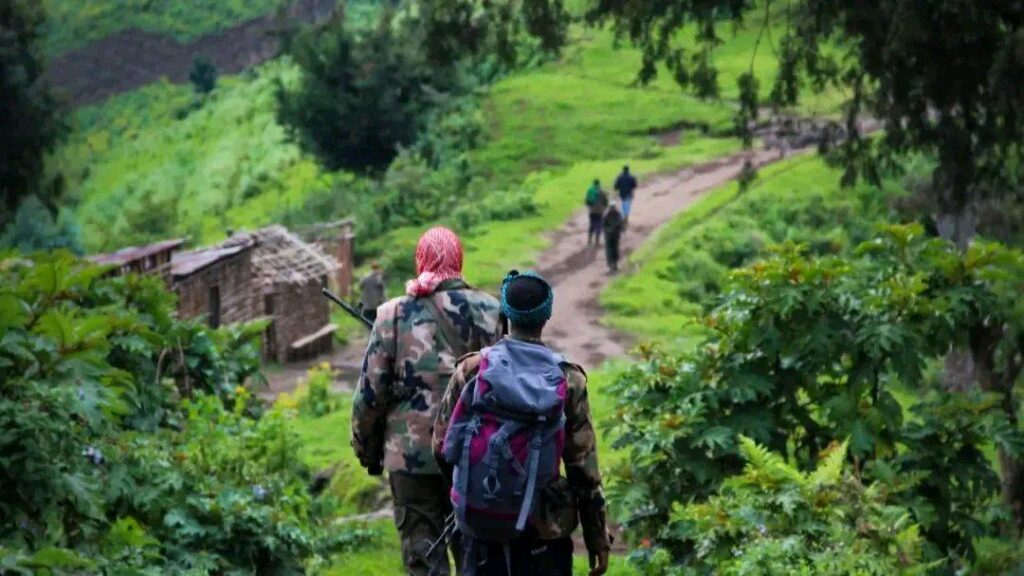
According to local authorities, the rebels have left several areas of the Ruzizi Plain and the Lemera Plateaus. The localities affected include Kabunambo, Sange, Nyakabere 1 and 2, Mutarule, Luberizi and Bwegera.

The administrator of the Uvira territory, Jean de Dieu Mabiswa Selemani, confirms this movement, which he attributes to diplomatic pressure exerted on the armed group.

“The movement has been significant since yesterday. They have left Kabunambo, the town of Sange, Nyakabere 1 and 2, Mutarule, Luberizi and Bwegera. But they are still visible in Luvungi,” he said.

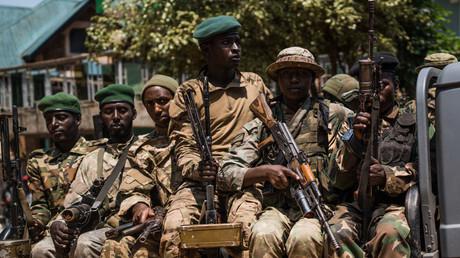
Whilst the rebel movement has provided no information regarding this latest withdrawal, which took place two months after another withdrawal—this time in the Lubero territory, in the neighboring province of North Kivu; multiple sources indicate that the AFC/M23’s withdrawal from these areas is taking place against a backdrop of relentless diplomatic pressure from the United States, which is demanding that the rebels return to the positions they held prior to the ratification of the Washington Agreement between the DRC and Rwanda on 4 December 2025.

Meanwhile, the FARDC, supported by Wazalendo fighters, are continuing their gradual redeployment in these areas. According to an army statement, positions are currently being reinforced in Mutarule in order to protect the local population and defend the integrity of Congolese territory.

According to information provided by Reagan Mbuyi Kalonji, spokesperson for Operation Sukola 2 South-Kivu and the point of contact on this security situation, Congolese troops have notably retaken positions in Mutarule, in Uvira territory, following the withdrawal of armed groups from Sange to Bwegera.

On the ground, however, the situation remains a cause for concern. Local sources report that traffic on the Bukavu-Uvira road has been at a standstill since Monday, a direct consequence of the ongoing insecurity and military movements observed in the region.

Located on the border between the DRC, Rwanda and Burundi, the Ruzizi Plain remains one of the key flashpoints in the conflict ravaging the east of the country, due to its geostrategic importance and its proximity to regional borders. Whilst the FARDC consolidate their positions, local populations remain hopeful of a lasting return to stability.

Written by Akilimali Chomachoma

DRC : A return to oil extraction in protected reserves?

DRC : A return to oil extraction in protected reserves?

Environmental civil society organizations in Ituri and North Kivu have expressed their deep concern following the opening, on 8 May in Kampala, of the session of the DRC-Uganda Joint Standing Committee.

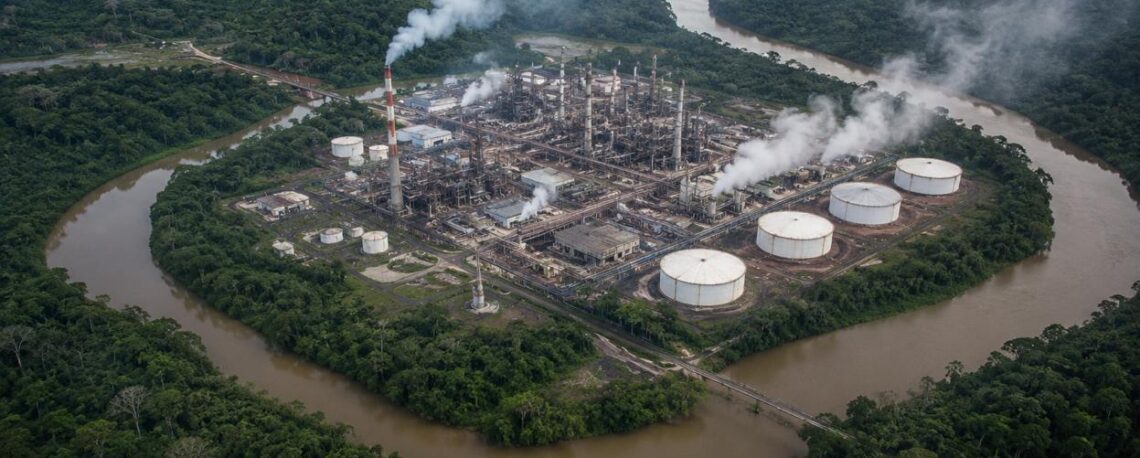
The presence of the Congolese Minister for Hydrocarbons within the official delegation, as well as the discussions currently underway regarding six new bilateral agreements, raise fears of an acceleration in oil cooperation between the two countries without due consideration for the environmental and social risks to communities living along Lake Albert, Lake Edward and the Semliki River.

“The Semliki River, as a major tributary of the White Nile, is also a vital hydrological feature for several states in the region (Uganda, DRC, Sudan, South Sudan, Egypt, Ethiopia, etc.),” the statement notes.

Environmental civil society organizations in Ituri and North Kivu note that no independent, cross-border and public impact assessment of the Tilenga, Kingfisher and EACOP projects has been carried out.

“The Tilenga, Kingfisher and EACOP oil projects, being developed on the Ugandan side, are already raising serious concerns regarding their impacts on the shared ecosystems of the Albertine Graben,” the source states.

The coalition of environmental civil society organizations in Ituri and North Kivu also condemns the lack of information and consultation with the Congolese communities affected. To date, the communities living along Lake Albert and the Semliki River have not been consulted in accordance with the principles of free, prior and informed consent.

No independent, publicly available cross-border environmental and social impact assessment has been brought to the attention of the affected communities.

“Such a move would risk a tangible acceleration of oil exploitation in eastern DRC, with major consequences for fishing communities, water resources and the ecosystems of the Albertine Rift,” added the “Notre Terre Sans Pétrole” coalition in another statement.

In response to this failure, civil society organizations have already brought a case before the East African Court of Justice (EACJ), calling on the governments concerned to act.

In this context, the coalition of environmental civil society organizations from Ituri and North Kivu solemnly calls on the Government of the Democratic Republic of the Congo to suspend the signing of any new agreements in the hydrocarbons sector concerning the Lake Albert and Semliki areas, pending the completion and publication of an independent environmental and social audit of the Tilenga, Kingfisher and EACOP projects, assessing their cumulative impacts on shared ecosystems.

It also calls for a meaningful consultation with local communities to be organized as soon as possible, in order to guarantee their right to information and their participation in decisions that directly affect their living conditions.

Furthermore, the coalition of environmental civil society organizations in Ituri and North Kivu urges the Congolese authorities to support the legal action brought before the EACJ, with a view to assessing the current state of measures to protect water resources, aquatic biodiversity and the livelihoods of the people of Ituri and North Kivu.

Lake Albert, Lake Edward and the Semliki River are not dumping grounds for the fossil fuel industry. The Congolese people cannot be treated as a bargaining chip in bilateral negotiations conducted without transparency or consultation with the communities concerned. Lakes Albert and Edward, the Semliki River and their fish stocks are common goods, the preservation of which is the responsibility of all riparian states.

NTSP and Stop EACOP also condemn the lack of meaningful consultation with the affected communities.

“The Congolese and Ugandan governments cannot proceed with cross-border oil projects without transparency, without involving the communities concerned and without clear guarantees for the protection of shared ecosystems,” says UWECHI MOISE, provincial president of the Federation of Lake Albert Fishermen’s Committees and Associations (FECOPELA) and a member of the NTSP coalition.

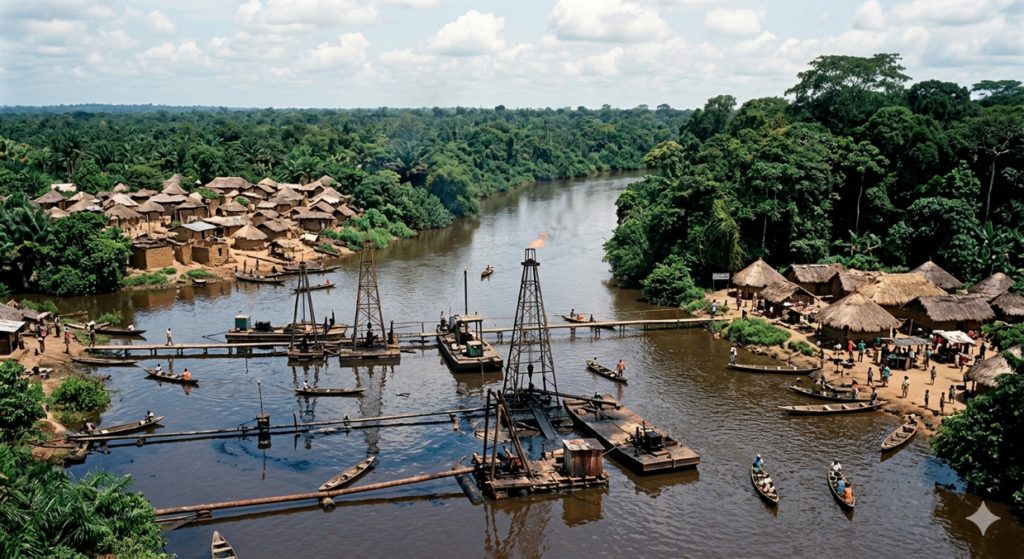
“Ugandan fishermen working on Lake Albert are already suffering the impacts of oil activities, notably the pollution of the lagoons connected to the lake and poor waste management affecting the waters. These consequences are already visible due to the Tilenga and Kingfisher oil projects in Uganda. Fish sellers, particularly women, are also suffering from the massive influx of oil sector workers into the Lake Albert region. Many are gradually being excluded from their economic activities.

“Oil has become a curse for fishing communities, and we do not want our governments to further expand oil exploration activities on the lake,” says Siifa Mwesige, a fishmonger working on Lake Albert in Uganda.

“What is being negotiated today risks further trapping the region in a model where wealth benefits oil companies and political elites, whilst communities suffer displacement, pollution and the loss of their livelihoods. The governments of Uganda and the DRC cannot hide these discussions from the public,” says Zaki Mamdoo, coordinator of the StopEACOP coalition.

Sources: Actualite.cd and press releases from NTSP & StopEACOP

Note: second picture is Gemini generated

Congo: Celebration of Simon Kimbangu Day and African Consciousness Day on 6 April

Congo: Celebration of Simon Kimbangu Day and African Consciousness Day on 6 April

Simon Kimbangu’s struggle embodies a collective memory and a defining moment in which African dignity, consciousness and identity were asserted in the face of history. His legacy spans generations, shaping reference points, values and a worldview that remains alive today.

To mark this day, Kimbanguist believers have organized processions across the DRC. In Lubumbashi, for example, they are marching through the city’s streets, preaching the Gospel and singing with great pomp. This powerful moment awakens the consciousness of Black people to break down stereotypes and fight for their freedom in the world.

With his famous saying, “the black man will become white, the white man will become black”, Simon Kimbangu preached change, transformation and the advancement of Black people in the face of injustices linked to skin color. Born on 12 September 1887, he died in 1951 after several periods of imprisonment due to his ideology, the longest of which lasted two decades in the village of Kisoko, in Lubumbashi, which has now become the headquarters of Kimbanguism in Haut-Katanga.

Since 2023, 6 April has been officially recognized in the Democratic Republic of the Congo as a day dedicated to commemorating Simon Kimbangu’s struggle and promoting African consciousness. This day is declared a public holiday, a day off work and a paid holiday throughout the country.

This day serves as a reminder that heritage is not limited to objects or places; it is also embodied in figures, commitments and intangible legacies that continue to shape society.

To honor Simon Kimbangu is to acknowledge an essential part of African history and consciousness.

The major announcement for 2026 was the official designation of the town of Nkamba as a holy city of the Democratic Republic of the Congo. This recognition reinforces the spiritual and historical status of this major pilgrimage site, which attracts many worshippers from across the country and the diaspora every year.

Through this gesture, the Congolese authorities reaffirm their commitment to honoring national historical figures and promoting the values of unity, faith and African pride championed by Simon Kimbangu.

Written by Akilimali Chomachoma

DRC: Virunga National Park and fishermen join forces to ensure the success of the Kivu-Kinshasa Green Corridor

DRC: Virunga National Park and fishermen join forces to ensure the success of the Kivu-Kinshasa Green Corridor

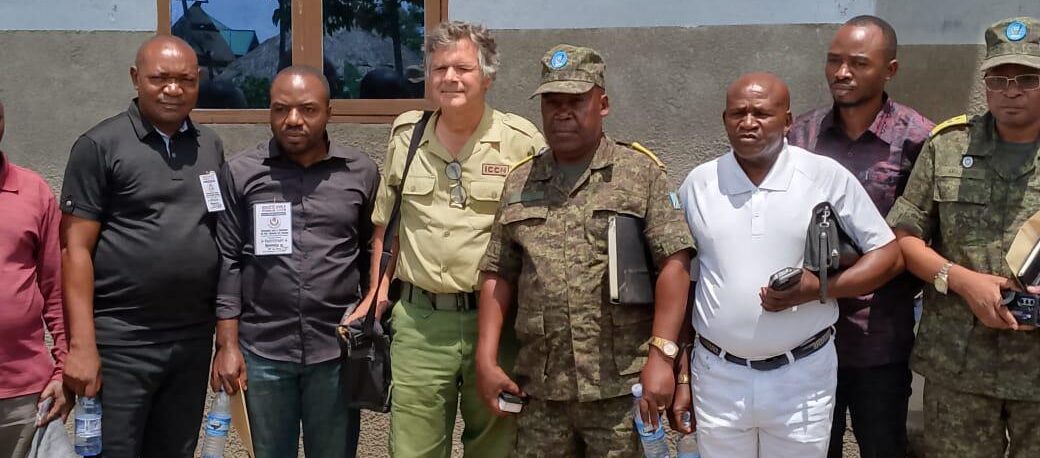
The Provincial Director of Virunga National Park, Emmanuel de Merode, met with representatives from various sections of the population in the Kyavinyonge fishing enclave, on the northern shore of Lake Edward in Beni territory, to discuss the ongoing tensions between the park and local communities on Tuesday 7 April 2026.

For nearly twenty years, the Kyavinyonge fishery, located in the Bashu chiefdom, has experienced friction with the park rangers. The population highlights difficulties linked to living conditions, land disputes and a lack of dialogue with park managers. “A frustrated population cannot support environmental protection,” laments Delphin Kakule Malekani, president of the local civil society group Forces Vives.

According to him, the lack of consultation fuels misunderstandings, particularly with the Virunga Fisheries Cooperative. He calls for the communities to be involved in decisions concerning their future. “Unemployed young people become vulnerable to insecurity. Employment strengthens peace and stability. Without land security, there can be neither peace nor sustainable development,” he insists.

Civil society actors are also calling for close collaboration between eco-guards and local communities to build trust in biodiversity conservation. They highlight several challenges, including a lack of electricity, dependence on firewood, limited economic development, dilapidated roads and a lack of access to clean drinking water.

For Delphin Malekani, the local population must be seen as “a solution, not a threat” to conservation. He also recommends establishing support mechanisms for families affected by attacks from wild animals, particularly crocodiles and elephants. “People protect the environment when they see the benefits. Involving the local population in decision-making is essential. Management of Nile crocodiles: consider classifying them as an invasive species under the law. Reject the option of electric fences,” adds this civil society representative.

For his part, Emmanuel de Merode pointed out that Kyavinyonge is part of the Kivu-Kinshasa Green Corridor vision, a program aimed at strengthening food security through sustainable fisheries management. “Environmental protection ensures the proper management of natural resources, particularly fisheries. It is necessary to maintain order in fishing activities to maximize production,” he explained.

The director also emphasized the role of the Congolese Institute for Nature Conservation (ICCN), pointing out that its staff are not authorized to accept money. He encouraged the public to report any instances of corruption.

Emmanuel de Merode announced the establishment of a working group comprising 12 members from various sectors of society and representatives of the ICCN. Its task will be to propose, within two months, concrete solutions for the drafting of a fisheries development plan.

“Let Kyavinyonge be a pilot project. Despite the security challenges, we can make progress together,” he reassured, emphasizing the importance of a sustainable dialogue between conservation and local development.

According to local stakeholders, these discussions represent an important step towards mutual understanding based on trust and the search for sustainable solutions that benefit both the local population and conservation.

Written by Victoire Katembo Mbuto

DRC: At Lake Edward, the birth of 153 hippos revives hopes of a slow recovery

DRC: At Lake Edward, the birth of 153 hippos revives hopes of a slow recovery

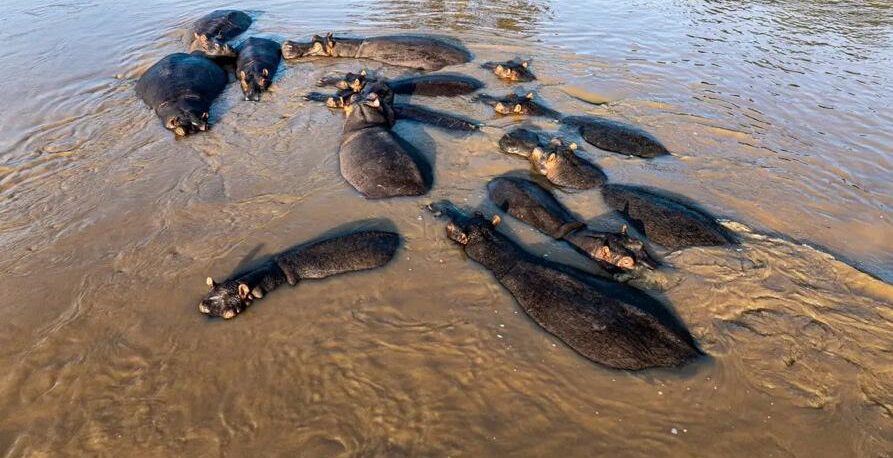
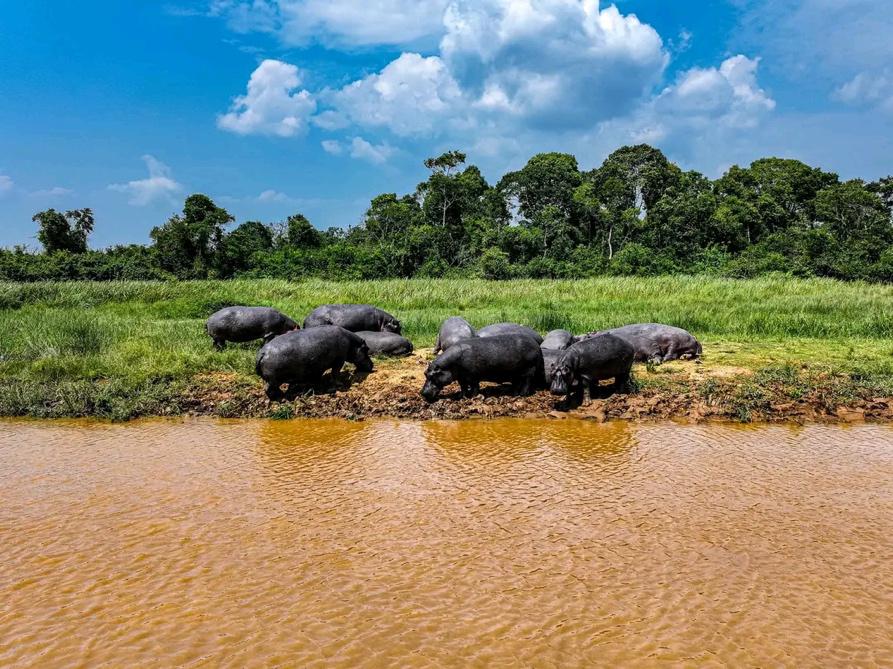
Virunga National Park has announced that 153 juvenile hippos have been counted within 171 groups observed in the southern areas of Lake Edward. This is seen as encouraging news in a region where the species has suffered one of the continent’s most severe declines.

In a statement released on its digital platforms, Virunga National Park emphasises that the presence of these young individuals could indicate a gradual recovery in reproduction, following several years of sharp decline.

A historic collapse in populations

In the 1970s, the park’s hippos constituted one of the world’s largest populations, with around 29,000 individuals concentrated around Lake Edward. Since then, their numbers have fallen by nearly 95%, due to the combined effects of massive poaching and chronic insecurity in the east of the Democratic Republic of the Congo.

According to recent data from the park, the population is now estimated at around 2,700 individuals, a level that remains fragile despite a trend towards stabilization. The park states that this development reflects “the combined effect of conservation efforts, increased ranger patrols and the use of new technologies”, the announcement highlights.

An ecological indicator beyond the species itself

Beyond the issue of biodiversity alone, the presence of hippos is often seen as an indicator of the health of aquatic ecosystems. Their role in the nutrient dynamics of Lake Edward fuels hopes of a positive indirect impact on fish stocks.

For some local environmentalists, this development is an encouraging sign. “When hippopotamus numbers increase, it often reflects an improvement in the lake’s ecological balance,” says a conservation activist from the fishing enclave of Vitshumbi, over 100 kilometers from the city of Goma, clearly pleased.

Within the fishermen’s associations, the news has also been received with caution but interest. Some see a potential positive impact on the lake’s productivity, whilst others are already discussing the possibility of further developing ecotourism in the region. “We’re going to make the most of nature’s wonders. Visitors will come from all over to see them, and this will restore a sense of pride to our village,” enthuses Atanaze Kambale, a 40-year-old fisherman.

Persistent vulnerabilities

This momentum, however, comes against a backdrop that remains unstable. A recent zoonotic disease led to the death of 26 hippos a few months ago.

Many researchers believe that this trend can only be consolidated through greater involvement of local communities. They argue that conservation cannot be effective without shared resource management and awareness-raising regarding health and environmental issues.

“Hippos play a key role in the lake’s ecological balance. Their protection must involve local communities. Stability in the region is also vital to maintaining this momentum. The ICCN must tackle poverty to prevent the resurgence of armed groups that view hippopotamus poaching as a source of income,” emphasizes an expert who requested anonymity.

Written by Victoire Katembo Mbuto

DRC: At Lake Edward, the birth of 153 hippos revives hopes of a slow recovery