DRC: Civil society warns of pangolin poaching in the Itombwe Nature Reserve

DRC: Civil society warns of pangolin poaching in the Itombwe Nature Reserve

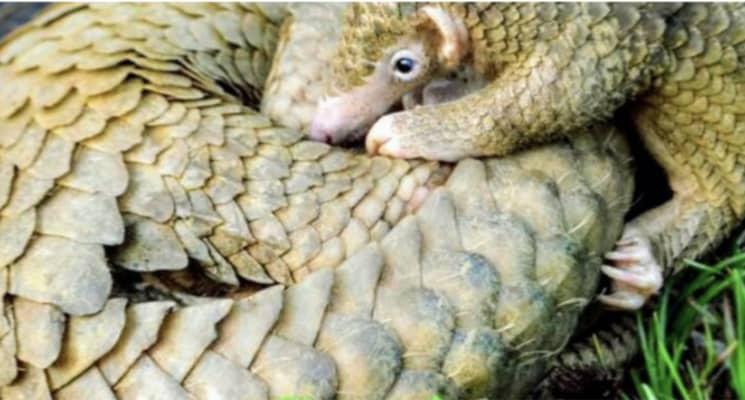
The civil society consultation framework in the Mwenga territory has warned of a resurgence of pangolin (Manis tricuspis) poaching in the Itombwe Nature Reserve, located in South Kivu province in the east of the Democratic Republic of Congo.

According to the group, several cases of illegal hunting have been reported recently in the reserve. Poachers mainly target pangolins for their scales and meat. These scales are highly sought after in wildlife trafficking networks.

The Itombwe Nature Reserve covers parts of the territories of Mwenga, Uvira, Fizi and Shabunda. This protected area is rich in biodiversity, but faces several threats, including poaching and illegal trade in wild species.

Mukamba Milenge Henri, coordinator of this citizen organization, is calling on the environmental authorities to take action to protect this species. "We invite the Congolese Institute for Nature Conservation (ICCN), local communities and environmental organizations to support a program to combat poaching and trafficking of pangolin scales and meat in the Itombwe Reserve," he said.

The civil society consultation framework in the Mwenga territory also encourages traditional authorities to become more involved in this fight. "May the guardians of tradition strengthen their guidance to communities. It is forbidden to hunt and consume this mammal, a practice already prohibited in Lega custom. To strengthen its protection, combat trafficking and preserve its habitat, we are also relaunching awareness campaigns," he adds.

The pangolin is now considered the most poached and trafficked mammal in the world. Since 2016, the Convention on International Trade in Endangered Species (CITES) has banned international trade in all pangolin species. According to the IUCN Red List, the pangolin (Manis tricuspis) is one of the most endangered species in the world.

Written by Victoire Katembo Mbuto

Lualaba: at least nine dead in a landslide at the SAFI mining site in Kakanda

Lualaba: at least nine dead in a landslide at the SAFI mining site in Kakanda

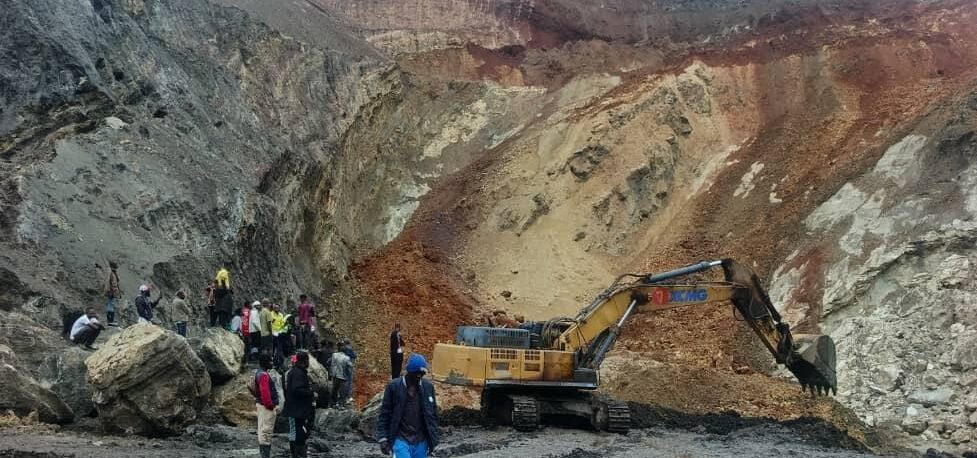
At least nine artisanal miners were killed on Wednesday 11 March in a landslide at the SAFI mining site, located near the mining town of Kakanda, in the Lubudi territory (Lualaba province), according to a detailed report by the Service d'Assistance et d'Encadrement de l'Exploitation Minière Artisanale et à Petite Échelle (SAEMAPE).

According to this official document, the accident occurred between 5 a.m. and 7 a.m. in this mining area covered by Boss Mining's PE 469 operating permit. Initial information gathered by the authorities indicates that several artisanal miners had entered the mine basin to extract ore.

According to SAEMAPE, for social reasons, artisanal miners are sometimes allowed access to certain parts of the mine between 5am and 9am. However, the report states that a group of miners entered the site with the agreement of armed individuals, under circumstances that remain unclear.

Alerted to the incident in the early afternoon, emergency teams were dispatched to the scene to rescue the victims. Nine bodies were taken to the Kakanda morgue, according to the provisional report released by SAEMAPE, which stated that search operations were still ongoing at the time of writing.

The provincial director of SAEMAPE also emphasized that his department currently has no permanent staff at the site, mainly due to the presence of armed elements. The document also mentions that the COMEMA cooperative was operating there without prior technical approval from the supervisory department.

Located about 100 kilometers east of Kolwezi, the SAFI mining site is in an area marked by artisanal copper and cobalt mining, often carried out in precarious conditions.

A technical mission is expected to visit the site on Thursday 12 March to establish the exact circumstances of the accident and draw up a final report.

For its part, local civil society is already reporting a higher death toll, with at least 11 fatalities, while the search continues under the rubble.

In its report, SAEMAPE makes several recommendations to prevent such accidents from happening again.

The supervisory service calls in particular for increased surveillance at the mining site, the permanent presence of technical agents to supervise artisanal activities, and clarification of the conditions of access for artisanal miners to industrial concessions.

SAEMAPE also recommends the involvement of the competent authorities to put an end to the presence of armed elements on the site, in order to ensure normal and secure technical supervision of mining activities.

Written by Noé KALEMEKO

Resurgence of insecurity in Beni: the commune of Mulekera under the control of bandits

Resurgence of insecurity in Beni: the commune of Mulekera under the control of bandits

For several days now, insecurity has been rampant in the city of Beni, the provisional capital of North Kivu province. The commune of Mulekera has been the most targeted by unwanted "night-time visits".

According to Kamabu Mukama Kennedy, president of the Mulekera Youth Council, several incursions have been reported, specifically in the Tamende neighborhood. The assailants take telephones, money and other valuables during their operations. "The assailants operate with complete impunity. From last week until yesterday, the Tamende neighborhood has become the epicenter of this banditry," he said.

The municipal youth council attributes this situation to the lack of effective security measures. "What surprises us is that serious measures are still not being taken. The victims call for help, but unfortunately, it always comes too late. "

Faced with this chaos, Mukama Kennedy calls on the authorities to take appropriate measures to curb this crime. "The authorities must act to prevent these incursions and protect residents. The city is full of soldiers and police officers; we believe that their presence would be more useful in the context of community policing. What we are experiencing is not what our people deserve," he concluded.

These bandits, who remain unidentified, are spreading terror and desolation. Meanwhile, the population is paying the price for what is perceived as a failure on the part of the city authorities, who are supposed to guarantee the protection of citizens and their property.

Written by Azarias Mokonzi

Tension in the DRC following announcements of a probable constitutional change

Tension in the DRC following announcements of a probable constitutional change

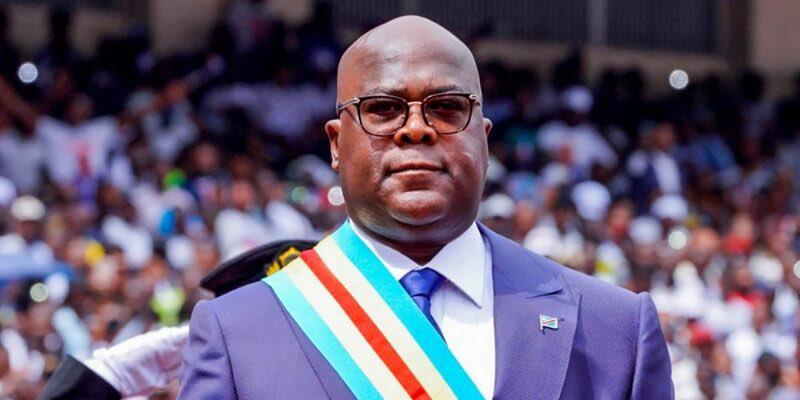
In the Democratic Republic of Congo, the issue of constitutional reform has returned to the forefront of political discussions following a recent statement by Modeste Bahati Lukwebo, second vice-president of the Senate, who has chosen not to support this initiative.

On Saturday 7 March, speaking to senior figures and activists from the presidential party gathered in Limete, Secretary-General Augustin Kabuya removed any doubt about the regime's intentions: "Rest assured, we are going to amend this Constitution". This statement is part of a debate that has been raging for several months on the future of the Congolese constitution, which was passed in 2006 and whose 20th anniversary was marked last February by a symposium organized at the National Assembly.

"Revising the Constitution is constitutional, while changing the Constitution is not constitutional," says Vital Kamerhe, former president of the National Assembly. The revision is planned, but some articles are locked, including the one limiting the number of terms of office for the president of the republic.

"These violations are orchestrated by members of the executive branch and the presidential party (UDPS, Sacred Union), such as Augustin Kabuya, Mbata, Didier Budimbu, Paul Tshilumbu and Christophe Mboso Kodia, who are responsible for spreading an anti-constitutional message and implementing repressive policies," says Baggothy Nyembo Sumaili, a Congolese member of the diaspora, in an open letter.

"If the UDPS persists in its reckless pursuit of changing the constitution, it will not only legitimize war, but also risk leading the country into civil war. It is time for the people to rise up and say 'Stop'." Prince EPENGE

For the Archbishop of Kinshasa and head of the Catholic community in Congo, there are better things to do. "How can a country like ours spend time, energy and even money talking about constitutional change instead of taking care of its abandoned youth?" asks Cardinal Fridolin Ambongo.

The citizen movement Lutte pour le Changement (LUCHA), one of the most active civil society actors in the Democratic Republic of Congo, denounced in a statement published on Monday 9 March 2026 what it describes as an attempt at institutional "slippage" through the debate on the revision or amendment of the 2006 Constitution. This initiative aims to "offer a permanent lease to President Félix Tshisekedi," whose second term expires in December 2028. The movement accuses the ruling power of diverting national priorities in favor of a political survival maneuver, while the country is facing an acute security crisis in the east (occupation by the M23/AFC supported by Rwanda, abuses by the ADF, etc.).

"Yesterday, we showed our determination to say no to any amendment to the Constitution. Today, we are ready to multiply that energy tenfold to defend democracy and respect for our laws," said one internet user.

Wait and see.

Written by Akilimali Chomachoma

A fire broke out on Wednesday, 11 March 2026, at Mavivi Airport, located in the Beni region. The flames engulfed a large part of the administrative facilities before the emergency services arrived. According to initial information gathered at the scene, a wooden building housing several airport service offices was completely destroyed. Although no official statement has yet been made by airport or local authorities, multiple sources point to a domestic cause. The fire is believed to have been caused by the improper use of a gas stove in the restaurant located directly opposite the Directorate General of Migration (DGM) office. The flammable structure of the building allowed the flames to spread rapidly, rendering the situation uncontrollable within minutes. The intervention of MONUSCO fire trucks was decisive in limiting the spread of the blaze to other critical airport infrastructure. Thanks to their deployment, the fire was contained, thus avoiding even greater material damage. At present, the exact extent of the material damage and lost documents remains to be determined. No loss of life has been reported so far, but there are fears that some administrative services may be temporarily suspended. The competent authorities are expected to issue an official statement to clarify the exact circumstances of this tragedy and assess its impact on airport operations in this part of North Kivu province. Written by Azarias Mokonzi

Urgent: Fire at Beni-Mavivi Airport, Several service offices destroyed

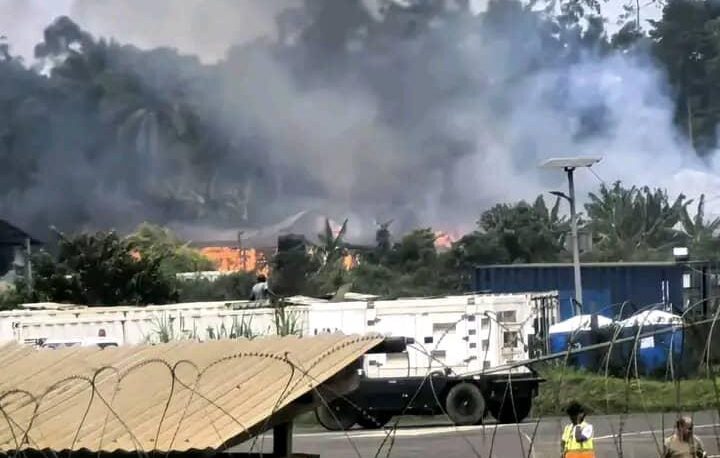
A fire broke out on Wednesday, 11 March 2026, at Mavivi Airport, located in the Beni region. The flames engulfed a large part of the administrative facilities before the emergency services arrived.

According to initial information gathered at the scene, a wooden building housing several airport service offices was completely destroyed. Although no official statement has yet been made by airport or local authorities, multiple sources point to a domestic cause.

The fire is believed to have been caused by the improper use of a gas stove in the restaurant located directly opposite the Directorate General of Migration (DGM) office. The flammable structure of the building allowed the flames to spread rapidly, rendering the situation uncontrollable within minutes.

The intervention of MONUSCO fire trucks was decisive in limiting the spread of the blaze to other critical airport infrastructure. Thanks to their deployment, the fire was contained, thus avoiding even greater material damage.

At present, the exact extent of the material damage and lost documents remains to be determined. No loss of life has been reported so far, but there are fears that some administrative services may be temporarily suspended.

The competent authorities are expected to issue an official statement to clarify the exact circumstances of this tragedy and assess its impact on airport operations in this part of North Kivu province.

Written by Azarias Mokonzi

Operation Shujaa: Ugandan Army To Remain In DR Congo

Operation Shujaa: Ugandan Army To Remain In DR Congo

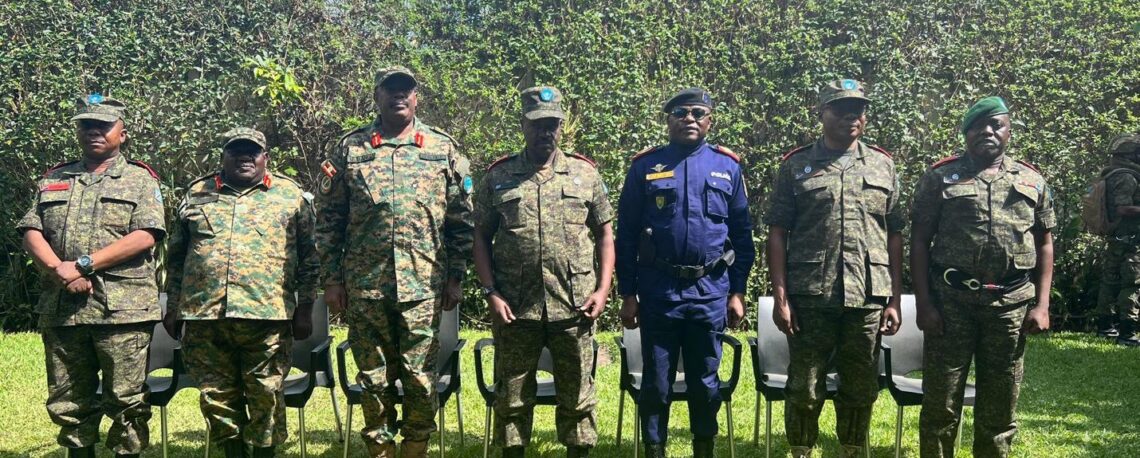
On Tuesday 10 February, the Armed Forces of the DRC (FARDC) and the Ugandan army (UPDF) held a meeting in Beni, the provisional capital of North Kivu, to assess their joint operations against ADF rebels, launched in November 2021. Discussions focused on strengthening the coordination of actions carried out in the territories of Beni and Lubero in North Kivu, as well as in Ituri.

Lieutenant-General Ychalingonza Nduru Jacques, Deputy Chief of Staff of the Armed Forces of the Democratic Republic of Congo (FARDC) in charge of operations, chaired a working session of high strategic importance. He was joined by his Ugandan counterpart, Lieutenant-General Kayanja Muhanga, Commander of the Uganda People's Defense Forces (UPDF) Land Forces, as well as the main commanders of the operational sectors of both countries.

Both generals acknowledged progress in tracking down the ADF-MTN-ISCARP. Ugandan troops have been present on Congolese soil since 30 November 2021, following Kampala's decision to support Kinshasa in the fight against the ADF, a threat to both countries. Despite these joint efforts, more than four years after the launch of operations, the armed group remains active and appears to have increased its violence, extending its actions to at least four territories in the east of the country: Beni, Lubero, Irumu and Mambasa.

In recent days, the territory of Lubero appears to be the epicentre of the violence, being the most affected by recent attacks. On Tuesday night, a new incursion was reported towards Mbau, in the territory of Beni. Faced with this persistent threat, the FARDC and UPDF are now focusing on better coordination to reverse the trend and secure the region.

Operation Shujaa "Operation of the Brave" is a joint military offensive conducted by the Uganda People's Defense Forces (UPDF) and the Armed Forces of the Democratic Republic of the Congo (FARDC). Launched on November 30, 2021, the operation's primary objective is to dismantle the Allied Democratic Forces (ADF), an Islamic State-affiliated insurgent group operating in the eastern DRC.

But beyond these operations, several observers in the DRC fear stagnation. These operations have been ongoing for four years now, and there are always new prospects. The Uganda People's Defense Forces have now deployed far from the shared border and are setting up in major cities such as Butembo, Beni and Bunia. They are intervening in regions such as Mahagi, where there is no terrorist threat, without really explaining their presence.

Written by Akilimali Chomachoma

Kinshasa: Constitutional Court asked to invalidate Washington agreement on strategic minerals

Kinshasa: Constitutional Court asked to invalidate Washington agreement on strategic minerals

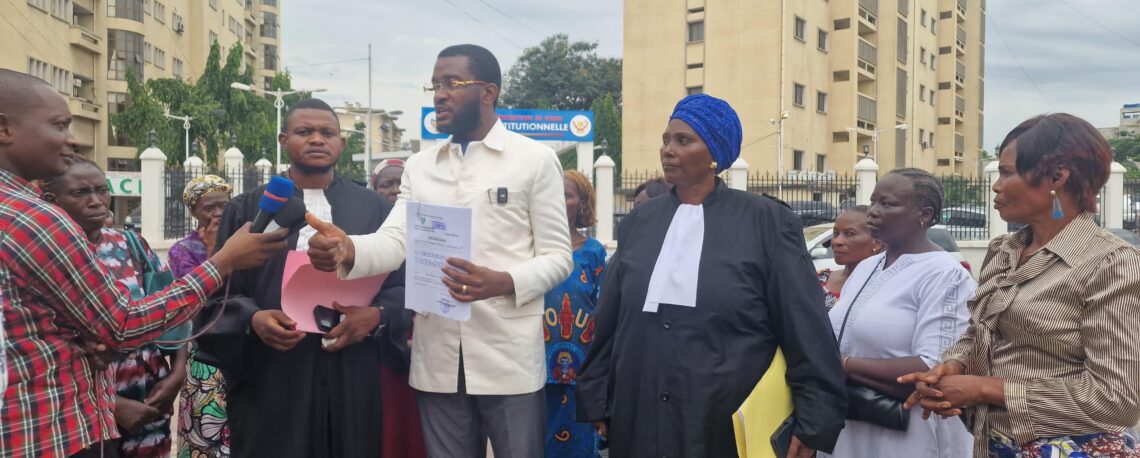
A group of Congolese lawyers and human rights defenders, alongside NGOs, has asked the Constitutional Court to annul the strategic partnership agreement signed with the United States on December 4, 2025. Their petition was filed on Wednesday, June 21, 2025, at the offices of the Constitutional Court of the Democratic Republic of Congo.

The "Washington Agreement on Strategic Minerals" refers to a strategic partnership signed in December 2025 between the Democratic Republic of Congo (DRC) and the United States, aimed at regulating US access to critical minerals (cobalt, copper, etc.) to secure supply chains for the benefit of the US market.

"The aforementioned agreement was never submitted to the Congolese people, as the primary sovereign authority, nor was its content disclosed," states the petition. "The people find it difficult to know what the Congolese state has actually committed to, and what the interests and future consequences of this agreement are; In short, our ability to manage our strategic minerals and our sovereignty are being undermined," the document continues.

"The DRC is offering manganese, copper-cobalt, and lithium assets to American investors as part of a minerals agreement. Washington is seeking to reduce its dependence on China for critical minerals," Reuters reports in one of its investigations.

The Constitutional Court has received the petition. It remains to be seen what will become of this request. In the DRC, the Constitutional Court has supreme authority to review the constitutionality of international treaties and agreements, ruling on their conformity with the Constitution prior to ratification, thereby ensuring that these acts do not violate the country's fundamental laws, and ensuring the balance of powers during their validation.

Written by Akilimali Chomachoma

Resilience in Classrooms: An Education Crisis in Congo

Resilience in Classrooms: An Education Crisis in Congo

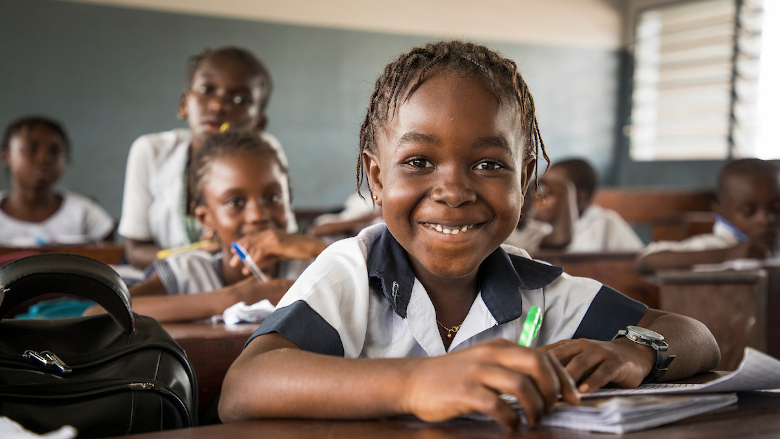
(image from: World Bank / Vincent Tremeau)

A classroom in Congo is not always one with four walls and unlimited resources for learning. Often, it is children sitting under trees, sharing their pencils and listening to an older sibling who has taught themselves the basics of mathematics. Yet, despite these challenges, education in Congo has remained a symbol of hope and resilience among families and the youth, proving to be a source of power that drives the future forward.

As a result of prioritizing elite schooling during colonial rule, this system has been inherited over time and is now a factor in the situation in the DRC. Economic decline and policy adjustments after independence left education underfunded and with a lack of attention, and the school system weakened over the years 1. As a result of the dwindling system, today’s crisis is not just a result of recent conflict, but rather an issue deeply rooted in systematic failure.

For decades, poverty and conflict have disrupted and pushed down the rates at which education is achieved among children in the DRC. Even when physical locations for schools exist, several are damaged and overcrowded, especially struggling with a lack of teachers.

According to UNESCO, the primary education completion rate was at an average of 82.5% between boys and girls2. With numbers dropping sharply after that, the completion rates for lower secondary education are only over half for girls, and around 63% for boys. For tertiary education, 5% of women and 8% of men were enrolled in 2020, leaving millions without adequate learning to pursue work and a better future.

Armed violence has displaced millions of children, forcing them into refugee camps with an even greater lack of educational resources. In fact, UNICEF data shows that over 6.5 million people, including 2.6 million children, are displaced in this region3. Because of the destruction that has come upon schools, almost 800,000 children are being deprived of an education just in North and South Kivu. When combined with the data from Ituri Province, this number skyrockets to 1.6 million children in eastern Democratic Republic of Congo who are now out of school.

Even if children may gain access to schooling, the challenge remains of the quality of learning. Congo faces extreme teacher shortages, with even the existing teachers not having adequate training. This means that even the few who get to attend have a limited quality of education, depriving them of a fair chance of pursuing higher learning. Moreover, the inadequate compensation teachers receive drives the crisis even lower. Salaries are notably low, with primary and secondary education staff earning about $100 per month4. This compels teachers to seek other sources of income, diverting their focus from education to a job to properly provide for themselves and their families. Statistics show that for one qualified educator, there are multiple classrooms without any staff5.

Despite these struggles, Congolese communities have come together to show strong resilience. Volunteers, parents, and teachers have created informal classrooms in churches, refugee camps, or open spaces to encourage the continuation of learning. In many places, young people who have managed to stay in school step up to help children, ensuring no child is left behind and making the most of their time to keep learning alive. In some areas, older students step in as tutors, sharing what they know to ensure younger children don’t fall behind. These efforts reflect remarkable persistence and hopefulness in a time of distress.

As an effort by the Congolese government to address the education crisis, the government launched a free primary schooling policy in September 2019, taking a step towards removing tuition barriers for children6. Though the implementation of this is not without struggle -including corruption- the DRC remains committed to the policy, increasing the cut of their federal budget that goes to education. In fact, between 2017 and 2021, the budget rose from 11.6% to 21.8%, followed by a national census to identify teachers to provide better salaries. This has given rise to the enrollments in primary and secondary schools across the country, with data showing at least 3 million additional enrollments7.

Moreover, several organizations such as BEBUC and the Global Partnership for Education have worked alongside local educators to train teachers and rebuild education structures. They have promoted the development of learning centers, even if they are not in the form of a physical school building. Not only do these efforts restore education, but they also protect children from being pulled into armed groups. Education in the DRC has become more than just learning; instead, it is hope, protection, and support for those traumatized by violence. The endeavors taken by the DRC communities, whomever they may be, have contributed to a step towards a stronger future.

Written by Vedica Chudiwale

1 https://doi.org/10.23916/0020230845230
2 https://www.iicba.unesco.org/en/congo-democratic-republic-drc
3https://www.unicef.ch/en/current/news/2025-02-17/drc-violence-and-displacement-deprive-hundreds-thousands-children-schooling
4 https://laboursolidarity.org/en/africa/n/3279/the-struggles-of-teachers-in-the-democratic-republic-of-congo?
5https://teachertaskforce.org/blog/how-teachers-keep-students-learning-one-most-difficult-places-world-go-school?
6 https://blogs.worldbank.org/en/education/free-primary-schooling-drc-where-we-are-road-reform?
7 https://reliefweb.int/report/democratic-republic-congo/covid-19-school-closures-drc-impact-health-protection-and-education

Congolese Art & Music: Hope of a Better Tomorrow

Congolese Art & Music: Hope of a Better Tomorrow

The streaks of paint that run through the walls of Congo tell a story of a revolution towards freedom; freedom from societal expectations and from the challenges of everyday life in the Congo. Where the burden of deep colonial history can be felt, it is difficult to find freedom from the present. Painting and art in general, in the Democratic Republic of the Congo, have become a means to unite cultural identity and transform it into a form of creativity. Through music, murals, and sculptures, people in the DRC have transformed struggle into expression by creating beauty from adversity, serving as a poignant reminder of imaginative resistance.

Much of the significance behind Congolese art can be traced back to its colonial history. As Belgian colonial policies reduced art to solely craft, its cultural significance was stripped and distorted1. Belgian rule introduced an educational system that replaced Indigenous cultural frameworks with European systems, suppressing artistic tradition and restricting creative freedom. After independence, the long past of instability and economic decline left cultural institutions unrecognized and underfunded, creating a gap that required fulfillment through identity and memory2. Modern Congolese artists stepped in to rebuild memory, using rhythm, movement, and expression through art.

Art in modern Congo is an expression of daily life, used to respond to the political and social climate in a subtle yet profound way. It’s a transformative means through which citizens can protest against poverty, conflict, and corruption, while sharing with the world their fashion and aspects of their daily lives3. The nature of Congolese art is commentary and survival in itself; a living archive of resilience that preserves memories and identities. A notable example of this is artist Cheri Samba, whose paintings depict life in Africa. With art pieces such as ‘Water Problem’ (2004) and ‘Hope Keeps You Going’ (1997), Samba notes his art is “a way of not allowing freedom of interpretation to the person who looks at [Samba’s] painting.”4

On the other hand, several music artists from history embrace Congolese rumba, typically aiming at creating music embedded with political commentary. For example, Papa Wemba was a music artist who played Congolese rumba and soukous, a genre of dance music originating from the Democratic Republic of Congo. Called the “King of Rumba Rock,” Wemba not only had an important role in world music, but he also was a fashion icon central in promoting La Sape, a youth movement that promoted fashion to cultural identity for Congolese youth5.

Moreover, Taby Ley Rochereau was another Congolese singer who specialized in African jazz. His music combined indigenous instruments, Latin dance beats, and several western arrangements6. By blending elements from several different cultures, Rochereau became one of the country’s most popular singers. In fact, he even made African music international following the rise in popularity of his band Afrisa International.

Today, Congolese art sits at a crossroad where tradition intersects heavily with global modernity. Artists like Fally Ipupa, Innoss’B, and Maître Gims all embody that combination thoroughly. Together, the sounds of rumba, ndombolo, soukous, Afrobeats, and western pop create a style of music that resonates across the world, far beyond the borders of the Democratic Republic of Congo. Even as bands like Afrisa International or artists like Cheri Samba achieve international fame, their work remains deeply rooted in the cultures and identities of those from home, reflecting the country's struggles with conflict and political uncertainty. Simultaneously, it emphasizes Congo's pride and resilience, exemplifying the endless creativity among its native people. Through their music and paintings, artists offer an image of Congo that circulates honesty and hopefulness, proving Congolese music as a cultural force that carries the weight of the promise of a brighter tomorrow.

Written by Vedica Chudiwale

References:

  1. https://news.artnet.com/art-world/kinshasa-congo-2164769
  2. https://www.britannica.com/place/Democratic-Republic-of-the-Congo/The-arts
  3. https://www.on-curating.org/issue-49-reader/painting-in-the-democratic-republic-of-the-congo-culture-and-identity.html
  4. https://museemaillol.com/en/expositions/cheri-samba-in-the-jean-pigozzi-collection/
  5. https://www.redbullmusicacademy.com/lectures/papa-wemba-lecture
  6. https://realworldrecords.com/artists/tabu-ley-seigneur-rochereau/#:~:text=Tabu%20Ley%20Rochereau%20came%20to,electric%20guitars%20and%20westernised%20arrangements.
Cultivating Tomorrow: The Future of Agriculture in the DRC

Cultivating Tomorrow: The Future of Agriculture in the DRC

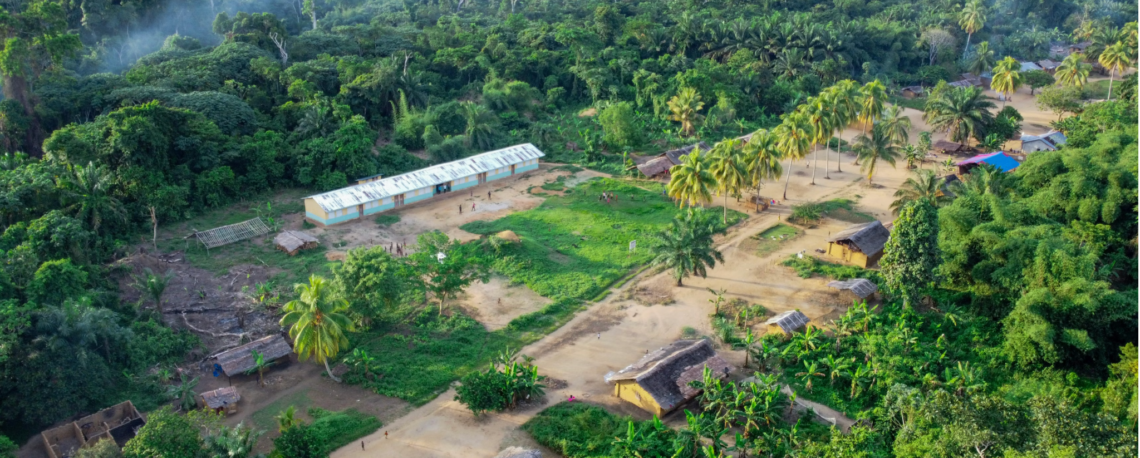
Toza Productions (2025)

Agriculture in the Democratic Republic of Congo is a lifeline for rebuilding communities amidst conflict. More than an economic activity, agriculture and farming are a stabilizing force that provides food and restores dignity after instability disrupts markets. Most farmers in Congo use knowledge passed down through generations to cultivate cassava, maize, plantations, and vegetables. Even as modern technology changes farm work, Congolese women and young people who work on these plots prioritize water. Specifically, they prioritize access to clean and safe drinking water, as this is a determining factor in crop health, community health, hygiene, and disease prevention. In places where these sources of water are contaminated or scarce, the challenge is evident through their daily lives, whether with cooking and farming, or caring for children. Yet, within the communities and past the borders of the country, innovators and NGOs work towards sustainable farming methods and rainwater harvesting systems that can provide a cleaner and safer future for families that depend on agriculture.

The Democratic Republic of Congo has more farms available than any other African country. Because of its proximity to the Congo River, which flows through the Congo Rainforest, agriculture becomes a primary activity for residents. With an estimated 80 million hectares of arable land and only 10% of which is used, the agricultural sector makes up for 18% of the country’s GDP, accounting for over 60% of jobs1. The country’s diverse landscape provides opportunities for a wide diversity of crops, from coffee and cocoa in the east to palm oil cultivated in the western region.

Beyond the country's agricultural aspect, the differences between large plantations and smallholder farmers reveal a complexity within the landscape. On the one hand, smallholder farmers make up a majority of the agricultural workforce and rely on traditional tools, family labor, and passed-down knowledge. On the other hand, larger plantations have greater access to resources, including machinery and better markets. The effects of this imbalance are seen in productivity, income, and the ability to adapt in broader environments. As farming faces complications due to the various soil and climate differences across the region, skilled farmers are forced to broaden their skills to unfamiliar territories. For instance, where volcanic soils in the east support higher value crops like coffee, heavy rainfall and dense forests in the central basin create difficulties for maintaining soil fertility.

Moreover, decades of conflict have created an instability in Congo’s agricultural business, interrupting farming cycles and reducing production in areas where agriculture is the main part of people's lives. Despite the displacement forcing farmers to relocate, their resilience has been truly remarkable. Organizations such as Farm Africa have further provided a strong hand for rural communities to make a sustainable living through farming, and for developing a large-scale agroforestry program. As communities in Congo share resources and support each other, they, as well as the organizations that assist them, all play crucial roles in strengthening the community after conflict and restoring food production.

Furthermore, water infrastructure has remained an essential part of the agriculture process, often being the make-or-break factor of the cycle. In the Congo, seasonal rain patterns determine farming cycles, though an increase in the threat of climate change has made rainfall increasingly unpredictable. In fact, rainfall weeks have become even more intense, showing numbers of being 9-19% stronger since the past eighty years. This number is projected to increase to about 20-30% in the next fifty years, with the rainy seasons becoming rainier and the dry seasons becoming drier. Overall, this significantly disrupts crop growth, even becoming a concern for water availability and accessibility. Especially for women and children who are primarily responsible for collecting water for their household and farms, long distances to sources reduce time for income-generating activities and education. In response to these struggles, several community members have begun innovating and creating systems that could make lives easier for Congolese farmers. Primarily, low-cost irrigation systems help with crop maintenance during the dry seasons, and community nurseries for seeds preserve varieties in resistance to climate change. An increase in access to technology has provided citizens with essential mobile and weather apps that can help them predict the weather to better schedule farming patterns. External youth-led initiatives have introduced several tools, including digital mapping of water points to better locate sources, and small-scale solar pumps that support the environment and human health. Projects such as the CGIAR Fund, as part of the Alliance Biodiversity & CIAT organization, focus on transforming agrofood systems in regions of Congo in response to climate change.

Though climate change poses a significant threat to the DRC, the country holds immense potential to face this global issue. Its extensive forests store carbon, and its fertile soils can sustain proper agriculture. Even its rivers thoroughly support renewable energy. An increase in inventions like community wells and soil-friendly farming techniques has demonstrated how local innovation can transform global issues. This reduces the burden on those who rely on Congo’s agriculture, including the women and youth responsible for travelling long distances just for water. It improves crop reliability and variety, overall strengthening the bonds between communities. As they spread, they offer hope for the Democratic Republic of Congo and a green, sustainable future.

Written by Vedica Chudiwale

References:

1 https://www.ambardcusa.org/invest-in-the-drc/industries/agriculture/