
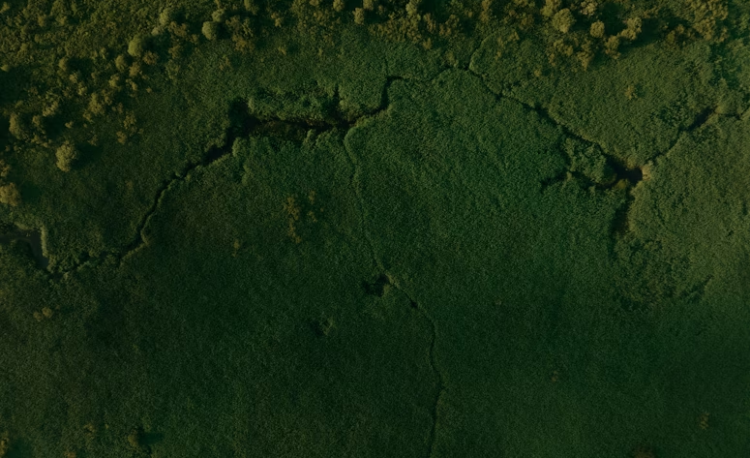
The Congo Basin is known to be the “lungs of the world” but is treated merely as a resource frontier rather than an ecological lifeline. As the Earth’s largest carbon sink, it has a major role in regulating atmospheric carbon, preserving biodiversity, and sustaining the lives of millions of local communities who need the forest to survive. The same governments and corporations that claim to protect the Basin actually are profiting from its degradation. This is evident as land from Congolese people has been stolen and damaged by mining and logging concessions that the government has allowed to occur. Additionally, carbon offset programs, which claim to protect the forest, are horribly regulated and provide excuses for the government to give indigenous land away to foreign interests, displacing and misleading communities. This article argues that the exploitation of the Basin, especially through “green” initiatives like REDD+, reveals patterns of the Congo’s governance prioritizing global markets over the rights of its indigenous communities.
Credits to: Unsplash+
The Congo Basin is known as the world’s largest remaining tropical carbon sink, with its immense number of trees and tropical plants, which allow it to absorb vast amounts of carbon. The basin spans roughly 500 million acres across six Central African countries: Cameroon, the Central African Republic (CAR), the Democratic Republic of the Congo (DRC), the Republic of the Congo, Equatorial Guinea, and Gabon. The region contains the largest area of rainforest with about 107 million hectares, and covers over 70% of Africa’s tropical forests, making it a hotspot for biodiversity. This can be seen through its housing more than 600 tree species and over 10,000 animal species. Despite its ecological significance, the region faces numerous threats of high degrees of poaching and escalating rates of forest degradation and deforestation. Additionally, the global demand for the basin’s natural resources such as wood, oil, gas, diamonds, gold, iron, and coltan has risen significantly. As a result, a large and growing percentage of the Congo Basin is under concession to logging and mining companies such as Glencore (Switzerland), Ivanhoe Mines (Canada), Eurasian Resources Group (Kazakhstan), Zijin Mining and CNOC Group (China), MMG Limited (China/Australia), and Trafigure (Singapore/Switzerland). Companies extracting materials often rely on subsistence methods, imposing severe damage to the keystone region. To make matters worse, powerful state actors such as China, Rwanda, Belgium, Uganda, and the USA/EU have continuously viewed the region as merely a way to make profit, causing several harmful mining initiatives to exploit Congolese people.
With a regional population estimated to be over 157 million people, housing over 150 ethnic communities, the Congo Basin is vital to human life. For groups such as the BaMbuti, Efe, and BaAka, the forest is an essential lifeline; it is a home of food, materials, medicine, and shelter. The region’s rapid increase in population has placed an especially large pressure on maintaining the Basin’s natural resources and ecosystems for the over 60 million individuals that directly depend on it for survival. As logging and mining have expanded in the Congo, the resulting displacement has created not only economic instability but also serious damage to culture. Congolese who are culturally tied to the land have had their right to it; mining operations have led to restrictions on land. This has caused an undermining of their farming, hunting, and medicinal needs and practices, breaking communities away from systems that have sustained them for hundreds of years. Additionally, many communities are not properly informed of mining or logging projects and are typically promised schools and infrastructure, which they never actually receive. This pattern of displacement is not only present in mining but has re-emerged through conservation and carbon offset projects.
Credits to: Markus Spiske, Unsplash.com
Currently, the same governments and organizations that claim to protect the Basin through conservation and climate initiatives are just ploys to exploit indigenous land for profit. Although REDD+ programs seem to provide solutions to climate change and deforestation, in actuality, their incredibly weak oversight and lack of transparency have made them commonly manipulated for financial gain. Instead of being treated as tools for local environmental protection, carbon credits are serving as commodities in international markets, creating a cover-up for companies to hide their emissions. In the Democratic Republic of Congo, the DRC Ministry of Environment has allowed for logging, mining, and conservation operations to occur without Congolese consent. This has caused a harmful and unjust reallocation of indigenous land to foreign-controlled companies, depriving the Congolese people of rights to their own land. Profits from resource extraction and carbon markets flow largely to investors in the North, whereas, despite losing land crucial to their survival, indigenous groups receive little to no share of profits. Governments and corporations justify their projects by promising opportunities such as schools, employment, healthcare, and infrastructure to Congolese people. However, these promises have never actually been fulfilled. As a result, through these projects, local communities are left with restricted land access, an erosion of their culture, and extreme economic hardship.
A prime example of indigenous exploitation is the Yafunga case. Yafunga is a village in Isangi territory where about 8000 people rely on farming and fishing for a living. Since 2004, the land that belonged to the Yafunga people has been inaccessible to its inhabitants, first due to a logging concession through the Safbois company, and later, a carbon offsetting project managed by Jadora. The Chiefs of the Yafunga had signed agreements to the land without full disclosure, allowing for indigenous consent to be missing. Safbois had promised schools, healthcare, roads, and jobs, but delivered almost nothing. A singular school was built but is now run down, and no hospitals, roads, or any other infrastructure were ever delivered. Ownership for both Safbois and Jadora was eventually transferred to the rich American Blattner family. More than 565,000 hectares (comparably the size of Delaware) were controlled by the Blattners in Isangi alone. The Blattner family exploited the residents of Yafunga and at least 30 other villages in the DRC’s territory. Residents were not informed of the REDD+ project until 2019, 15 years after the project had begun. Due to this exploitation, indigenous residents bear extreme environmental and economic costs, along with displacement from centuries-old connections to their land.
Credits to: Planet Volumes, Unsplash.com
The crisis in the Congo basin reveals how “green” solutions are not inherently ethical. Interestingly enough, carbon offset and conservation programs produce the same patterns of exploitation as corrupt mining and logging concessions in the Basin. This is a result of certain profit-hungry government officials who refuse to take accountability for their actions. Readers must examine who actually benefits from carbon markets and if indigenous communities are actually being informed of activities in the Basin, not misled with false promises. Indigenous communities must maintain their right to their land because it is their home, and no corrupt government or corporation should be able to take that from them. We cannot allow the world’s largest carbon sink to be placed in the hands of individuals who do not care if it deteriorates. As a result, government and corporate actors must be held accountable for their actions. This can only be accomplished through better oversight, an increase in protections for indigenous land, and more transparent carbon markets. If the Congo Basin collapses, this will not just affect the Congo but the entire world because of its global climate significance. As a result, readers must demand global action to guarantee the Basin’s preservation.
Written by Vatsala Dogra
Source List
- Mongabay
- Congo Rain Forest and Basin | PlacesWorld Wildlife Fundhttps://www.worldwildlife.org › places › congo-basin
- Journey into the Congo Basin – The Lungs of Africa and …World Bankhttps://www.worldbank.org › news › feature › 2022/10/24
- https://www.congolandscapes.org/about
- https://www.cifor-icraf.org/knowledge/publication/8700/
- https://pulitzercenter.org/stories/carbon-credits-congo-cost-capture-part-1
- https://mines.cd/rdc-metalkol-kcc-mumi-ces-societes-de-glencore-visees-par-une-serie-denquetes-pour-corruption-et-blanchiment-des-capitaux/
- https://mines.cd/rdc-la-production-de-kamoa-kakula-a-baisse-suite-a-linstabilite-dans-la-fourniture-en-electricite/
- https://mines.cd/jacques-kyabula-implique-dans-le-vol-de-120-tonnes-de-cathode-de-cuivre-de-tfm/
- https://mines.cd/exploitation-artisanale-de-minerais-strategiques-remis-a-litie-pour-publication-laccord-egc-trafigura-ne-viole-pas-les-lois-sur-la-concurrence/
- http://congomines.org/