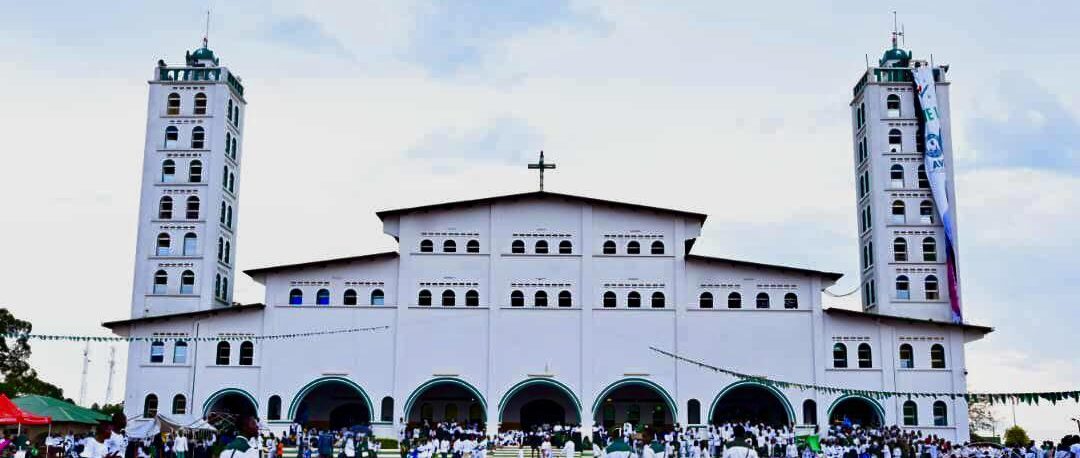
Congo: Celebration of Simon Kimbangu Day and African Consciousness Day on 6 April

Congo: Celebration of Simon Kimbangu Day and African Consciousness Day on 6 April

Simon Kimbangu’s struggle embodies a collective memory and a defining moment in which African dignity, consciousness and identity were asserted in the face of history. His legacy spans generations, shaping reference points, values and a worldview that remains alive today.

To mark this day, Kimbanguist believers have organized processions across the DRC. In Lubumbashi, for example, they are marching through the city’s streets, preaching the Gospel and singing with great pomp. This powerful moment awakens the consciousness of Black people to break down stereotypes and fight for their freedom in the world.

With his famous saying, “the black man will become white, the white man will become black”, Simon Kimbangu preached change, transformation and the advancement of Black people in the face of injustices linked to skin color. Born on 12 September 1887, he died in 1951 after several periods of imprisonment due to his ideology, the longest of which lasted two decades in the village of Kisoko, in Lubumbashi, which has now become the headquarters of Kimbanguism in Haut-Katanga.

Since 2023, 6 April has been officially recognized in the Democratic Republic of the Congo as a day dedicated to commemorating Simon Kimbangu’s struggle and promoting African consciousness. This day is declared a public holiday, a day off work and a paid holiday throughout the country.

This day serves as a reminder that heritage is not limited to objects or places; it is also embodied in figures, commitments and intangible legacies that continue to shape society.

To honor Simon Kimbangu is to acknowledge an essential part of African history and consciousness.

The major announcement for 2026 was the official designation of the town of Nkamba as a holy city of the Democratic Republic of the Congo. This recognition reinforces the spiritual and historical status of this major pilgrimage site, which attracts many worshippers from across the country and the diaspora every year.

Through this gesture, the Congolese authorities reaffirm their commitment to honoring national historical figures and promoting the values of unity, faith and African pride championed by Simon Kimbangu.

Written by Akilimali Chomachoma
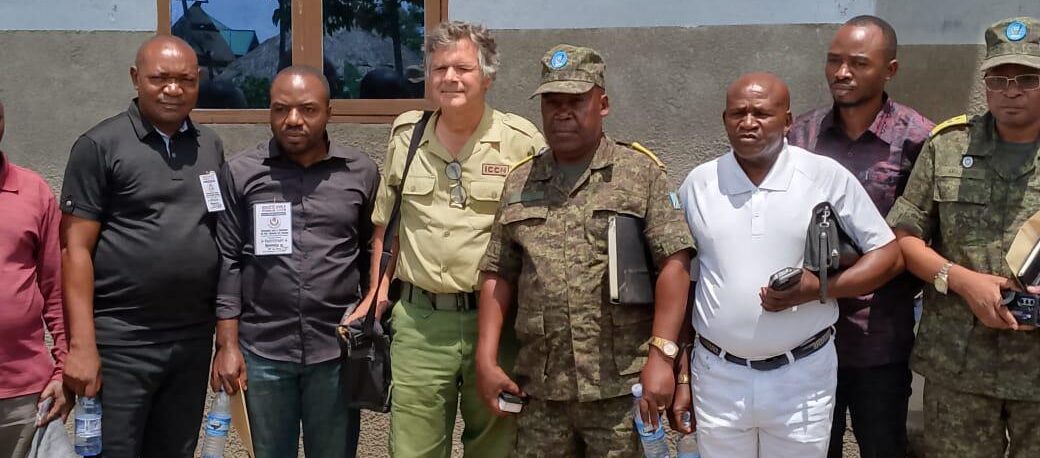
DRC: Virunga National Park and fishermen join forces to ensure the success of the Kivu-Kinshasa Green Corridor

DRC: Virunga National Park and fishermen join forces to ensure the success of the Kivu-Kinshasa Green Corridor

The Provincial Director of Virunga National Park, Emmanuel de Merode, met with representatives from various sections of the population in the Kyavinyonge fishing enclave, on the northern shore of Lake Edward in Beni territory, to discuss the ongoing tensions between the park and local communities on Tuesday 7 April 2026.

For nearly twenty years, the Kyavinyonge fishery, located in the Bashu chiefdom, has experienced friction with the park rangers. The population highlights difficulties linked to living conditions, land disputes and a lack of dialogue with park managers. “A frustrated population cannot support environmental protection,” laments Delphin Kakule Malekani, president of the local civil society group Forces Vives.

According to him, the lack of consultation fuels misunderstandings, particularly with the Virunga Fisheries Cooperative. He calls for the communities to be involved in decisions concerning their future. “Unemployed young people become vulnerable to insecurity. Employment strengthens peace and stability. Without land security, there can be neither peace nor sustainable development,” he insists.

Civil society actors are also calling for close collaboration between eco-guards and local communities to build trust in biodiversity conservation. They highlight several challenges, including a lack of electricity, dependence on firewood, limited economic development, dilapidated roads and a lack of access to clean drinking water.

For Delphin Malekani, the local population must be seen as “a solution, not a threat” to conservation. He also recommends establishing support mechanisms for families affected by attacks from wild animals, particularly crocodiles and elephants. “People protect the environment when they see the benefits. Involving the local population in decision-making is essential. Management of Nile crocodiles: consider classifying them as an invasive species under the law. Reject the option of electric fences,” adds this civil society representative.

For his part, Emmanuel de Merode pointed out that Kyavinyonge is part of the Kivu-Kinshasa Green Corridor vision, a program aimed at strengthening food security through sustainable fisheries management. “Environmental protection ensures the proper management of natural resources, particularly fisheries. It is necessary to maintain order in fishing activities to maximize production,” he explained.

The director also emphasized the role of the Congolese Institute for Nature Conservation (ICCN), pointing out that its staff are not authorized to accept money. He encouraged the public to report any instances of corruption.

Emmanuel de Merode announced the establishment of a working group comprising 12 members from various sectors of society and representatives of the ICCN. Its task will be to propose, within two months, concrete solutions for the drafting of a fisheries development plan.

“Let Kyavinyonge be a pilot project. Despite the security challenges, we can make progress together,” he reassured, emphasizing the importance of a sustainable dialogue between conservation and local development.

According to local stakeholders, these discussions represent an important step towards mutual understanding based on trust and the search for sustainable solutions that benefit both the local population and conservation.

Written by Victoire Katembo Mbuto

DRC: At Lake Edward, the birth of 153 hippos revives hopes of a slow recovery

DRC: At Lake Edward, the birth of 153 hippos revives hopes of a slow recovery

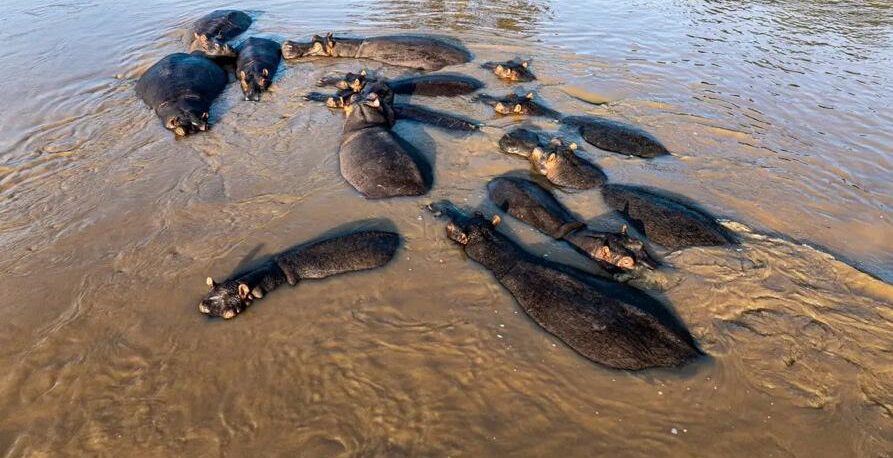
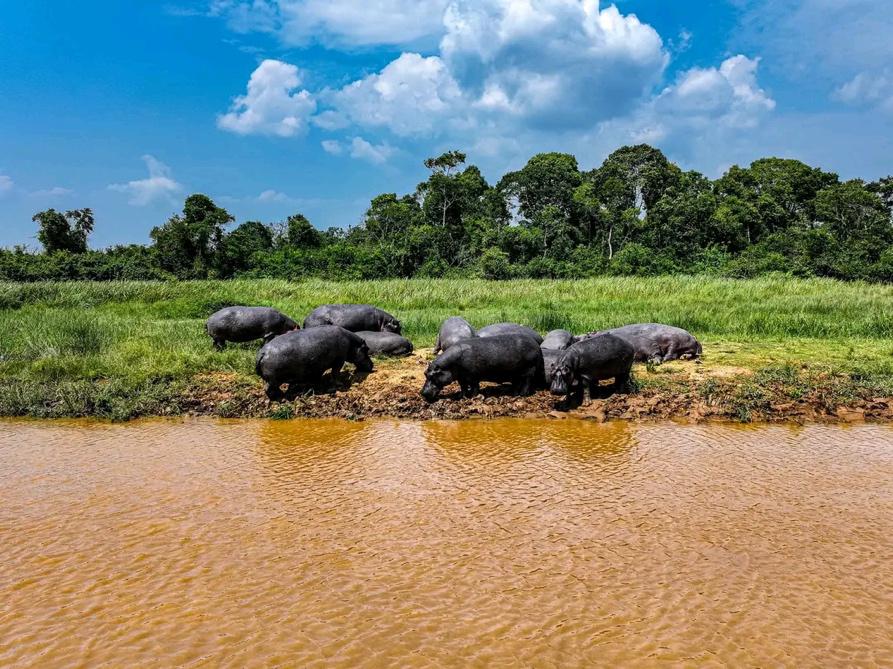
Virunga National Park has announced that 153 juvenile hippos have been counted within 171 groups observed in the southern areas of Lake Edward. This is seen as encouraging news in a region where the species has suffered one of the continent’s most severe declines.

In a statement released on its digital platforms, Virunga National Park emphasises that the presence of these young individuals could indicate a gradual recovery in reproduction, following several years of sharp decline.

A historic collapse in populations

In the 1970s, the park’s hippos constituted one of the world’s largest populations, with around 29,000 individuals concentrated around Lake Edward. Since then, their numbers have fallen by nearly 95%, due to the combined effects of massive poaching and chronic insecurity in the east of the Democratic Republic of the Congo.

According to recent data from the park, the population is now estimated at around 2,700 individuals, a level that remains fragile despite a trend towards stabilization. The park states that this development reflects “the combined effect of conservation efforts, increased ranger patrols and the use of new technologies”, the announcement highlights.

An ecological indicator beyond the species itself

Beyond the issue of biodiversity alone, the presence of hippos is often seen as an indicator of the health of aquatic ecosystems. Their role in the nutrient dynamics of Lake Edward fuels hopes of a positive indirect impact on fish stocks.

For some local environmentalists, this development is an encouraging sign. “When hippopotamus numbers increase, it often reflects an improvement in the lake’s ecological balance,” says a conservation activist from the fishing enclave of Vitshumbi, over 100 kilometers from the city of Goma, clearly pleased.

Within the fishermen’s associations, the news has also been received with caution but interest. Some see a potential positive impact on the lake’s productivity, whilst others are already discussing the possibility of further developing ecotourism in the region. “We’re going to make the most of nature’s wonders. Visitors will come from all over to see them, and this will restore a sense of pride to our village,” enthuses Atanaze Kambale, a 40-year-old fisherman.

Persistent vulnerabilities

This momentum, however, comes against a backdrop that remains unstable. A recent zoonotic disease led to the death of 26 hippos a few months ago.

Many researchers believe that this trend can only be consolidated through greater involvement of local communities. They argue that conservation cannot be effective without shared resource management and awareness-raising regarding health and environmental issues.

“Hippos play a key role in the lake’s ecological balance. Their protection must involve local communities. Stability in the region is also vital to maintaining this momentum. The ICCN must tackle poverty to prevent the resurgence of armed groups that view hippopotamus poaching as a source of income,” emphasizes an expert who requested anonymity.

Written by Victoire Katembo Mbuto

DRC: At Lake Edward, the birth of 153 hippos revives hopes of a slow recovery
Withdrawal of the motion against the Minister of the Interior: when Parliament loses its independence

Withdrawal of the motion against the Minister of the Interior: when Parliament loses its independence

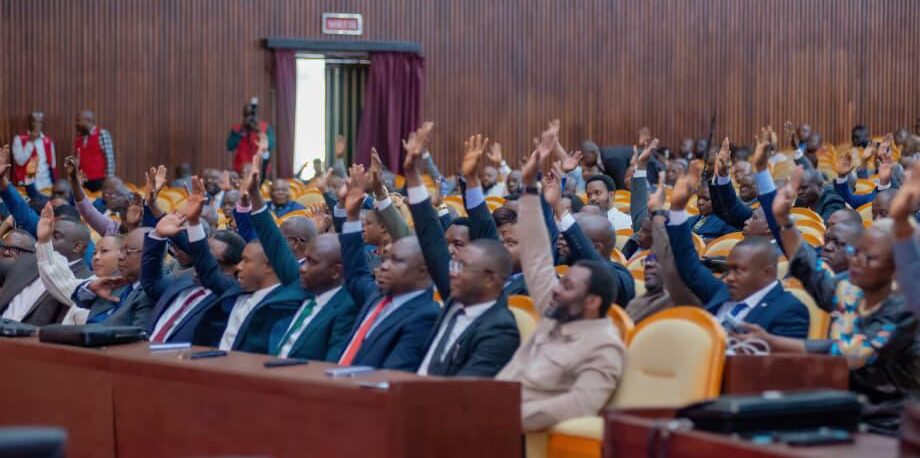
In his motion, MP Laddy Yangotikala accused Jacquemain Shabani of violating the free administration of the provinces, obstructing parliamentary oversight, undermining the separation of powers, abusing authority for partisan purposes, and being responsible for persistent insecurity; yet within a single day, the situation took a dramatic turn in several respects.

First, in the morning, the initiator of the motion, MP Laddy Yangotikala, resigned from his post as interim president of the ‘Action Des Volontaires Pour Le Relève Patriotique’ party.

“I wish to inform the national and international community that I am stepping down from my role as interim president of my political party, AVRP, in order to calmly defend the security of the population through my motion against the Minister of the Interior. I wish to spare others the pressures I am already facing,” he wrote on his X account before deleting the tweet that evening.

It should be noted that the announcement of this motion of no confidence was welcomed by the majority of the population of Kinshasa, who are victims of growing insecurity marked by armed robberies, kidnappings, theft and urban banditry commonly known as ‘Kuluna’.

Subsequently, political parties began to put pressure on the MPs who had signed the motion to withdraw their support. The AFDC-A (Alliance of Democratic Forces of Congo and Allies) political party officially distanced itself from two of its national MPs on Tuesday 14 April 2026. The MPs in question are Cizungu Ntaboba Landry and Placide Wenda Mukagwa, accused of supporting a motion of no confidence in the National Assembly targeting the Deputy Prime Minister and Minister of the Interior, Jacquemain Shabani Lukoo.

Within the parliamentary group, the permanent secretary of the Union sacrée, the platform of President Félix Tshisekedi, issued a message to MPs calling for an end to their actions against the second highest-ranking figure in the Congolese government.

"We are members of the majority and have all signed the Pledge of Commitment to the Sacred Union of the Nation (USN) and the Pledge of Loyalty to His Excellency Félix-Antoine Tshisekedi Tshilombo, President of the Republic, Head of State and Highest Political Authority. "Taking such a grave decision concerning the Deputy Prime Minister for the Interior, who is the number two in the USN government, without consulting the platform is totally unacceptable," he wrote.

Several figures in public life in the DRC have condemned the executive’s encroachments on parliament. Some analysts suggest that the initiator may have come under pressure from his political family, of which Minister Shabani is also a member.

"Do you realize the extent to which our society has deteriorated? Even MPs are no longer free to carry out their duties. If even MPs are no longer free, then who in this country still is?" asks Lionel Basila, a political analyst.

Written by Akilimali Chomachoma
Withdrawal of the motion against the Minister of the Interior: when Parliament loses its independence
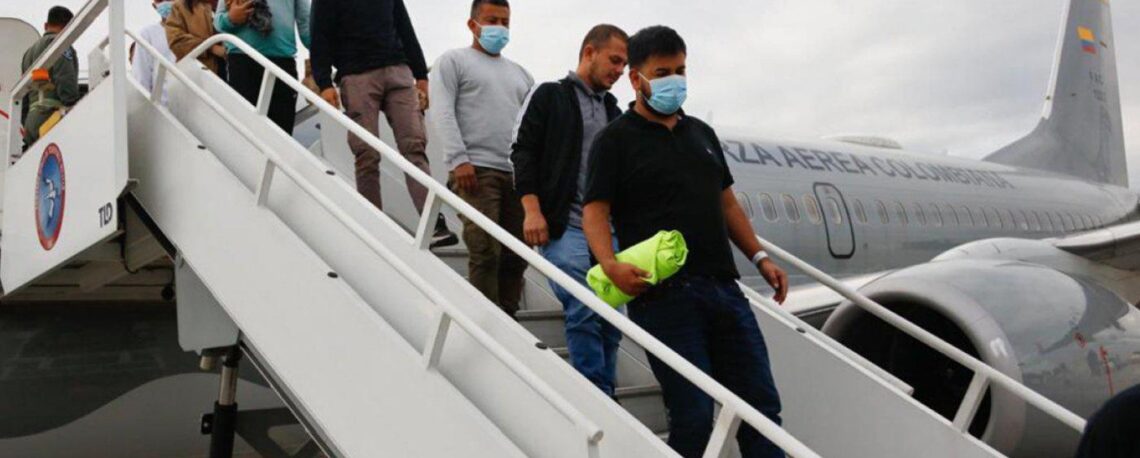
A first group of people deported from the United States has already arrived in Kinshasa

A first group of people deported from the United States has already arrived in Kinshasa

The government refers to “a temporary reception scheme for third-country nationals”. On this point, the authorities are keen to stress that “this scheme is strictly transitional, temporary and limited in duration”, without providing further details.

Those deported are from Colombia, Peru and Ecuador, according to sources close to the matter. “It took a very long time, about 26 or 27 hours,” one migrant told Reuters.

In other words, it is clearly established that “this constitutes neither a mechanism for long-term settlement on national territory nor a permanent resettlement”, though no indication is given as to how long the migrants will remain in the Congo.

Furthermore, the government emphasizes that “their reception, supervision and care are funded by the US Government”.

The arrival of these migrants has sparked a wave of reactions among politicians. Several civil society organizations have highlighted a lack of transparency and raised questions about the reception conditions and the legal framework of this operation.

Meanwhile, members of the National Assembly had called for the lower house of parliament to examine this issue, which is considered sensitive.

The Institute for Human Rights Research (IRDH), for its part, rejects this move. In an opinion piece, its director, Hubert Tshiswaka Masoka, strongly criticizes an agreement which he considers to be contrary to international commitments regarding the protection of refugees.

The NGO cites a violation of the principle of non-refoulement, forced transfers contrary to international law, and the illegal outsourcing of US obligations regarding asylum.

“By agreeing to become a platform for the outsourcing of migration for the United States, the DRC is deviating from international standards and undermining the universal protection of asylum seekers,” he says.

It calls on the DRC to suspend the agreement, on Washington to terminate it, and on the UNHCR to secure immediate access to the people concerned.

Written by Akilimali Chomachoma
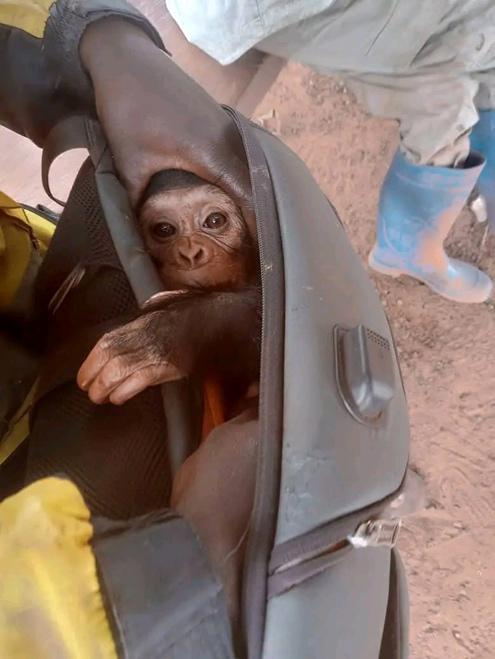
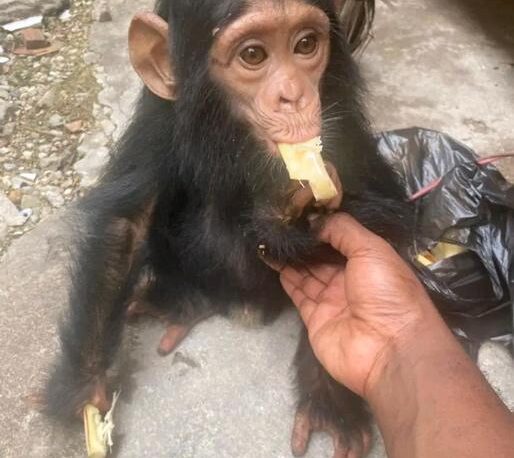
DRC: Baby chimpanzee seized from a rucksack in Kisangani

DRC: Baby chimpanzee seized from a rucksack in Kisangani

The organization Conserv Congo announced on Thursday 9 April that a baby chimpanzee (Pan troglodytes) had been seized in Kisangani, in the north-east of the Democratic Republic of the Congo. Listed on the International Union for Conservation of Nature (IUCN) Red List, the chimpanzee has been classified as an endangered species due to poaching and wildlife trafficking since 1996.

According to this organization, which is committed to combating wildlife trafficking, the operation took place on 7 April. It was carried out jointly with the Congolese Institute for Nature Conservation (ICCN), the Congolese National Police and the Tshopo Public Prosecutor’s Office. “The baby chimpanzee, which had been illegally transported in a rucksack, was found alive and placed under protection. The animal was being transported in a rucksack to evade the vigilance of environmental service and ICCN checkpoints, particularly at the barrier located approximately 23 km from the city of Kisangani,” Congo Conserv reports.

Two senior officials implicated

The operation led to the arrest of two senior officials from different ministries, suspected of being involved in an illegal trafficking network dealing in protected species. “The baby chimpanzee was found in a hotel in Kisangani, where it was due to be shown to potential buyers. It was seized immediately and transferred to a zoo. The suspects, both senior officials from two different ministries, hold positions requiring frequent travel to forested regions. This access enabled them to participate directly in the illicit trade in protected species,” she explains.

Mbusa Mapoli Joël Mbusa Mapoli, a biologist and senior lecturer at the University of Nature Conservation and Development in Kasugho, states in an email to Mongabay that the trafficking of chimpanzees, although illegal, is common and often facilitated by the complicity of certain officials. According to him, this trafficking involves both civilians and state officials. “Animal species, even those protected by law, are subject to illegal trade, either alive or as meat. As for chimpanzees, they are captured and trafficked.”

Some residents also keep them on their land for reasons of prestige, often unaware of the law. It is a long chain involving civilians, police and the military. The main weakness remains the failure to enforce the laws, which leads to almost total impunity,” he explains.

Mbusa recommends strict enforcement of the law, improved working conditions for enforcement officers and the imposition of exemplary penalties. “The key recommendation is to enforce the law to the full extent. It is also imperative to improve conditions for officers at all levels of wildlife control. Exemplary sanctions must be imposed on offenders, regardless of their role or status,” he suggests.

The organization Congo Conserv also states that the alleged accomplices are already in the custody of the judicial authorities pending further investigations. “The two individuals arrested are public officials assigned to a toll booth on National Road No. 4, the route from which the animal originated. They are in the custody of the judicial authorities, and legal proceedings are underway in accordance with current legislation. Investigations are continuing to identify any accomplices and trace the entire trafficking chain,” the organization reassures.

Written by Victoire Katembo Mbuto

DRC: Baby chimpanzee seized from a rucksack in Kisangani
Africa: deforestation on the rise, with the DRC at the heart of forest loss

Africa: deforestation on the rise, with the DRC at the heart of forest loss

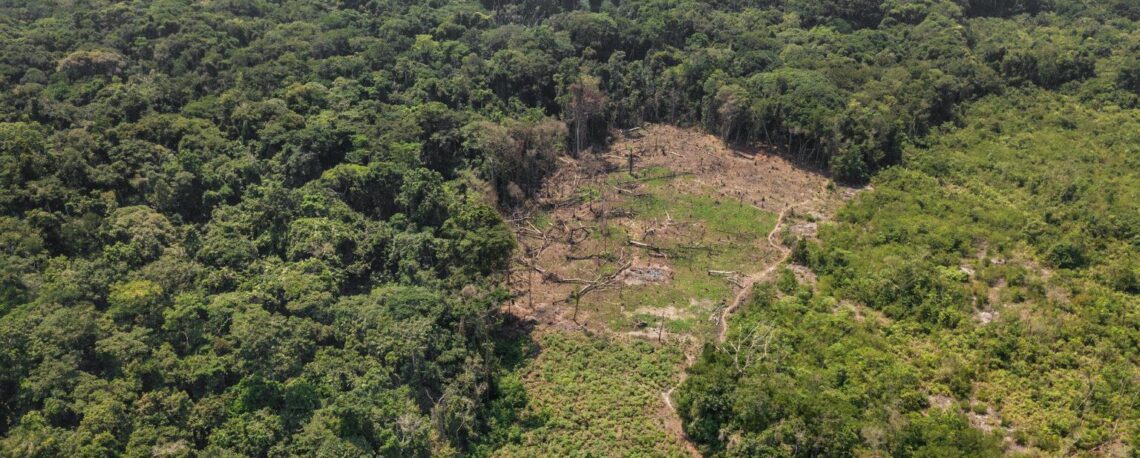
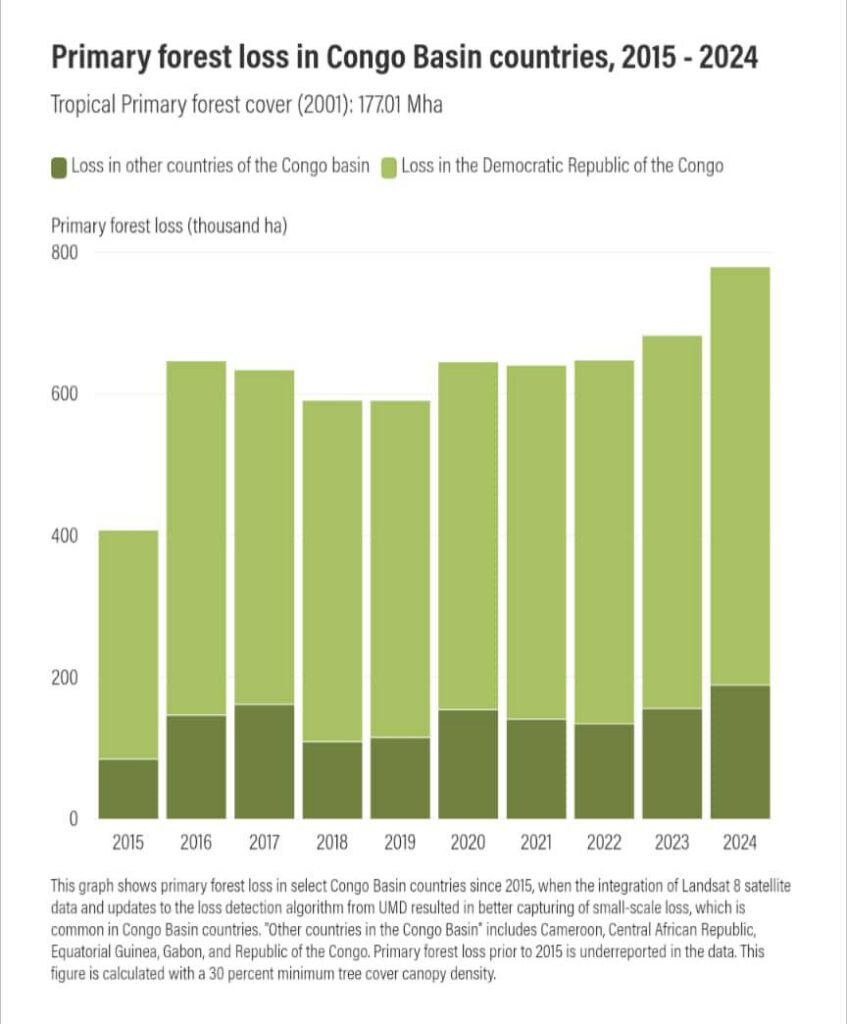
According to data from Global Forest Watch (GFW), a global platform for monitoring the world’s forests, forest loss in the Congo Basin has seen a gradual but steady increase over the last decade. This trend also affects primary forests, which are nevertheless the ecosystems richest in biodiversity.

The Democratic Republic of the Congo (DRC) accounts for the bulk of this forest loss in the region. It alone accounts for over 75% of the deforestation recorded in the Congo Basin, far ahead of Cameroon, which comes in second place.

Across much of the region, the main cause of forest cover loss remains small-scale shifting cultivation. This traditional subsistence practice involves clearing a section of forest to cultivate it for a few years, before leaving it fallow to allow the vegetation to regenerate naturally.

Although this agricultural system is ancient and widespread in rural communities, its expansion in certain areas is now contributing to increased pressure on forests.

Furthermore, cocoa cultivation is gradually emerging as a new driver of deforestation in certain countries of the Congo Basin, particularly where the sector is encouraged by public policy. In the DRC, for example, cocoa production more than quadrupled between 2015 and 2023, according to available data.

Agricultural development programs often promote shade-grown cocoa systems or intensive farming models. However, even these practices can lead to forest conversion, particularly in forest landscapes that are still intact.

Written by Victoire Katembo Mbuto

Africa: deforestation on the rise, with the DRC at the heart of forest loss

Source of datas :
https://www.globalforestwatch.org/blog/forest-insights/congo-basin-forest-loss-trends/?utm_medium=social&utm_source=facebook&utm_campaign=congobasintcl&fbclid=IwZXh0bgNhZW0CMTEAc3J0YwZhcHBfaWQPMjc1MjU0NjkyNTk4Mjc5AAEeSPCiwpwn7nYxUUKRukjRs52RCKNaDekM96AapeirUZcfNXypUn08bK7ML3o_aem_8LxsCbiKJvYvJryMaxarJQ

Crisis in the east: HRW urges the European Union and the UN to follow the US in isolating M23 supporters

Crisis in the east: HRW urges the European Union and the UN to follow the US in isolating M23 supporters

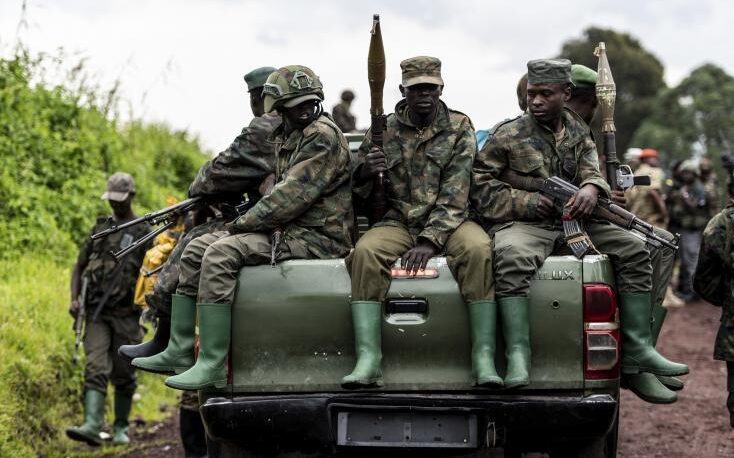
Faced with escalating violence in the east of the Democratic Republic of Congo, the United States is taking a tougher stance. Through targeted sanctions, Washington is denouncing not only logistical support, but also the direct operational involvement of Rwandan troops alongside M23 rebels.

According to UN and military sources, several thousand Rwandan soldiers, including special forces units, crossed the Congolese border in the weeks leading up to this major operation.

In response to the new sanctions imposed on the Rwandan army and four of its senior commanders, Human Rights Watch considers the overall response to be still too timid. The human rights organization is calling on the European Union, the United Kingdom and governments in the region to follow the United States' lead.

The objective is clear: to increase pressure by adopting targeted sanctions against other high-ranking officials, both within the M23 and the Rwandan military hierarchy, in order to break the cycle of violence in eastern Congo.

For Nicole Widdersheim, deputy director of the organization’s Washington office, these US measures go beyond the mere diplomatic framework.

"The United States is making it clear that the M23's territorial gains would not have been possible without the direct operational involvement of the Rwandan army," she explains. According to her, these sanctions reflect an effort by Washington to enforce international agreements and demand that Rwanda end its support for the armed group "once and for all".

The US Treasury Department's Office of Foreign Assets Control (OFAC) corroborates this analysis, stating that the Rwandan army "actively supports, trains and fights alongside the M23".

The M23 is now at the heart of an unprecedented humanitarian crisis in the region. The United Nations, the United States and the European Union have documented an alarming list of abuses attributed to the group, including summary executions and sexual violence, massive, forced displacement of populations, indiscriminate attacks on civilians, and forced recruitment, including of child soldiers.

Written by Azarias Mokonzi

DRC Justicia Asbl calls for an independent inquiry following Human Rights Watch’s revelations about the CNC

DRC Justicia Asbl calls for an independent inquiry following Human Rights Watch’s revelations about the CNC

The noose is tightening around the National Cyber Defence Council (CNC). Following the damning report by Human Rights Watch (HRW) denouncing enforced disappearances in Kinshasa, the Congolese NGO Justicia Asbl has broken its silence. It is calling on President Félix Tshisekedi to take action against the abuses committed by a service under his direct authority.

In a recent report, the international organization Human Rights Watch revealed around ten cases of enforced disappearances targeting political opponents since March 2025. These acts are attributed to the National Cyber Defense Council (CNC), a body attached to the Presidency, which is said to use ‘spurious’ grounds to carry out arbitrary arrests and detain citizens in secret locations.

For Justicia Asbl, these revelations confirm long-standing fears. In an official statement, the NGO commends the work of HRW, emphasizing that the CNC has legally “no right to abduct citizens, nor to detain them in clandestine cells”.

The organization strongly condemns practices described as “barbaric and tantamount to terrorism”, targeting not only opponents but also human rights activists and journalists. According to Justicia Asbl, these actions do not serve national security interests but are part of a “purely political” agenda.

This intensified repression comes against a backdrop of growing tension surrounding the Constitution. Justicia Asbl fears that the CNC and the judiciary may be “exploited to silence critical voices” opposed to a potential constitutional amendment that would allow the Head of State to seek a third term. Such a scenario would, according to the NGO, deal a “fatal blow” to the young Congolese democracy.

In light of the gravity of the situation, Justicia Asbl is appealing directly to the country’s head of state. The NGO is calling on the President of the Republic, in particular, to launch an independent inquiry into the CNC’s abuses and to order the immediate and unconditional release of all those unjustly detained.

Whilst the families of the missing remain without news, international and local pressure is mounting for the authorities in Kinshasa to shed full light on these “missing persons” and to respect legal judicial procedures.

Written by Azarias Mokonzi

Massacres in Mambasa Islamic State claims responsibility for the attack on the Muchana mining site

Massacres in Mambasa Islamic State claims responsibility for the attack on the Muchana mining site

The eastern Democratic Republic of Congo is once again plunged into horror. Whilst the families’ tears continue to flow, the terrorist organization Islamic State officially claimed responsibility, on Saturday 14 March 2026, for the bloody assault carried out last Thursday against the Muchana mining site, in the territory of Mambasa, Ituri.

The toll provided by the organization via its propaganda channels is chilling. The terrorists claim to have cold-bloodedly shot dead around twenty people. The victims are said to include 17 civilians, trapped within the mining compound, as well as Congolese soldiers who were attempting to protect the site.

Beyond the massacre, Islamic State claims to have abducted more than 100 people during this incursion. This mass abduction has plunged the region into deep anxiety, with the fate of the hostages remaining, at this hour, completely unknown.

This attack on a strategic economic site demonstrates once again the vulnerability of mining areas in Ituri, which are often targeted for the plundering of resources or to finance terrorist activities.

Despite ongoing military operations, blood continues to be shed with impunity. This latest tragedy highlights the urgent need for greater security for civilians and workers at mining sites, which have become prime targets for the armed groups that have been causing grief in the province for years.

Written by Azarias Mokonzi