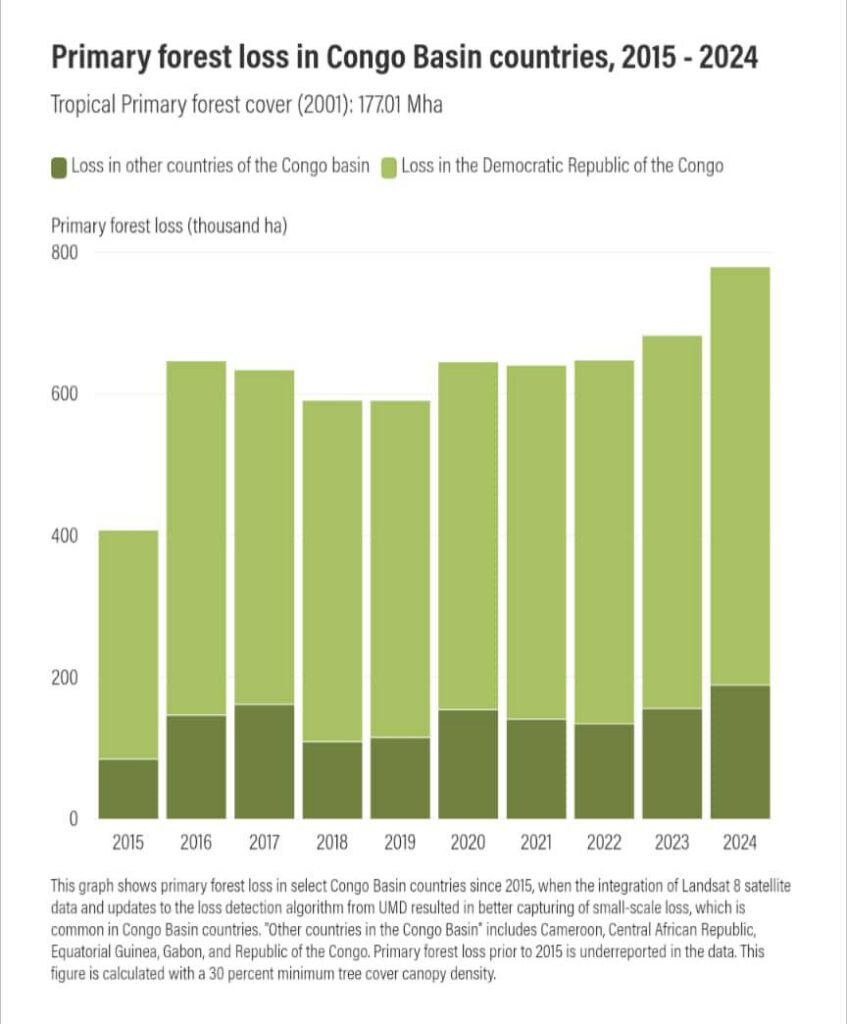
According to data from Global Forest Watch (GFW), a global platform for monitoring the world’s forests, forest loss in the Congo Basin has seen a gradual but steady increase over the last decade. This trend also affects primary forests, which are nevertheless the ecosystems richest in biodiversity.
The Democratic Republic of the Congo (DRC) accounts for the bulk of this forest loss in the region. It alone accounts for over 75% of the deforestation recorded in the Congo Basin, far ahead of Cameroon, which comes in second place.
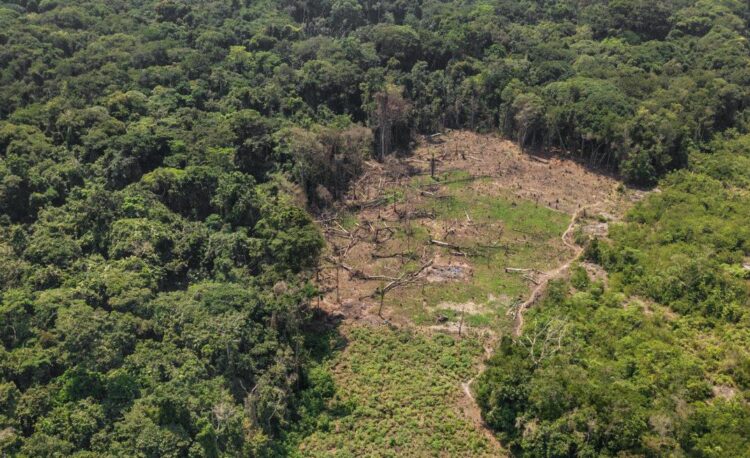
Across much of the region, the main cause of forest cover loss remains small-scale shifting cultivation. This traditional subsistence practice involves clearing a section of forest to cultivate it for a few years, before leaving it fallow to allow the vegetation to regenerate naturally.
Although this agricultural system is ancient and widespread in rural communities, its expansion in certain areas is now contributing to increased pressure on forests.
Furthermore, cocoa cultivation is gradually emerging as a new driver of deforestation in certain countries of the Congo Basin, particularly where the sector is encouraged by public policy. In the DRC, for example, cocoa production more than quadrupled between 2015 and 2023, according to available data.
Agricultural development programs often promote shade-grown cocoa systems or intensive farming models. However, even these practices can lead to forest conversion, particularly in forest landscapes that are still intact.
Written by Victoire Katembo Mbuto