
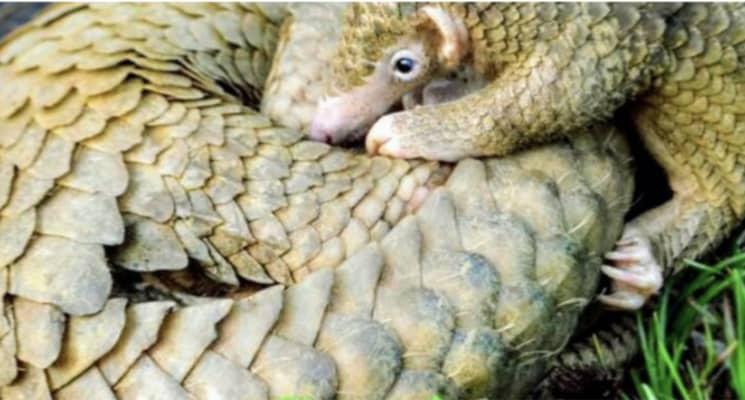
The civil society consultation framework in the Mwenga territory has warned of a resurgence of pangolin (Manis tricuspis) poaching in the Itombwe Nature Reserve, located in South Kivu province in the east of the Democratic Republic of Congo.
According to the group, several cases of illegal hunting have been reported recently in the reserve. Poachers mainly target pangolins for their scales and meat. These scales are highly sought after in wildlife trafficking networks.
The Itombwe Nature Reserve covers parts of the territories of Mwenga, Uvira, Fizi and Shabunda. This protected area is rich in biodiversity, but faces several threats, including poaching and illegal trade in wild species.
Mukamba Milenge Henri, coordinator of this citizen organization, is calling on the environmental authorities to take action to protect this species. “We invite the Congolese Institute for Nature Conservation (ICCN), local communities and environmental organizations to support a program to combat poaching and trafficking of pangolin scales and meat in the Itombwe Reserve,” he said.
The civil society consultation framework in the Mwenga territory also encourages traditional authorities to become more involved in this fight. “May the guardians of tradition strengthen their guidance to communities. It is forbidden to hunt and consume this mammal, a practice already prohibited in Lega custom. To strengthen its protection, combat trafficking and preserve its habitat, we are also relaunching awareness campaigns,” he adds.
The pangolin is now considered the most poached and trafficked mammal in the world. Since 2016, the Convention on International Trade in Endangered Species (CITES) has banned international trade in all pangolin species. According to the IUCN Red List, the pangolin (Manis tricuspis) is one of the most endangered species in the world.
Written by Victoire Katembo Mbuto