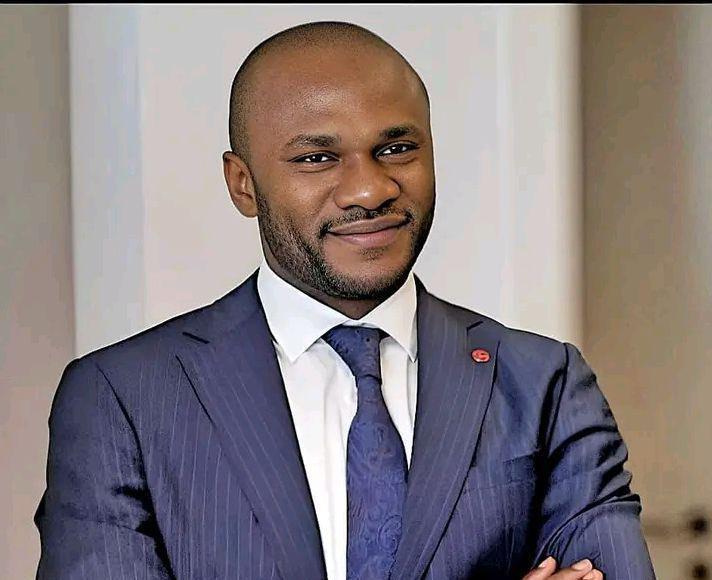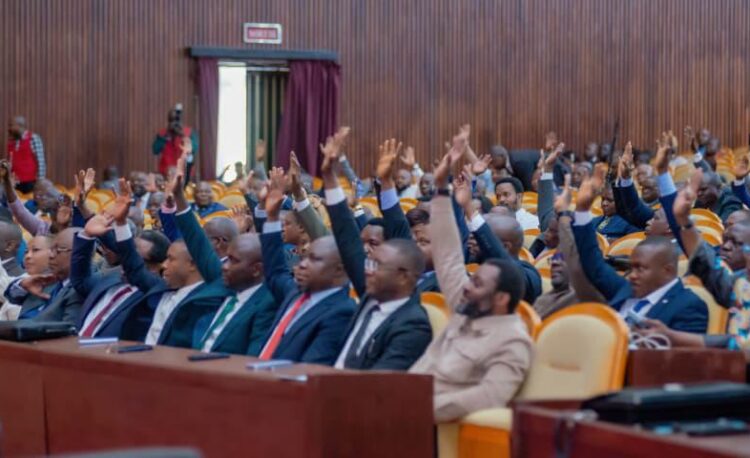
In his motion, MP Laddy Yangotikala accused Jacquemain Shabani of violating the free administration of the provinces, obstructing parliamentary oversight, undermining the separation of powers, abusing authority for partisan purposes, and being responsible for persistent insecurity; yet within a single day, the situation took a dramatic turn in several respects.
First, in the morning, the initiator of the motion, MP Laddy Yangotikala, resigned from his post as interim president of the ‘Action Des Volontaires Pour Le Relève Patriotique’ party.
“I wish to inform the national and international community that I am stepping down from my role as interim president of my political party, AVRP, in order to calmly defend the security of the population through my motion against the Minister of the Interior. I wish to spare others the pressures I am already facing,” he wrote on his X account before deleting the tweet that evening.
It should be noted that the announcement of this motion of no confidence was welcomed by the majority of the population of Kinshasa, who are victims of growing insecurity marked by armed robberies, kidnappings, theft and urban banditry commonly known as ‘Kuluna’.
Subsequently, political parties began to put pressure on the MPs who had signed the motion to withdraw their support. The AFDC-A (Alliance of Democratic Forces of Congo and Allies) political party officially distanced itself from two of its national MPs on Tuesday 14 April 2026. The MPs in question are Cizungu Ntaboba Landry and Placide Wenda Mukagwa, accused of supporting a motion of no confidence in the National Assembly targeting the Deputy Prime Minister and Minister of the Interior, Jacquemain Shabani Lukoo.
Within the parliamentary group, the permanent secretary of the Union sacrée, the platform of President Félix Tshisekedi, issued a message to MPs calling for an end to their actions against the second highest-ranking figure in the Congolese government.
“We are members of the majority and have all signed the Pledge of Commitment to the Sacred Union of the Nation (USN) and the Pledge of Loyalty to His Excellency Félix-Antoine Tshisekedi Tshilombo, President of the Republic, Head of State and Highest Political Authority. “Taking such a grave decision concerning the Deputy Prime Minister for the Interior, who is the number two in the USN government, without consulting the platform is totally unacceptable,” he wrote.
Several figures in public life in the DRC have condemned the executive’s encroachments on parliament. Some analysts suggest that the initiator may have come under pressure from his political family, of which Minister Shabani is also a member.
“Do you realize the extent to which our society has deteriorated? Even MPs are no longer free to carry out their duties. If even MPs are no longer free, then who in this country still is?” asks Lionel Basila, a political analyst.
Written by Akilimali Chomachoma