Environmental civil society organizations in Ituri and North Kivu have expressed their deep concern following the opening, on 8 May in Kampala, of the session of the DRC-Uganda Joint Standing Committee.
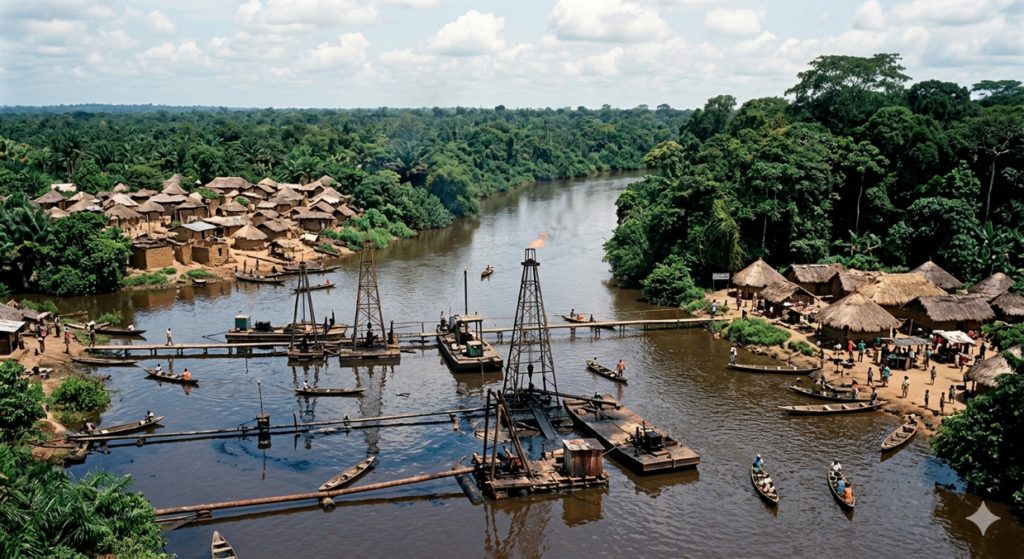
The presence of the Congolese Minister for Hydrocarbons within the official delegation, as well as the discussions currently underway regarding six new bilateral agreements, raise fears of an acceleration in oil cooperation between the two countries without due consideration for the environmental and social risks to communities living along Lake Albert, Lake Edward and the Semliki River.
“The Semliki River, as a major tributary of the White Nile, is also a vital hydrological feature for several states in the region (Uganda, DRC, Sudan, South Sudan, Egypt, Ethiopia, etc.),” the statement notes.
Environmental civil society organizations in Ituri and North Kivu note that no independent, cross-border and public impact assessment of the Tilenga, Kingfisher and EACOP projects has been carried out.
“The Tilenga, Kingfisher and EACOP oil projects, being developed on the Ugandan side, are already raising serious concerns regarding their impacts on the shared ecosystems of the Albertine Graben,” the source states.
The coalition of environmental civil society organizations in Ituri and North Kivu also condemns the lack of information and consultation with the Congolese communities affected. To date, the communities living along Lake Albert and the Semliki River have not been consulted in accordance with the principles of free, prior and informed consent.
No independent, publicly available cross-border environmental and social impact assessment has been brought to the attention of the affected communities.
“Such a move would risk a tangible acceleration of oil exploitation in eastern DRC, with major consequences for fishing communities, water resources and the ecosystems of the Albertine Rift,” added the “Notre Terre Sans Pétrole” coalition in another statement.
In response to this failure, civil society organizations have already brought a case before the East African Court of Justice (EACJ), calling on the governments concerned to act.
In this context, the coalition of environmental civil society organizations from Ituri and North Kivu solemnly calls on the Government of the Democratic Republic of the Congo to suspend the signing of any new agreements in the hydrocarbons sector concerning the Lake Albert and Semliki areas, pending the completion and publication of an independent environmental and social audit of the Tilenga, Kingfisher and EACOP projects, assessing their cumulative impacts on shared ecosystems.
It also calls for a meaningful consultation with local communities to be organized as soon as possible, in order to guarantee their right to information and their participation in decisions that directly affect their living conditions.
Furthermore, the coalition of environmental civil society organizations in Ituri and North Kivu urges the Congolese authorities to support the legal action brought before the EACJ, with a view to assessing the current state of measures to protect water resources, aquatic biodiversity and the livelihoods of the people of Ituri and North Kivu.
Lake Albert, Lake Edward and the Semliki River are not dumping grounds for the fossil fuel industry. The Congolese people cannot be treated as a bargaining chip in bilateral negotiations conducted without transparency or consultation with the communities concerned. Lakes Albert and Edward, the Semliki River and their fish stocks are common goods, the preservation of which is the responsibility of all riparian states.
NTSP and Stop EACOP also condemn the lack of meaningful consultation with the affected communities.
“The Congolese and Ugandan governments cannot proceed with cross-border oil projects without transparency, without involving the communities concerned and without clear guarantees for the protection of shared ecosystems,” says UWECHI MOISE, provincial president of the Federation of Lake Albert Fishermen’s Committees and Associations (FECOPELA) and a member of the NTSP coalition.
“Ugandan fishermen working on Lake Albert are already suffering the impacts of oil activities, notably the pollution of the lagoons connected to the lake and poor waste management affecting the waters. These consequences are already visible due to the Tilenga and Kingfisher oil projects in Uganda. Fish sellers, particularly women, are also suffering from the massive influx of oil sector workers into the Lake Albert region. Many are gradually being excluded from their economic activities.
“Oil has become a curse for fishing communities, and we do not want our governments to further expand oil exploration activities on the lake,” says Siifa Mwesige, a fishmonger working on Lake Albert in Uganda.
“What is being negotiated today risks further trapping the region in a model where wealth benefits oil companies and political elites, whilst communities suffer displacement, pollution and the loss of their livelihoods. The governments of Uganda and the DRC cannot hide these discussions from the public,” says Zaki Mamdoo, coordinator of the StopEACOP coalition.
Sources: Actualite.cd and press releases from NTSP & StopEACOP
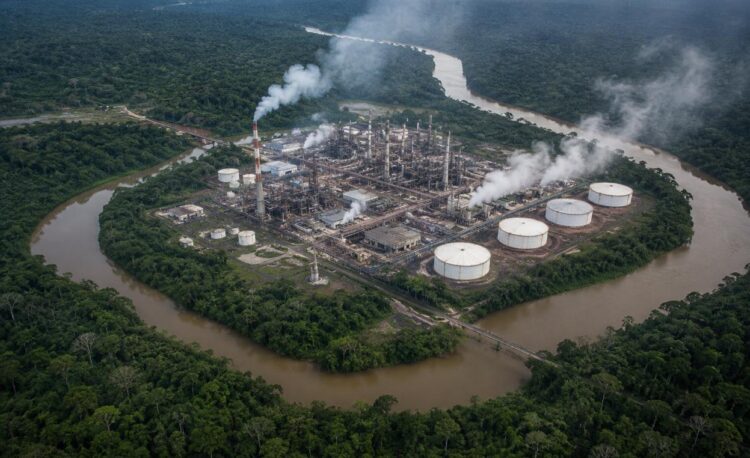
Note: second picture is Gemini generated