Situated on the northern shore of Lake Edward, at the mouth of the Semuliki River, Ishango Beach – in the northern sector of Virunga National Park, in the Semuliki Valley to the east of Beni territory in the east of the DRC – faces serious environmental threats. Once vast and stable, this iconic beach is now suffering from accelerated lateral erosion and a gradual shift in the river’s course – direct consequences of the severe degradation of the riverbanks, according to reports. Degradation of beaches and sandbanks. Increased erosion of exposed beaches. Compaction of the sand due to human activities.
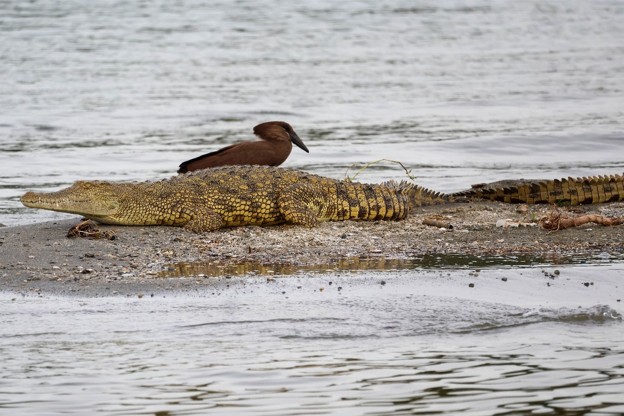
Ishango’s sandy beach is also recognized as a stopover and resting place for migratory birds, as well as for numerous species of birds, elephants, hippos and amphibians in Virunga National Park. Its sandy, open riverbanks play a vital role in regulating the climate, according to scientists. It was here that, in 1950, prehistoric human bones were discovered, commonly known as the Ishango Man – the famous Ishango Bone, an artefact dating back more than 20,000 years and considered one of the oldest known examples of mathematical reasoning to date.
As a result, this site within Virunga National Park attracts researchers, historians and tourists, all fascinated by the scientific and symbolic significance of these discoveries for the history of humankind. However, environmental activists and conservationists are now warning of a growing threat: the erosion of Ishango Beach is accelerating. This phenomenon, exacerbated by climate change and certain human pressures, risks causing the gradual disappearance of this sandy strip that protects the site. Ultimately, the very integrity of this historical heritage could be compromised. Some scientists believe that this situation is due to pollution in Lake Edward, from which the Semuliki River rises. This degradation is thus contributing to rising water levels.
These natural processes, further exacerbated by human activities in the Semuliki Valley – located in the northern sector of Virunga National Park – are, according to some scientists, exposing the Ishango wetland ecosystem to increased risks of flooding and desiccation. The Semuliki River, which links Lake Edward to Lake Albert, is gradually encroaching on certain sections of the shore.
Local sources, particularly in Kyavinyonge, a fishing enclave situated nearly 8 kilometers from Ishango, point out that uncontrolled deforestation and overgrazing are among the main contributing factors. Environmental campaigners fear that accelerated silting and sedimentation will transform certain areas of light-colored sand into marshy areas, which are less favorable to biodiversity, particularly for migratory species.
The gradual disappearance of Ishango Beach would thus pose a twofold challenge: the loss of a key ecosystem for the biodiversity of Lake Edward and the degradation of a world-renowned heritage site. For more than two months, the Virunga National Park authorities have been carrying out an operation to combat illegal logging, particularly in the Semuliki Valley, an area where human activities have already reached alarming levels. “We have been carrying out this operation for about ten days. More than 60 lorries have been seized in and around the Semuliki Valley. Sixty lorries full of planks and charcoal: just imagine what that means in terms of felled trees,” says Bienvenue Bwenge, communications officer for Virunga National Park, before adding.
“We are in the Semuliki catchment area to deter large-scale destructive activities in Virunga National Park, in particular charcoal production and the felling of trees for timber. These are illegal activities carried out within the Park, acts that are strictly prohibited by law. Some of these practices are irreversible and have considerable negative impacts on the environment.”
The same source explains that this ongoing operation is therefore aimed at deterring these illegal activities, particularly deforestation. “We are targeting those who engage in charcoal production and the manufacture of planks from trees within the Park, and we want to put a stop to this. These are trees, some of which are over a hundred years old. Once they are felled today, there is no going back. The Congolese Institute for Nature Conservation, supported by the provincial security services, is carrying out operations on the ground to deter these environmental criminals,” he adds.
Scientists believe that efforts to combat deforestation in this valley are helping to preserve the environment around Ishango Beach. However, he calls for action to tackle water pollution in Lake Edward in order to mitigate this threat. He advocates for scientific monitoring and the involvement of local communities in protecting this ecosystem. He emphasizes the need for strict protection of Ishango’s riverbanks and sensitive areas.
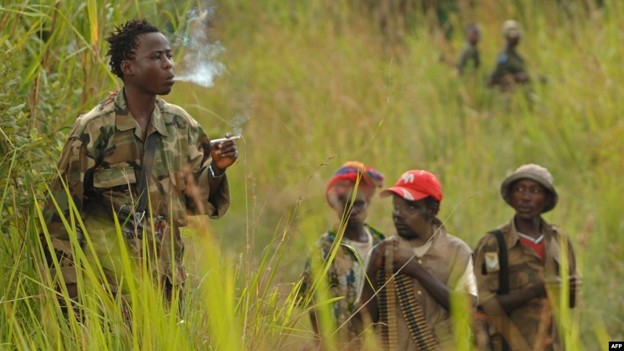
The Allied Democratic Forces (ADF) are facing an unprecedented financial crisis. Active in the territories of Beni and Lubero (North Kivu), as well as in Irumu and Mambasa (Ituri), this armed group of Ugandan origin is experiencing a drastic decline in its external funding. This is the alarming conclusion drawn by the latest report from the United Nations Group of Experts.
The fall in the ADF’s external revenue stems directly from international counter-terrorism pressure. Targeted operations carried out in Somalia against Islamic State (IS), the ADF’s main sponsor, have severely disrupted its funding networks.
Deprived of their usual sources of funding, ADF terrorists have had to completely overhaul their economic survival strategy in order to maintain their operations in the east of the DRC. To make up for this shortfall, the movement has resorted to the ruthless exploitation of civilian populations through various illicit practices.
“In most cases, these taxes were collected by force. In a propaganda video, Bonge la Chuma, a member of the ADF, stated that members of the public must either convert to Islam or pay taxes, on pain of being killed or expelled from areas controlled by the group,” the document states.
Traders. Looting
In the territories of Lubero, Irumu and Mambasa, extortion has become highly systematized. The rebels have introduced compulsory receipts known as ‘Dubius’ tokens, which serve as travel permits, whilst ‘Amani na Upendo’ ’ (Peace and Love) or ‘Délivrance Cacao’ serve as proof that local producers have paid their taxes.
Forced Islamization as a weapon of extortion
Religious ideology is now being used as a tool for economic blackmail. The UN report cites a propaganda video by Bonge la Chuma, an ADF commander. In it, he issues a clear ultimatum to residents of rebel-controlled areas: convert to Islam or pay taxes, on pain of execution or expulsion. For impoverished farmers, forced conversion remains the only way to avoid death.
Kidnappings for ransom have become a critical source of income. Earlier this year, along the strategic Komanda–Luna road and near Mamove, the ADF carried out a spate of mass kidnappings. The UN report confirms that captured civilians unable to pay the sums demanded were systematically executed. In the eyes of experts, this extremely violent escalation illustrates the financial distress of a group that is on its last legs, but which remains an extremely harmful threat to the region.
The latest report by UN experts reveals a drastic decline in external funding for the Islamist terrorists of the Allied Democratic Forces (ADF). This drying up of resources follows sustained counter-terrorism pressure in Somalia on IS, the group’s main sponsor. In the face of this widespread economic stranglehold, civil society in the Mambasa territory is urging the Congolese government to step up military pressure to permanently cut off these criminals’ local sources of income.
For local humanitarian actors, the current situation represents a major strategic turning point. Speaking to our newsroom on Friday 10 July 2026, Rams Malikidogo, a human rights defender and member of local civil society, believes that the Democratic Republic of the Congo must seize this opportunity to deal the terrorist group a fatal blow.
“The pressure on terrorists in Somalia is a godsend for us here in the DRC,” he explains. “We must take advantage of this situation to exert military pressure on these terrorists. Strangling them economically could lead to their neutralization. This is a golden opportunity for our government to put an end to this phenomenon of cruel and violent attacks against our people.”
Forced taxes and compulsory Islamization
Deprived of oil and external funding, the ADF has stepped up the ruthless exploitation of local resources in the territories of Lubero, Irumu and Mambasa. The UN report details the establishment of an institutionalized racketeering system involving compulsory tokens known as ‘Dubius’. The agricultural sector, particularly the cocoa industry, is one of the terrorists’ main targets. Producers are subjected to forced taxes known as ‘Amani na Upendo’ (Peace and Love) or ‘Délivrance Cacao’.
The document draws in particular on a propaganda video by Bonge la Chuma, a leading figure in the ADF, who issues a clear ultimatum to local communities: convert to Islam, pay the authorization tax, or face death and expulsion.
The grim industry of kidnappings for ransom
To make up for their financial losses, the rebels have also developed an economy of terror based on mass abductions. The experts’ report documents several waves of mass abductions of civilians along the Komanda-Luna route and near Mamove. Victims are targeted on the basis of their presumed financial means. During their captivity, they are subjected to forced labor before being released in exchange for ransoms ranging from 2,000 to 5,000 US dollars.
For families unable to raise such sums, the outcome is tragic: the hostages are systematically executed. Civil society is now calling on Kinshasa to align its strategy with international efforts to shut down the ADF’s war economy and permanently liberate the battered populations of North Kivu and Ituri.
In the east of the Democratic Republic of the Congo, efforts to combat the resurgence of Ebola are intensifying. Faced with the risk of the disease spreading, several local organizations are now using places of worship to raise awareness among worshippers about preventive measures and to strengthen community engagement.
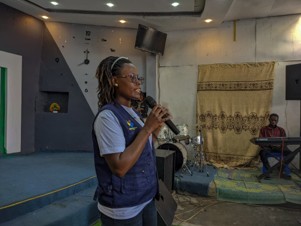
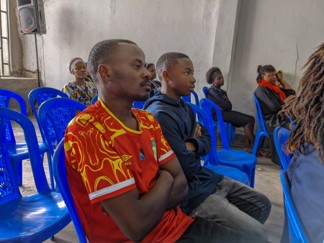
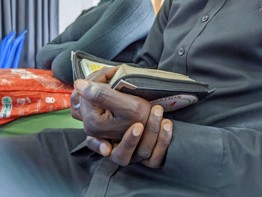
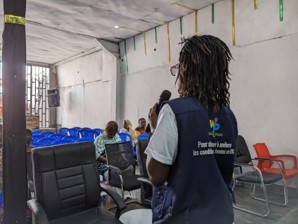
It is 7.30 am on Tuesday 7 July 2026, in the Mabanga-Nord neighborhood, in the Karisimbi commune. Songs of praise and thanksgiving ring out in the church of the International Ministry of the Conquerors, situated on Osso II Avenue. As the congregation prepares to listen to the morning sermon, the worship leader briefly pauses his message to hand over to an awareness-raising team.
“We are following reports of the resurgence of Ebola with concern. I ask you to pay close attention to the messages that will be shared with you today,” he tells the congregation.
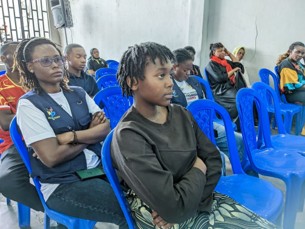
Among the speakers is Aurélie Maliro, a member of the organization Woman Power DRC. Speaking to several dozen worshippers, she emphasizes that Ebola is an infectious disease and not a supernatural phenomenon.
“We can continue to pray whilst observing preventive measures. Ebola exists. It is neither a demon nor witchcraft. Churches bring large numbers of people together; it is therefore essential to apply preventive measures there,” she explains.
For this humanitarian worker, religious leaders play a key role in the fight against the epidemic. Their influence within communities can help to combat rumors, restore trust in health teams and encourage the adoption of preventive behaviors.
“We must follow the recommendations of healthcare workers, avoid physical contact, wash our hands regularly and seek immediate medical attention at a health center if we develop any suspicious symptoms. Together, we can slow the spread of Ebola,” she insists.
Following the discussions, theory gives way to practice. The facilitators demonstrate to the congregation the various steps involved in effective handwashing, which is considered one of the most important measures for limiting the transmission of several infectious diseases.
“We will take this advice on board. We will always need your support to raise awareness further within our community,” says the preacher at the end of the session.
Aurélie Maliro also points out that, whilst we await fully validated treatments for the Bundibugyo strain, the speed of treatment remains crucial.
“Anyone showing suspicious symptoms must be referred to a healthcare facility without delay. The earlier the treatment, the greater the chances of survival,” she emphasizes.
Since the resurgence of Ebola virus disease in eastern DRC, several civil society organizations have been stepping up awareness campaigns in neighborhoods, schools and, more recently, churches. At the same time, the health authorities, with the support of their international partners, are continuing their efforts in epidemiological surveillance, contact tracing and patient care. Clinical trials of treatments for the Bundibugyo strain have also been launched to assess their effectiveness.
Experts believe that one of the main challenges remains the mistrust felt by some sections of the population towards the response teams, which complicates the rapid identification of cases and the tracing of contacts. In this context, the involvement of religious leaders is seen as a key factor in strengthening community adherence to public health measures.
A few weeks ago, Bishop Willy Ngumbi Ngengele of the Diocese of Goma also called on the faithful to observe protective measures and follow the recommendations of the health authorities in order to limit the spread of the disease.
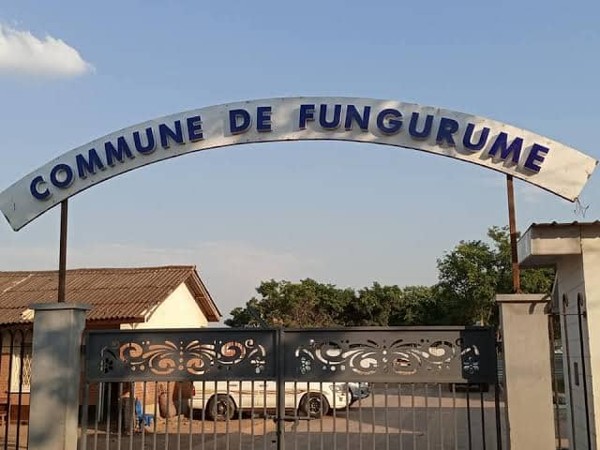
A new environmental incident is causing concern in Fungurume, in Lualaba province. Following the overturning on Wednesday of a lorry carrying acid, a significant fish kill has been observed in the Dipeta River, according to local civil society groups, who fear contamination of the water used by riverside communities.
The lorry, travelling from Lubumbashi towards Fungurume, overturned near the Tenke Fungurume Mining (TFM) base. A quantity of acid then spilled into the Dipeta River, causing several fish found floating on the water’s surface to die moments later.
For Gauthier Kavwamba, coordinator of the Fungurume Civil Society Consultative Forum, this incident has reignited concerns about the management of chemical transport in the region.
“We observed a significant fish kill in the Dipeta River following the acid spill. What worries us most is the recurrence of such incidents and the lack of sufficiently effective measures to protect communities,” he says.
Civil society believes that the Dipeta River is not an isolated case. It also cites similar incidents on other watercourses, notably the Kalweji River, near TFM’s 30K plant, and the Digulwe River.
Gauthier Kavwamba also criticizes what he sees as the lack of a sustainable response to support the communities affected by previous incidents.
“Whenever these accidents occur, the cases are dealt with in offices, but the riverside communities who bear the direct consequences are often left without a satisfactory response,” he laments.
Civil society organizations highlight in particular the case of the Kelangile River, where an acid spill in 2024, they claim, affected aquatic wildlife and the activities of market gardeners based along the river’s banks.
It is calling on the authorities and the companies concerned to take urgent action: to secure the affected areas, assess the environmental impacts, prevent any consumption of potentially contaminated water, and strengthen safety measures for the transport of chemicals.
Trump’s crackdown on illegal immigrants is impacting documented refugees and the Democratic Republic of Congo (DRC). The deportation of 15 Latin American migrants to the DRC marks the implementation of a controversial "third-country" deportation policy by the Trump administration1. This agreement, which involves sending migrants to a nation that is neither their country of origin nor the country they sought to enter, is driven by a complex web of deterrence strategies, geopolitical maneuvering, and economic incentives2.
The primary motivation for the United States is to end "illegal and mass immigration", bolstering border security through a hard-line approach. By sending deportees to far-flung locations like the DRC, South Sudan, or the Central African Republic, the administration aims to create a tangible form of deterrence for those planning to enter the U.S. illegally3. Furthermore, the US is emboldened to take this opportunity as it is circumventing legal protections. Many of these deportees, such as those from Colombia or Iran, have court-ordered protection against being returned to their home countries due to risks of torture or persecution45. Sending them to a third country allows the U.S. to remove them from American soil without technically violating the specific prohibition against repatriating them to their place of origin.
The Democratic Republic of Congo is complicit in furthering Trump’s agenda. The Congolese government’s motivations are largely transactional and diplomatic. While officials publicly state the deal aligns with their commitment to "human dignity" and "international solidarity," the underlying incentives are more practical6. First, the DRC is under diplomatic pressure from the US. President Félix Tshisekedi candidly admitted that he agreed to the deal "simply because it’s what the Americans wanted"7. Maintaining a strong relationship with Washington is vital for the DRC, especially regarding security assistance and the mediation of its conflict with Rwanda-backed rebels (M23). The DRC has framed the stay of these migrants as "temporary," issuing short-stay tourist visas that do not allow the deportees to work8. This allows the government to claim it is not facilitating a permanent "outsourcing" of U.S. migration policy.
In comparison, Burkina Faso's military government has refused to take in deportees from the US. This rift made Washington suspend issuing visas to the African nation, placing pressure on their divergence of complicity. The foreign affairs minister Karamoko Jean-Marie Traoré viewed the decision as a coercive exchange, even referring to the event as "blackmail"9. Unlike Congo, Burkina Faso retains its sovereignty, thus illustrating a stark image of standing up to Western neo-imperial efforts, and choosing instead to champion the values of pan-Africanism and nationalism10.
Despite the strategic motivations of the two governments, the reality for the deportees is one of "conflict, uncertainty and fear". Many of the 15 migrants, mostly from Colombia, Peru, and Ecuador, arrived in Kinshasa shackled at the hands and feet11, unaware of their destination until they were in the air. Critics within the DRC have denounced the policy, calling it a "dumping ground"12for U.S. security/migration policies and questioning why a nation already struggling with seven million internally displaced persons would accept foreign deportees. Ultimately, the deal reflects a shift toward migration as a commodity, where the U.S. and other Western nations trade financial aid and diplomatic favors for the right to house, and process asylum seekers beyond U.S borders13.
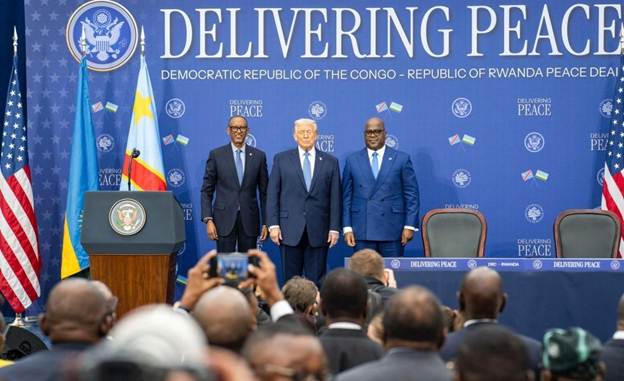
In 2025, the Rwandan funded rebel militia M23 violently charged into Goma and Bukavu in the Eastern Democratic Republic of the Congo, taking the city over from the government, controlling access to the city. The current conflict between Congo (DRC) and Rwanda started in 2021 although there has been tension between these two countries for over 30 years. This tension is illustrated by the conflict between the Rwandan-backed militia M23 and the Congolese armed forces (FARDC). This is a fight for the world’s richest critical mineral reserves, and longstanding ethnic political tensions[1]. In June of 2025 both Congo (DRC) and Rwanda met at the White House to sign an official peace deal entitled “The Washington Accords” (later reaffirmed in December) to end the violence between the two African Nations. The finalization of a peace agreement was publicized across the globe with Presidents Félix Tshisekedi of the DRC and Paul Kagame of Rwanda seemingly legitimizing this diplomatic effort, in addition to both praising Trump. Although, to what extent is this accord going to be effective at preventing conflict, especially since Rwanda and the DRC possess a history of failed diplomatic initiatives (UN Security Council Resolution 2773).
This conflict can be understood as a war for critical minerals. The critical minerals found in the Democratic Republic of Congo are among the most sought-after raw materials due to the vital role they play in the development of modern technologies. For example, lithium is required for electric vehicles and energy storage systems, making it essential for the global transition to green energy. Furthermore, critical minerals are used in the production of permanent magnets, which are necessary for many defense technologies, including fighter jets, lasers, and warships. Overall, critical minerals have significant implications for national security, economic security, and energy security. For the United States, dependence on foreign sources of critical minerals can disrupt defense manufacturing, weaken industrial competitiveness, and slow the transition to clean energy technologies such as electric vehicles, batteries, and renewable power systems. This makes them extremely lucrative and of extreme importance.
The objective of the Washington Accords is to promote peace and prosperity between the Democratic Republic of Congo and Rwanda. Both countries under the supervision of the United States have committed to peaceful relations, respect for sovereignty, as well as cooperation to ensure the safe return of displaced persons and refugees[2]. President Trump claimed “We’re succeeding where so many others have failed and this has become the eighth war that we’ve ended in less than one year”[3]. Furthermore, the agreement highlights economic integration between both countries. Both countries signed onto the Regional Economic Integration Framework (REIF), which attempts to link the nations economies which would be mutually beneficial, and furthermore deter conflict. For instance, both countries have committed to jointly constructing energy power projects such as the Ruizi III hydropower plant and methane gas extraction from lake Kivu to increase electricity access for families and businesses. In addition, the DRC and Rwanda are seeking to collaborate on tourism; they intend to position the region as a unified, world-class destination for ecotourism. They plan to mutually market Rwanda’s Volcanoes National Park and the DRC’s Virunga National Park as a single, cohesive destination with the assistance of joint visas, and infrastructure. This increased interconnectivity is mutually beneficial for the regional economy, and therefore offers a form of deterrence from conflict.
In contrast, this perceived successful diplomatic effort (Washington Accords) registers as an illusion when encountering the reality on the ground. The Washington Accords means nothing to the victims, survivors, and those engaged in the conflict as there is “currently no ceasefire in place, and the M23 rebellion continues to expand and consolidate its control”[4]. Furthermore, doctors near conflict zones are overwhelmed having to perform back to back surgeries on soldiers, patriotic militias (Wazalendo fighters), and civilians who have been wounded in the militaristic clashes[5]. President Trump's assertion that his administration ended the war and secured peace in the region is contradicted by conditions on the ground.
Moreover, the Washington Accords represent a departure from previous diplomatic frameworks, undermining the effectiveness of multilateral institutions such as the UN.. This is represented by a significant shift in the diplomatic narrative of the conflict compared to the UN Security Council’s Resolution (UNSC)[6], moving away from the language of international condemnation and towards a narrative of bilateral partnership and economic integration. To illustrate this point, within the UNSC's Resolution the Security Council explicitly identifies the Rwandan Defense Forces(RDF) as an active participant in the conflict. Condemning the aggressors (RDF) for "direct support and participation" in the capture of major Congolese cities like Goma and Bukavu. The UNSC Resolution frames the situation as a violation of the sovereignty and territorial integrity of the DRC. In contrast, the Washington Accords represents a strong relationship between Presidents Tshisekedi and Kagame centered on "mutual respect" and "cooperation", undermining multilateral institutions.
The reality is that the United States has secured its supply chain of critical minerals via the bilateral strategic partnership agreement (between the US and the DRC). This agreement was established beyond the Washington Accords yet plays an arguably more important role in terms of its implications for the DRC. In essence, the strategic partnership is meant to ensure secure long term mineral supply security in addition to combating China’s dominance over the critical mineral supply chain. To illustrate this argument, Article II section 8 ( Washington Accords) states the DRC must “facilitate stable, predictable, long-term access for U.S. persons and aligned persons to critical minerals from the Democratic Republic of the Congo to support safety, security, and prosperity for both the United States of America and the Democratic Republic of the Congo”[7]. On top of this, the US will be the majority owner in all the projects that are a part of the agreement. This directly illustrates that the U.S. is locking in long-term supply security where they will maintain a predictable flow of raw ore to continue the production of essential technologies.
Furthermore, Article XI section 1 (Washington Accords) states “the Parties recognize the strategic nature of the Sakania-Lobito Corridor project and that it serves as a key route for the transport and export of copper, cobalt, zinc, and other critical minerals, as well as other commercial goods, from the Democratic Republic of the Congo to the United States of America”[8]. This core infrastructure strategy involved the United States pledging $4 billion under Joe Biden’s administration in order to reduce reliance on the current China-dominated supply chain, working to create a western alternative. The Sakania-Lobito Corridor is a railway project traversing rich mining regions across Angola, the Democratic Republic of Congo, and Zambia. Minerals will be exported out from the Port of Lobito on the Atlantic coast, which will increase the speed at which the US and European markets access critical minerals. This pledge reflects the United States’ heightened focus on securing supply chains for critical minerals, resources that play a pivotal role in the development of technologies from electric vehicles to solar panels to defense systems. It gives the U.S. preferential access to mineral assets over China.
At the re-affirmation of the peace-deal press conference Donald Trump makes it clear that the US’s incentive to get involved in the region isn’t solely about preventing human rights violations but is instead foundationally economic. The DRC is currently sitting on $25 trillion in untapped mineral reserves[9]. Trump wasn’t shy about expressing the deal his administration worked out to access those reserves: “we're going to take out the rare earth, take out some of the assets, and pay, [...] everybody's going to make a lot of money.[10]" The presence of economic deals coupled alongside humanitarian policy represents a blurry set of priorities for the Trump administration. Furthermore, analysts are sceptical that the Washington Accords will lead to lasting peace. A Congolese researcher with the South Africa-based Institute for Security Studies think-tank, Bram Verelst claimed "the signing ceremony is unlikely to alter this (humanitarian) situation, though there is some small hope it could increase accountability on Congolese and Rwandan leaders to honour their commitments”[11]. This expert account represents the perceived weak effectiveness of the Washington Accords as a solution to the humanitarian violations in the great lakes region.
In essence, the Trump administration's priorities are represented through the policies being enforced. The failure to tangibly address the atrocities in Eastern Congo expose the Washington Accords summits as deceptive, presented as a humanitarian achievement while ultimately serving to secure a geostrategic critical mineral supply chain. The regional conflict persists till the present between M23 and Congolese national forces. This does not render diplomacy irrelevant; rather, it raises critical questions about whose interests are truly being served and whether sustainable peace can emerge from international intervention that fails to confront the underlying causes of the conflict. In this light, the Washington Accords risk being remembered less as a genuine breakthrough and more as a symbolic gesture. This treaty (Washington Accords) highlights the complexities of modern geopolitics, where humanitarian goals and economic ambitions are often deeply intertwined.
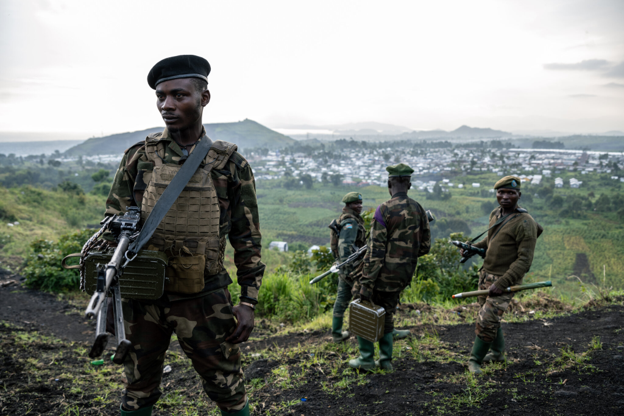
During the night of Wednesday, July 15 to Thursday, July 16, 2026, the rural municipality of Mangina, located in Beni Territory, North Kivu Province, was once again targeted in an attack by the Islamist Allied Democratic Forces (ADF).
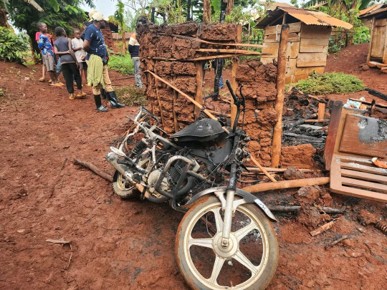
According to local sources, the attackers raided the Makukulu neighborhood, specifically the Ntobili block. They went from house to house, killing at least 10 civilians and setting several homes on fire before fleeing the area.
"They killed at least 10 people and injured several others. They also burned down houses before leaving," said a resident of Mangina.
The mayor of the municipality, Nicolas Kikuku, confirmed the incident. He said the attackers were eventually repelled following the rapid intervention of the Armed Forces of the Democratic Republic of the Congo (FARDC).
The tragedy comes just one day after another attack in the same municipality that claimed the lives of four people. The local authority has called on residents to remain highly vigilant to protect themselves from these repeated attacks.
For its part, civil society has condemned what it describes as the negligence of the security services. It regrets the lack of an effective response despite prior warnings from residents about the presence of armed men. In light of the situation, civil society is calling for stronger protection measures and urging the army to launch offensives to permanently neutralize the attackers.
The government of the Democratic Republic of the Congo adopted the country's first National Forest Policy 2025–2035 during the Cabinet meeting held on Friday, July 10. According to the official report of the meeting, this reform aims to modernize governance in the forestry sector and promote the sustainable management of natural resources. It is the result of an extensive consultation process involving public administrations, civil society organizations, representatives of local communities and Indigenous Peoples, as well as other stakeholders.
According to the Ministry of the Environment, the policy responds to the need to better structure a sector that is strategic to the national economy while incorporating biodiversity conservation and climate change mitigation objectives. "This policy is built around several strategic pillars, including the sustainable and integrated management of forest resources, strengthened governance, the promotion of the forest economy, the protection of the rights of local communities and Indigenous Peoples, and the enhancement of ecosystem services, particularly forest carbon," the statement said.
The forest policy also provides for the decentralization of forest management by giving greater responsibility to decentralized territorial entities. It also highlights several major challenges, including deforestation, illegal logging, and increasing population pressure.
Environmental advocates have welcomed the adoption of the policy, describing it as an important step forward for forest governance in the DRC. However, they stress that its effectiveness will depend on its actual implementation, including the meaningful participation of local communities and Indigenous Peoples in decision-making processes and in the sharing of benefits derived from forest resources.
"The legal framework and institutional mechanisms are sound, but local communities now want to see tangible impacts and concrete actions on the ground that improve their living conditions," said Crispin Ngakani.
This view is consistent with the findings of a study published in June 2026 in the International Journal of Scientific Research and Innovation (IRSI Journal). According to the study, the sustainable management of the Congo Basin forests requires stronger governance and transparency, greater involvement of local communities, the development of a green economy based on ecotourism and non-timber forest products, the protection of biodiversity through protected areas and ecological corridors, and increased investment in scientific research and capacity building.
Victoire Katembo Mbuto
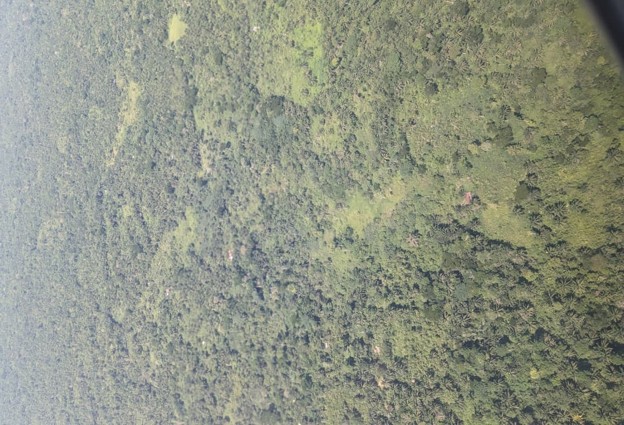
Caption: Sky view of the forest in Upemba park. Photo by Akilimali Chomachoma
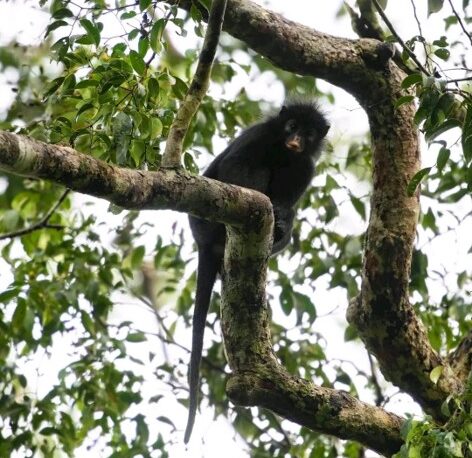
A study published on 15 July 2026 in the scientific journal PLOS ONE officially describes a new species of colobus monkey, known locally as the Likweli (Colobus congoensis), in Lomami National Park, in the Democratic Republic of the Congo.
According to the authors, this discovery is the result of several years of research carried out by a consortium of Congolese and international scientists. To confirm that this was a distinct species, the researchers combined genetic analyses (DNA), morphological comparisons (size, coat, skull and dentition), analyses of vocalizations and field observations. The results show that the Likweli exhibits characteristics sufficiently different from other African colobus monkeys to be recognized as a distinct species in its own right.
‘We describe and name a new species of African monkey, Colobus congoensis sp. nov. (Primates, Cercopithecidae), from the region between the Lomami and Congo (Lualaba) rivers, in the central-eastern part of the Democratic Republic of the Congo (DRC).
Colobus congoensis is a rare and elusive monkey, about which little is yet known, even amongst some local communities living near its habitat. Some of these communities, however, use the local name ‘Likweli’ to refer to this species. Between 2018 and 2022, researchers made 114 field observations across an estimated range of around 1,700 km². The study also indicates that communities living around Lomami National Park were already familiar with this monkey under the name ‘Likweli’, but that its scientific status could only be confirmed following these in-depth analyses. ‘The first sightings date back to 2007–2008, before field missions and further analyses made it possible to validate its official description,’ the study notes.
The researchers estimate that the Likweli occupies a range of only around 1,700 km² in and around Lomami National Park. Between 2018 and 2022, they recorded only 114 sightings, which highlights the species’ rarity and restricted distribution. The authors warn of the threats already facing this primate, notably hunting and habitat degradation. They recommend that it be listed as ‘Endangered’ on the International Union for Conservation of Nature (IUCN) Red List. According to them, this discovery highlights the still little-known biodiversity of the Congo Basin and underlines the importance of continuing scientific research and conservation efforts in this region.
In a press release issued following the publication of the study, Lomami National Park welcomed this discovery, which it regards as a major step forward in our understanding of Congolese biodiversity.
For Mardoché Bisimwa Koko, technical director of the research and biomonitoring program at Lomami National Park, the identification of the Likweli reinforces the need to step up conservation efforts.
“Lomami National Park already provides a protective haven for many species. But because the Likweli is so rare and so localized, conservationists must step up their targeted efforts. We will step up patrols and put in place specific monitoring on the right bank and throughout its entire range,” he said.
According to him, this discovery also demonstrates the exceptional scientific potential of the Congolese forests.
“Two decades ago, these deep-green forests appeared almost unexplored on Google Earth. The Likweli is living proof that the last wild areas of the Democratic Republic of the Congo still harbor incredible secrets just waiting to be discovered,” he enthuses.