Rutshuru Fishing Activities Suspended in Vitshumbi and Nyakakoma Due to the Ebola Outbreak

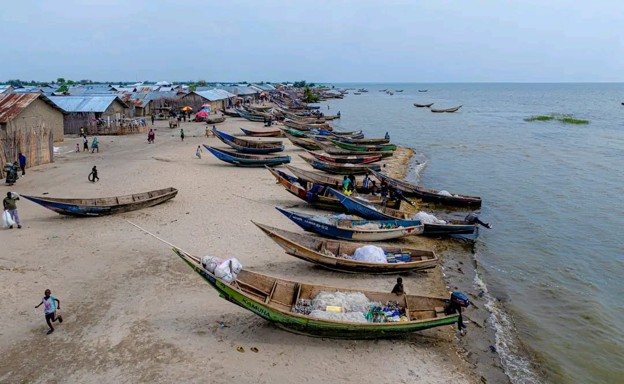
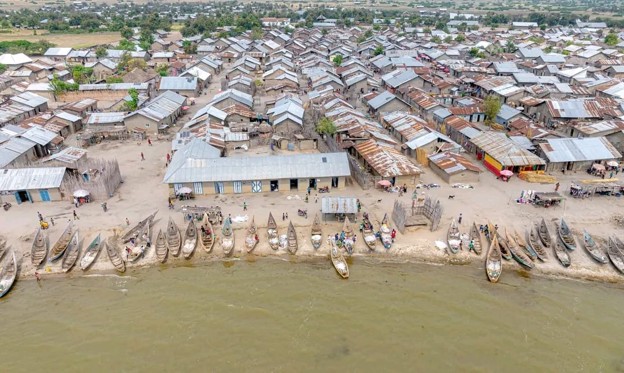
The administrator of the Rutshuru territory, which is under the control of the AFC-M23, Éphrem Kabasha, announced the suspension of fishing activities in Vitshumbi and Nyakakoma, according to a statement released on Monday, October 5, 2026.

He also mentioned the suspension of traffic between these two fishing areas and Kiwanja, as well as on several major roads, notably Nyakakoma-Ishasha, Kanyabayonga-Kiwanja, and Kanyabayonga-Kikuku. He cited “preventive measures,” without providing further details on the reasons or the duration of this measure.

“Fishing activities in Vitshumbi and Nyakakoma have been suspended. No canoes are permitted to navigate Lake Edward. No motorcycles or vehicles are permitted to leave Vitshumbi or Nyakakoma toward Kiwanja or Rutshuru-Center,” the statement said.

“All canoes must return immediately to their docking areas. All boat traffic on Lake Edward, as well as fishing activities, are suspended until further notice,” the statement said.

Concerns About Livelihoods

Local sources are already reporting outrage over this measure, which is being described as sudden. In particular, they fear its impact on economic activities and the livelihoods of communities that depend on fishing.

The fate of the drivers who typically transport fish products between Vitshumbi, Nyakakoma, and other consumer centers remains unclear at this time.

In Vitshumbi, as in Nyakakoma, fishing is an important source of income and food for the residents. This suspension comes at a time when trade between Vitshumbi and several villages on the northeastern shore of Lake Edward—notably Lunyasenge and Musenda—is already disrupted. These communities, controlled by the DRC’s armed forces and groups known as the Wazalendo, supply Vitshumbi with foodstuffs, among other things.

“We’re going to have trouble getting food. It’s a nightmare. Fishing, which was already producing very little, has been suspended. It’s complicated,” said a Vitshumbi resident who wished to remain anonymous.

This new restriction could thus affect fishermen, transporters, merchants, and households that depend on the movement of fishery products and foodstuffs between the various communities along the shores of Lake Edward.

A Concerning Health Situation

The suspension also comes amid a concerning health situation in the region.

According to reports by Média Congo, six new cases of Ebola virus disease (Bundibugyo strain) were officially confirmed on Friday, October 2, in the Kayna and Alimbongo health zones.

In Alimbongo, which had until then been spared from the outbreak, the first four cases were reported. In Kayna, two new cases were confirmed, just one week after the sole patient being treated there had recovered.

However, the statement from the territorial administrator does not specify whether the suspension of fishing activities and travel between Vitshumbi, Nyakakoma, and the other affected localities is related to this health situation.

Furthermore, the AFC-M23 leaders have not provided any additional details regarding the reasons for this measure or its duration.

By the editorial staff

Caption: Nyakakoma Fishing Village, photos by Virunga National Park
Kigonze: Security Incidents on the Rise for War-Displaced People Near Bunia

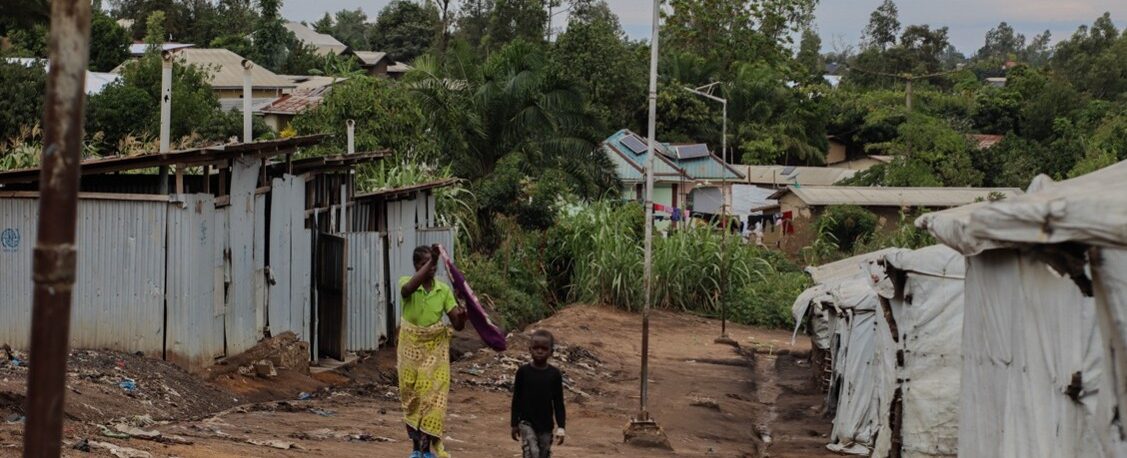
The situation is becoming a cause for concern at the Kigonze site in Bunia, Ituri Province, where nearly 19,000 displaced people are sheltered. Several families have begun to leave the site following security incidents reported throughout the month of September.

According to local sources, the army has repeatedly conducted sweeps of the site, apparently in search of weapons or military equipment associated with the CRP rebellion. During these operations, huts were reportedly set on fire. Feeling unsettled, several families are said to have left the site. Others are said to have returned directly to Djugu, their region of origin, despite the security concerns that had prompted them to seek refuge in Kigonze.

This situation is all the more concerning given that the Humanitarian Coordinator in the DRC, Damien Mama, has himself expressed his “deep concern” in a statement.

"The dispersal of families and restrictions on access risk complicating epidemiological surveillance and disease control. Every family that leaves the site without follow-up potentially becomes a link that slips through the cracks of public health monitoring," say health sources in the city of Bunia.

In light of the difficult conditions faced by many families at this site, the bishop of the Diocese of Bunia, Monsignor Dieudonné Uringi, is calling for solidarity with those affected by this situation.

In particular, he invites “people of good will to offer their support to displaced families, especially women and children, who are considered among the most vulnerable in this context,” he says. This appeal is directed both to the faithful of his diocese and to the entire Ituri community, at a time when the needs of these families continue to grow. 

A meeting was held on September 29 between the military governor of Ituri, Major General Gaby Kasongo, and leaders of the province’s main community organizations.

According to data cited in the press release, more than 1.1 million people are currently displaced in Ituri due to conflict and violence. Of these, more than 373,000 are living in displacement camps.

In the book *Kigonze: The Objectification of Humanity*, written by Professor Chelo Dhebbi, a faculty member and researcher at the Higher Pedagogical Institute of Bunia (ISP/Bunia), the author recounts the events that took place at the Kigonze displacement site. He condemns these operations, citing their human and economic consequences for a segment of the population already in a critical situation.

The Honorable Samy Ufoyrwoth Jakwong'a, president of the Ituri Provincial Assembly, bluntly addressed three situations he considers particularly concerning regarding the security operations being carried out at the Kigonze displacement site.

The elected official reiterated that “a site for displaced persons must remain a strictly civilian and humanitarian space. No combatants, weapons, ammunition, or military or criminal activities should find refuge or protection there.” He called on anyone carrying a weapon to “refrain from using displaced populations as cover, human shields, rear bases, or means of concealment.”

While acknowledging the state’s duty to seek out and neutralize infiltrated armed elements, he emphasizes a principle he considers fundamental: “The presumed or confirmed presence of a few armed individuals cannot turn the entire displaced population into suspects, nor justify their stigmatization, their equating with an armed group, or any form of collective punishment.”

Referring to the consequences of the operations carried out on the ground, he notes that “the available information points to families being scattered, shelters abandoned or destroyed, loss of property, and fires—the full circumstances and responsibilities for which still need to be clearly established,” and calls for “sufficiently detailed official information” as well as thorough investigations into allegations of looting.

Questions that await answers:

Will the army confirm that these lockdowns took place and explain their legal basis? What exactly was it seeking, and what conclusions has it drawn from the operation? Were the huts set on fire during these operations, and by whom? Where have the displaced families gone, and who is ensuring their protection and providing them with medical care? As long as these questions remain unanswered, they will continue to fuel controversy and fear.

Written by Akilimali Chomachoma in Bunia

DRC at the UN: Zénon Mukongo Condemns Rwandan Violations and Reaffirms the “Non-Negotiable” Nature of Territorial Integrity

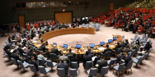
The Permanent Representative of the Democratic Republic of the Congo (DRC) to the United Nations, Zénon Mukongo Ngay, strongly appealed to the Security Council in light of the continuing deterioration of the security situation in the eastern part of the country.

In his address, the Congolese diplomat reaffirmed Kinshasa’s unwavering determination to defend its territorial integrity, while denouncing the “blatant bad faith” of the DRC’s aggressors, directly pointing to the role of Rwanda and the M23 rebel movement.

Ambassador Zénon Mukongo Ngay emphasized that the ongoing insecurity in eastern DRC requires immediate attention from the international community. “These security demands are vital and non-negotiable. No obstacle will deter us from them,” he insisted.

Although firmly committed to a multilateral approach to resolving this crisis, the DRC warns that it will continue to defend its inalienable right to peace and sovereignty by all means necessary.

The representative emphasized that his country scrupulously complies with the resolutions of the United Nations, the African Union, and the various peace agreements. Kinshasa actively supports the Doha process and is cooperating fully with the Joint Verification Mechanism Plus (JVM+), whose first verification missions have already been conducted in Minembwe (South Kivu) and Masisi (North Kivu).

To counter Kigali’s justifications—which regularly cite the threat posed by the Democratic Forces for the Liberation of Rwanda (FDLR) as a reason to intervene in Congolese territory—the ambassador highlighted the concrete progress made in the Washington process.

In addition to the voluntary repatriations already overseen by MONUSCO, on May 30, 2026, the Congolese government signed a historic protocol on the disarmament, demobilization, and cantonment of the FDLR-Foka.

Under this agreement, these combatants commit to laying down their arms at sites designated by Kinshasa before their permanent return to Rwanda.

This demonstration of good faith by the DRC, however, has been severely tested. Zénon Mukongo Ngay has formally denounced a TB2-type drone strike—attributed to the Rwandan army—that targeted a Congolese position in Pinga, killing 5 people and seriously wounding 8 others.

This flagrant violation of the ceasefire comes at the very moment when the DRC is planning an operation to neutralize the FDLR in the “ANI1” operational zone, in accordance with the commitments made in Washington. Kinshasa fears that this aggression will seriously jeopardize the implementation of these operations and demands that a prompt investigation be conducted by the relevant regional mechanisms.

“We condemn this violation of the ceasefire, our sovereignty, and our territorial integrity. It comes as the DRC is preparing the operation to neutralize the FDLR in the ANI1 zone in accordance with its commitments under the Washington Agreement, and risks compromising its implementation.”

The Congolese diplomat concluded his remarks by condemning Kigali’s lack of reciprocity. According to the DRC, the withdrawal of Rwandan forces and the lifting of their so-called “defensive measures” lack transparency regarding the number of troops and their exact locations.

The permanent representative reiterated the strict terms of Security Council Resolution 2773: the M23 must immediately cease hostilities and withdraw from areas under its control, while Rwanda must cease all support for this rebel group and unconditionally withdraw its troops from Congolese territory.

“However, the withdrawal of Rwandan forces and the lifting of their so-called defensive measures cannot be objectively assessed in terms of the exact number and location of such ‘defensive measures.’ Resolution 2773 is, however, unequivocal: The M23 must cease hostilities and withdraw to areas under its control, while Rwandan forces must cease all support for the M23 and withdraw unconditionally from Congolese territory. It is clear that Kigali has largely failed to fulfill these obligations.”

Written by Azarias Mokonzi

DRC: Ebola Response—Haut-Uele Governor Closes Strategic PK51 Mining Site

Faced with growing resistance encountered by health teams on the ground, the governor of Haut-Uele Province, Jean Bakomito Gambu, took a radical decision on Wednesday, September 30, 2026. Following a strategic crisis meeting held in Isiro, the provincial authority ordered the immediate closure of the PK51 mining site and strict restrictions on population movement in this highly volatile area in order to curb the spread of the Ebola virus disease.

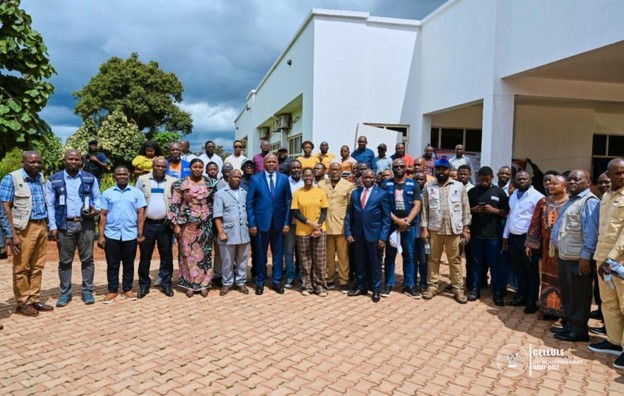
This high-level meeting brought together leaders of mining cooperatives, representatives of artisanal miners, and key international health partners, including the WHO, UNICEF, and Africa CDC.

Since the official declaration of the epidemic linked to the Bundibugyo strain, mining communities have posed the greatest challenge to authorities in the Democratic Republic of the Congo. Citing instances of open resistance toward medical response teams in the towns of Wamba and PK51, the governor banged his fist on the table.

The high mobility of artisanal miners and the denial of the disease within these communities are dangerously exacerbating the spread of the virus.

To break the chain of transmission, a strict measure limiting movement between PK51 and Sali Sali has been enacted.

The Security Committee Steps In:

To ensure strict compliance with these health guidelines, provincial authorities are no longer relying solely on public awareness campaigns. Jean Bakomito Gambu announced that the provincial security committee—comprising the Armed Forces (FARDC) and the National Police (PNC)—will be deployed on a large scale in the field to escort and protect healthcare workers as they carry out their duties.

Mining operators, who were previously reluctant, are now being held accountable for encouraging their employees to follow mandatory preventive measures, such as regular handwashing and the immediate reporting of suspected cases. The region’s economic and public health survival depends on it.

Written by Azarias Mokonzi

Beni: 12 Years of Forgotten Terrorist Massacres; the Population Demands Justice and Unity

Twelve years to the day after the first large-scale massacres, the Beni region, located in North Kivu province, is still healing its gaping wounds. On October 2, 2014, the town of Mukoko was plunged into horror, marking the beginning of the bloody rampage by terrorists from the Allied Democratic Forces (ADF).

Since that tragic date, the atrocities have never ceased: more than 15,000 civilians have lost their lives in the region. Despite the launch of multiple successive military operations, blood continues to flow in torrents. Beyond the mass killings, local populations endure unspeakable suffering daily, marked by systematic abductions, the burning of villages, and the mass displacement of families fleeing the insecurity.

In the face of this humanitarian crisis, the local population continues to demand concrete action to restore state authority.

A painful reality has now become clear: this tragedy seems to have been pushed to the sidelines of national and governmental attention, as the news is largely dominated by the crisis stemming from the aggression by the Alliance Fleuve Congo (AFC-M23), supported by Rwanda.

Faced with this apparent indifference, Christian Basikania, a community leader in the region, has vigorously appealed to the Congolese nation. For him, the duty to remember the victims and the establishment of a strong judicial system are the only paths to a favorable outcome.

“There is no peace without justice; there is no peace without reparations. For peace and social cohesion to return, the rule of law is indispensable,” he insisted.

The persistence of this violence for more than a decade has placed an overwhelming psychological and social burden on the youth of Beni, who are deprived of prospects for the future and lulled by the sound of gunfire.

To break this vicious cycle, the community leader believes it is imperative that internal barriers be torn down. He calls on the population to overcome internal divisions in order to defend the most fundamental of rights: the right to live in safety.

Christian Basikania urges opinion leaders, political figures, and citizens to come together in a sacred union, transcending political divides and partisan interests.

“It is time for us to stand united. We must put aside what divided us to guarantee, at the very least, the right to life. Let us set aside our political divisions and selfish interests and all cry out together: justice!” he declared solemnly.

On this October 2, 2026, the commemoration of the first waves of massacres is taking place in an atmosphere of solemn reflection and intense tension. For the victims’ families and the affected local communities, official recognition of the suffering endured, the identification of those responsible for these crimes, and the securing of reparations remain the top priorities.

While the memory of those who have disappeared remains deeply rooted in Beni’s collective memory, the message from the people remains unchanged and more urgent than ever: an immediate end to the violence and absolute respect for the right to life.

Written by Azarias Mokonzi

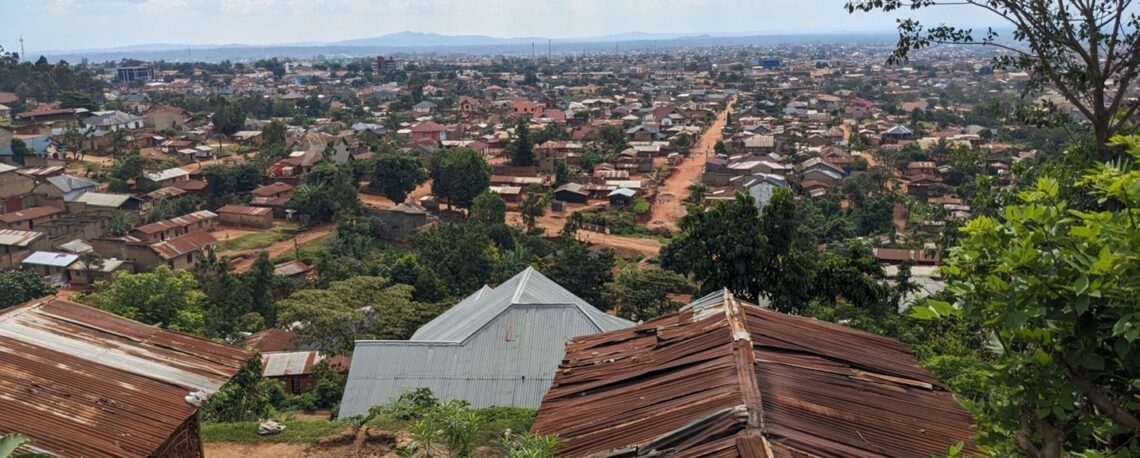
Caption: View of part of the city of Beni. Photo by Akilimali Chomachoma

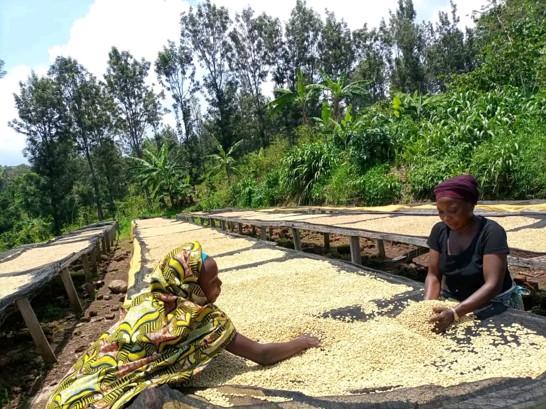
How to Restore Degraded Coffee Plantations Through the Implementation of Integrated Management Systems – Studies

Published on August 19 in the journal *Frontiers in Agronomy*, a study examines the effectiveness and economic viability of integrated management programs aimed at restoring soil health, agroecological functions, and coffee productivity in these degraded systems. According to the study, the experiment took place over 34 months, from September 2022 to June 2025, at the Mulungu research station in South Kivu, in the eastern part of the Democratic Republic of the Congo.

This study explores the combination of five integrated farming practices, including cover crops or intercrops with a single application of cow manure, the conservation of crop residues, and the establishment of elephant grass (Pennisetum purpureum) hedgerows around plots and Calliandra hedgerows around blocks.

The PCI treatments were distinguished by the following cover or intercrop crops: horse bean (Mucuna pruriens), bush crotalaria (Crotalaria grahamiana), elephant grass, a horse bean–common bean (Phaseolus vulgaris) rotation, and banana as an intercrop. A control plot with only Calliandra along the edges of the blocks was included.

According to Dr. Ntamwira Bagula Jules of the National Institute for Agronomic Studies and Research (INERA) and the Biodiversity International–CIAT Alliance, a co-author of this study, coffee is an important source of income for a large portion of the population in eastern DRC. Nevertheless, yields are declining due to the depletion and degradation of farmland, caused in particular by continuous plowing, slash-and-burn farming, bushfires, and deforestation.

Finally, the study highlights that the combination of coffee and banana trees yielded promising economic results. The findings reveal a significant improvement in coffee yield in certain treatments. The study also notes that the management systems tested reduced coffee tree mortality and increased relative diameter growth at 34 months. The study indicates that 45% of coffee trees had died in the control plots after this period, whereas the mortality rate ranged from 10 to 30% in the plots that benefited from integrated management.

Changes in chemical properties were observed during the study period, the study notes, while physical and biological indicators showed signs of recovery, including a decrease in temperature in the plots and an increase in earthworm abundance.

Bagula Jules noted in an email that, to restore degraded fields, Mucuna and beans were reintroduced into a crop rotation, along with Crotalaria juncea and Pennisetum purpureum in the aisles or as hedges, as well as a Calliandra hedge and banana trees as shade crops.

He explains that dwarf beans are grown in rotation with Mucuna. Bean residues and Mucuna biomass are returned to the soil as mulch. Pennisetum purpureum, planted as an interrow or hedge crop at 25 × 25 cm, is cut regularly and applied as mulch around the coffee trees. Calliandra, planted along the field edges at 1-meter intervals, fixes nitrogen and is used as manure, mulch, or fodder when pruned. He adds that banana trees provide shade and mulch in this intercrop system.

He states that these techniques have enabled cover crops and grasses to improve soil health, nutrient levels, earthworm populations, soil moisture and temperature, as well as crop vigor and income over a three-year period. They have also significantly reduced labor costs and limited the use of chemical pesticides.

According to Ghislain Kamondo, Executive Director of Congo Agri Platform a consortium of Congolese coffee and cocoa agricultural cooperatives based in the DRC that did not participate in the study agroforestry helps restore cocoa fields and improve their profitability.

Written by Victoire Katembo Mbuto

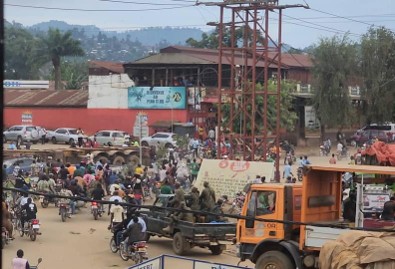
Beni: Anger and Protests Following the Death of a Young Girl Shot During an Ebola Funeral in Katula

High tension gripped downtown Beni on Thursday following a fatal altercation at the Katula cemetery. A young girl was shot and killed during a dignified and safe burial (DSB) related to the Ebola virus disease, triggering a spontaneous protest by an angry crowd.

The tragedy occurred around midday as a medical team, escorted by security forces, was conducting the burial of an Ebola victim. According to initial eyewitness accounts and amateur footage circulating rapidly, a misunderstanding between the crowd and law enforcement escalated.

To disperse the crowd, security forces opened fire. A young girl was fatally shot at the scene.

The incident immediately sparked unrest. Refusing to hand over the remains, dozens of angry protesters took the girl’s body and marched toward downtown. The impromptu procession brought major thoroughfares to a standstill, with protesters chanting slogans against law enforcement and denouncing police brutality.

Dignified and safe burials, while crucial for stopping the spread of the Ebola virus, remain a frequent source of friction in Beni. Restrictions imposed on families for health reasons regularly clash with local traditions, exacerbating mistrust toward response teams.

As of now, police authorities have not yet released their official account of the events or provided an exact toll from the clashes. The situation remains tense in the city, where residents are demanding a full investigation into this tragedy and that those responsible for the shooting be brought to justice.

Written by Azarias Mokonzi