
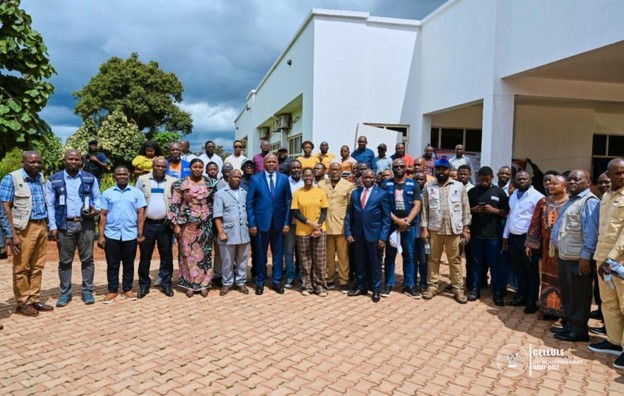
Faced with growing resistance encountered by health teams on the ground, the governor of Haut-Uele Province, Jean Bakomito Gambu, took a radical decision on Wednesday, September 30, 2026. Following a strategic crisis meeting held in Isiro, the provincial authority ordered the immediate closure of the PK51 mining site and strict restrictions on population movement in this highly volatile area in order to curb the spread of the Ebola virus disease.
This high-level meeting brought together leaders of mining cooperatives, representatives of artisanal miners, and key international health partners, including the WHO, UNICEF, and Africa CDC.
Since the official declaration of the epidemic linked to the Bundibugyo strain, mining communities have posed the greatest challenge to authorities in the Democratic Republic of the Congo. Citing instances of open resistance toward medical response teams in the towns of Wamba and PK51, the governor banged his fist on the table.
The high mobility of artisanal miners and the denial of the disease within these communities are dangerously exacerbating the spread of the virus.
To break the chain of transmission, a strict measure limiting movement between PK51 and Sali Sali has been enacted.
The Security Committee Steps In:
To ensure strict compliance with these health guidelines, provincial authorities are no longer relying solely on public awareness campaigns. Jean Bakomito Gambu announced that the provincial security committee—comprising the Armed Forces (FARDC) and the National Police (PNC)—will be deployed on a large scale in the field to escort and protect healthcare workers as they carry out their duties.
Mining operators, who were previously reluctant, are now being held accountable for encouraging their employees to follow mandatory preventive measures, such as regular handwashing and the immediate reporting of suspected cases. The region’s economic and public health survival depends on it.
Written by Azarias Mokonzi