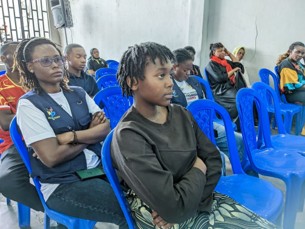
In the east of the Democratic Republic of the Congo, efforts to combat the resurgence of Ebola are intensifying. Faced with the risk of the disease spreading, several local organizations are now using places of worship to raise awareness among worshippers about preventive measures and to strengthen community engagement.
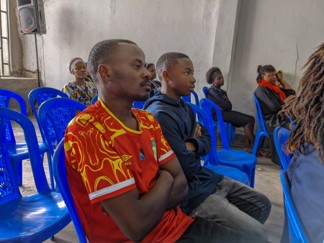
It is 7.30 am on Tuesday 7 July 2026, in the Mabanga-Nord neighborhood, in the Karisimbi commune. Songs of praise and thanksgiving ring out in the church of the International Ministry of the Conquerors, situated on Osso II Avenue. As the congregation prepares to listen to the morning sermon, the worship leader briefly pauses his message to hand over to an awareness-raising team.
“We are following reports of the resurgence of Ebola with concern. I ask you to pay close attention to the messages that will be shared with you today,” he tells the congregation.
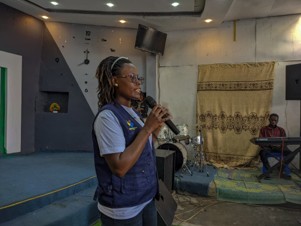
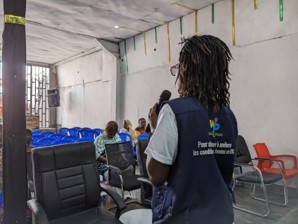
Among the speakers is Aurélie Maliro, a member of the organization Woman Power DRC. Speaking to several dozen worshippers, she emphasizes that Ebola is an infectious disease and not a supernatural phenomenon.
“We can continue to pray whilst observing preventive measures. Ebola exists. It is neither a demon nor witchcraft. Churches bring large numbers of people together; it is therefore essential to apply preventive measures there,” she explains.
For this humanitarian worker, religious leaders play a key role in the fight against the epidemic. Their influence within communities can help to combat rumors, restore trust in health teams and encourage the adoption of preventive behaviors.
“We must follow the recommendations of healthcare workers, avoid physical contact, wash our hands regularly and seek immediate medical attention at a health center if we develop any suspicious symptoms. Together, we can slow the spread of Ebola,” she insists.
Following the discussions, theory gives way to practice. The facilitators demonstrate to the congregation the various steps involved in effective handwashing, which is considered one of the most important measures for limiting the transmission of several infectious diseases.
“We will take this advice on board. We will always need your support to raise awareness further within our community,” says the preacher at the end of the session.
Aurélie Maliro also points out that, whilst we await fully validated treatments for the Bundibugyo strain, the speed of treatment remains crucial.
“Anyone showing suspicious symptoms must be referred to a healthcare facility without delay. The earlier the treatment, the greater the chances of survival,” she emphasizes.
Since the resurgence of Ebola virus disease in eastern DRC, several civil society organizations have been stepping up awareness campaigns in neighborhoods, schools and, more recently, churches. At the same time, the health authorities, with the support of their international partners, are continuing their efforts in epidemiological surveillance, contact tracing and patient care. Clinical trials of treatments for the Bundibugyo strain have also been launched to assess their effectiveness.
Experts believe that one of the main challenges remains the mistrust felt by some sections of the population towards the response teams, which complicates the rapid identification of cases and the tracing of contacts. In this context, the involvement of religious leaders is seen as a key factor in strengthening community adherence to public health measures.
A few weeks ago, Bishop Willy Ngumbi Ngengele of the Diocese of Goma also called on the faithful to observe protective measures and follow the recommendations of the health authorities in order to limit the spread of the disease.
Written by Victoire Katembo Mbuto