
When you’re driving an electric car, you probably think you’re contributing to a cleaner future. But have you ever thought about who actually makes that future possible?
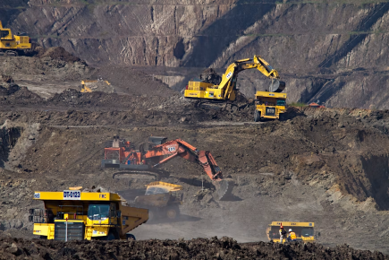
Essential to the batteries powering electric vehicles and other green technologies, cobalt has become one of the most significant resources in our global transition to green energy. As the demand for battery powered technologies continues to grow, so does the demand for the cobalt needed to power them. The center of this flourishing industry lies in the south of the Democratic Republic of the Congo, in Kolwezi–the cobalt capital of the world.
Credits to: Dominik Vanyi, Unsplash.com
From sunrise-to-sundown, thousands of women toil at mines, working dangerously with these very minerals crucial to obtaining our “green” future. The Mutoshi Pilot Project offered a glimpse of what a different future could look like–one with clean energy and protected women’s livelihoods. Yet, its eventual termination revealed a deeper issue: without long-term commitments, even the most successful reforms can create only temporary differences, leaving women vulnerable to the very conditions they were supposed to be freed from.
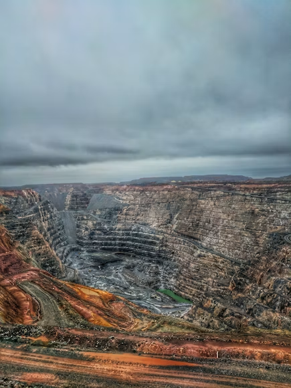
Currently, women make up 20-50% of artisanal mine workers. Many are forced into mining due to economic hardship and a lack of access to alternative income sources. Because early communities thought women were in charge of life and fertility above ground, mixing female energy with the “womb of the earth” was believed to offend the spirits guarding minerals. Therefore, women are not allowed in tunnels because their presence is thought to drive away copper veins. Due to this and differences in physical strength, women and men have different jobs: women often crush, sort, and wash raw minerals, whereas men dig through tunnels. Working conditions are incredibly dangerous. Women spend between 8 and 10 hours a day cleaning unearthed ores. Feet in water, handling black stones with bare hands, they are exposed to an immense amount of radiation danger. Women often perform mineral purification on cobalt–a mineral incredibly toxic to inhale and touch–while they are pregnant or alongside children without any Personal Protective Equipment (PPE). Additionally, women’s reproductive health deteriorates through their exposure to minerals in the mines. Menstrual disruption, infections, miscarriages, stillbirths, and birth defects are all examples of toxic reproductive effects that occur. Poor hygiene practices exist due to a lack of access to drinking water and sanitation facilities, ultimately placing women and girls at high risk of infections, along with other gynecological and reproductive diseases. Women are often subject to widespread sexual violence in mining communities as well. In one study, over 70% of women reported sexual violence, including abuse involving police and security forces working at mines to oversee transactions between miners and middleman purchasers. Such exploitation contributes to coerced prostitution of underage girls, underage pregnancy, and high rates of HIV. Yet, these conditions aren’t unavoidable; the Mutoshi Pilot Project demonstrated how safer and more equitable mining practices are possible. The project, existing from 2018-2020, aimed to improve income, support female empowerment, increase school attendance, reduce child labor and injuries, and eliminate fatalities. While traditional mining relied on deep, dangerous, narrow tunnels, Mutoshi brought safer, open-pit mechanical extraction: a process that stripped topsoil, converting underground shafts that were hazardous into flat, open-pit areas capped at 10 meters, roughly the length of a standard yellow school bus. Through doing this, the physical barrier of narrow tunnels was removed, along with cultural superstitions keeping women from digging in enclosed mines in the first place. Specifically, 77% of participating women moved into non-washing roles. (39% became ore collectors, 31% became diggers, and 7% became team leader diggers).
Credits to: Matthew de Livera, Unsplash.com
The project introduced clean drinking water, sanitary latrines, and on-site healthcare, heavily improving the well-being of all women working. Miners at Mutoshi worked an average of 1 hour less per day than those on non-project sites, having a lower rate of absence because of illness and spending less out-of-pocket money on medical bills. Additionally, women faced less harassment from male colleagues through heavily structured fences on-site, protecting women while they work.
Mutoshi transformed households and communities. Women participating in the project earned roughly 2.5 times more than those not a part of it, with monthly earnings increasing from ~$34/month to ~$100+. As a result, household incomes doubled, providing mothers a greater financial ability to support their families. Many mothers used their increase in earnings to pay off their children’s education, granting children the ability to return to school. Hence, the project caused a significant decline in child labor. Women also gained leadership roles and legal recognition within the mining sector, affirmatively challenging the gender barriers that had confined them to lower-paying positions in the past. The project’s success showed how gender equality wasn’t just a matter of protecting workers; rather, it was also about improving the economy. Women opened up new businesses in surrounding communities, launching small retail stalls, food markets, and clothing shops. Local food sellers and farmers also saw an increase in daily demand because miners had a reliable cash flow for daily nourishment. In fact, women were able to spend about 75% of their earnings on local goods. Since women were given greater opportunities to earn, for every 10,000 miners on site, the project generated around $1 million per year in local economic activity.
Credits to: catrina farrell, Unsplash.com
Despite its success, the progress Muthoshi made was ultimately unsustainable. When the COVID-19 pandemic ended the project in 2020, the safety standards that protected miners deteriorated rapidly. Fatalities in tunnels increased from zero during the project to seven afterwards, pushing women back into the dangerous working conditions they had briefly escaped. Many women went back to washing ore, losing the higher wages they gained in their new roles as collectors, diggers, and team leaders. As household incomes declined, child labor also found its way back into the area, along with sexual harassment, causing women to once again become exploited by middlemen. The collapse of Mutoshi reveals a fundamental limitation of short-term human rights interventions: even when a project shows that safer and more equitable mining is achievable, those improvements can never last to protect communities permanently without long-term commitments to enforce them. Clean energy should still be obtainable without the expense of women’s lives. The Mutoshi Pilot project demonstrated how achieving safer and more equitable mining practices is not impossible; when mining practices changed, women were able to gain safer working conditions, better economic opportunities, and the power to support their families and communities. The project ending, and its protections disappearing alongside it, was never because possible solutions didn’t exist; rather, it was because there was no long-term commitment to them. We must hold governments, mining companies, and battery manufacturers accountable for making the standards we want permanent instead of temporary. This means providing miners with safe working conditions and PPE, investing in economic empowerment for women, and strengthening the enforcement of human-rights protections throughout the cobalt supply chain. Consumers should start questioning where the minerals that make their “ethical” batteries possible actually come from–and whose lives are used to get them. The green industry has already shown it is capable of protecting the workers behind their minerals. Now, it is time to make those protections the standard, not the exception.
Credits to: Noah Buscher, Unsplash.com
Written by Vatsala Dogra
Source List
- https://catalystmcgill.com/womens-security-and-cobalt-mining-in-the-drc/#:~:text=Women%20are%20tasked%20with%20the,these%20jobs%20are%20physically%20dangerous.
- https://news.mongabay.com/2024/11/cobalt-mining-for-green-energy-risks-womens-reproductive-health-in-drc/
- https://www.trafigura.com/media/1qnci1so/2019_trafigura_the_mutoshi-pilot_project.pdf
- https://ditsong.org.za/en/iron-smelting-taboos-during-the-late-iron-age-in-south-africa/
- https://www.delvedatabase.org/uploads/resources/2020-SoS_OHS-2_Mutoshi-Cobalt.pdf#:~:text=For%20every%201%2C000%20miners%20at%20the%20site%2C,ment%20and%20bribes%20sought%20by%20government%20agents.
- https://bhr.stern.nyu.edu/wp-content/uploads/2023/02/NYUCBHRCobaltMining_FINALFeb7.pdf
- https://academicjournals.org/journal/JASD/article-full-text-pdf/D34190A71369