
In Goma, eastern Democratic Republic of the Congo (DRC), the Mazuku phenomenon associated with the accumulation of carbon dioxide CO_2 in certain areas poses a danger to local populations and animals. A lack of awareness about this phenomenon and the spread of misinformation complicate prevention efforts.
———
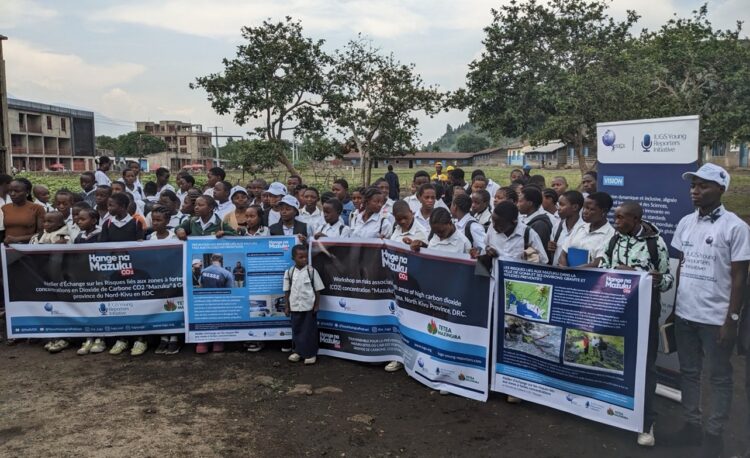
The Youth Reporters Initiative of the International Union of Geological Sciences (YoRI-IUGS), represented in the DRC by journalist Daniel Makasi, raised awareness among around one hundred students at Institut Nyabyungu regarding the risks associated with Mazuku. The activity, organized in collaboration with Tetea Mazingira on Monday, October 19, 2026, also addressed the consequences of disinformation on prevention.
Mazuku: A Hazard Linked to Volcanic Activity
Abeli Minani, a researcher at the Goma Volcanological Observatory (OVG), explains that Mazuku is linked to volcanic activity. He emphasizes caution as the primary preventive measure.
According to the researcher, prolonged exposure to high concentrations of CO_2 can cause various symptoms, notably fatigue, respiratory distress, and loss of consciousness. In the most severe cases, it can be fatal.
“Exposure to CO_2 concentrations between 2% and 5% can notably cause nausea and dizziness,” he warns.
The researcher highlights the neighborhoods of Lac-Vert, Mugunga, and Himbi, as well as peripheral areas of Goma and sectors of Virunga National Park, as being among the locations affected by the phenomenon.
He also mentions signs that may indicate the presence of hazardous zones, such as yellowish vegetation or an unusual absence of plant life. However, these indicators alone are not enough to confirm the presence of dangerous $CO_2$ levels.
An Average of Six Deaths Per Year
Abeli Minani notes that a scientific study published in 2021 reported an average of six human deaths per year linked to Mazuku. He clarifies that these figures are based on available data and that other cases might go unrecorded, particularly when they occur in isolated areas.
The phenomenon also affects domestic animals and wildlife, with potential consequences for community livelihoods and local ecosystems.
To reduce accidents, the researcher urges residents to exercise vigilance, particularly when in areas likely to be affected.
In particular, he advises against approaching a dead animal or attempting to rescue a person in distress in an area suspected of having dangerous $CO_2$ concentrations without proper equipment.
“Appropriate protective equipment is required before taking action to rescue a victim in a potentially dangerous area,” he recommends.
Because CO_2 is invisible and odorless, any intervention in a suspicious area must be left to trained and equipped personnel. An unprotected person should not venture into these zones, even to render aid.
Disinformation: A Challenge for Prevention
Mazuku is also affected by the circulation of false information. Rumors and misleading content can downplay the risks, create unjustified fear, or encourage dangerous behavior.
Daniel Makasi, DRC focal point for the IUGS Young Reporters Initiative and facilitator of these exchanges, emphasized the need to strengthen collaboration between scientists, journalists, and society. According to him, this synergy helps make scientific knowledge more accessible, improves public information, and combats disinformation. He cautions that reliable information about Mazuku can thus contribute to raising awareness of the risks and prevention measures.
Other stakeholders are advocating for the marking and fencing off of high-risk zones to increase residents’ caution