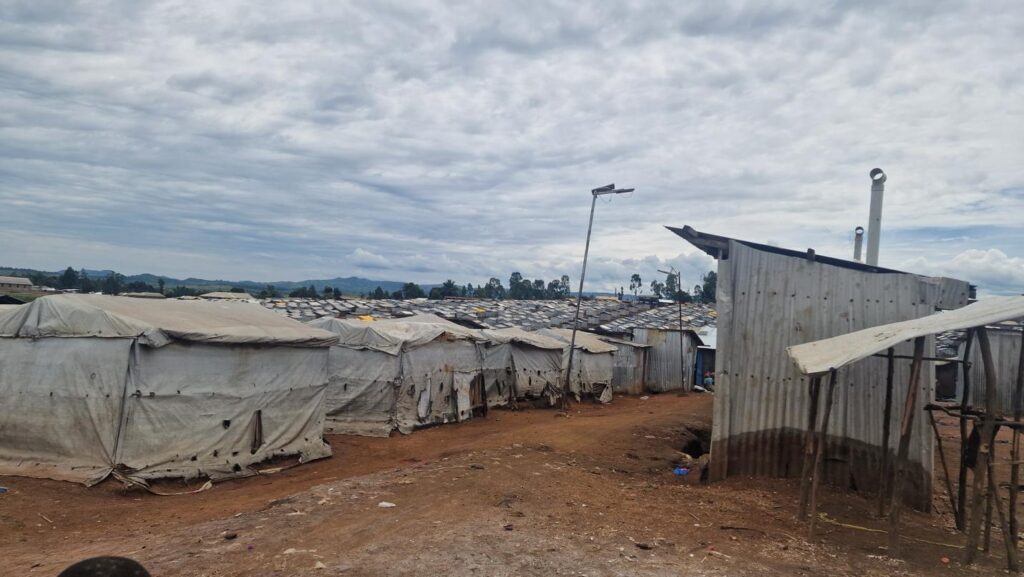
More than 25,000 displaced people are living in the Kigonze camp, which was built in 2018. So far, no cases of Ebola have been reported there, but living conditions in the camp raise fears of the worst. “If Ebola arrives, we’ll be wiped out because we’re crammed in here and there are so many other problems,” said one resident.
There is no approved vaccine or treatment for the Bundibugyo strain of the Ebola virus. An effective response therefore relies above all on rapid detection, infection prevention and community trust. But so far, there has been no aid for the displaced to prevent this disease.
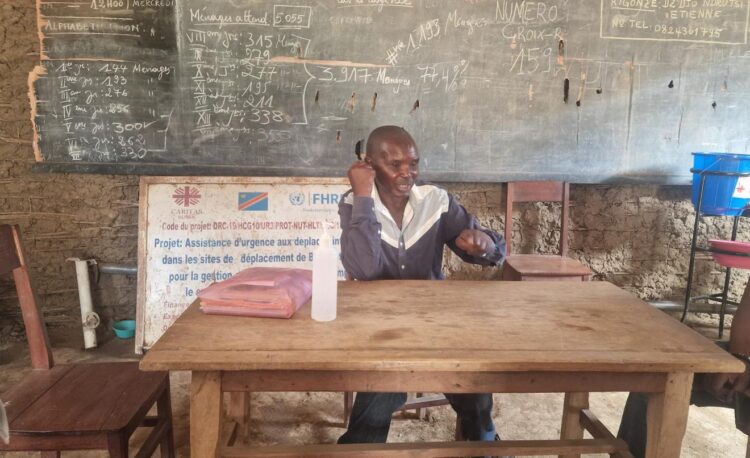
“It has been eight years since our camp received any humanitarian aid. The toilets are full or in poor condition, yet no repairs are being made. Not to mention our tarpaulin shelters – we feel abandoned here,” says Dzudjo Etienne, chair of the Kigonze displaced persons’ committee.
To make ends meet, around 70% of the displaced people at the Kigonze site in Bunia (Ituri) rely on small-scale income-generating activities: farming, small-scale trading, day labor, and so on. These initiatives enable them to provide for their families as best they can. But despite these efforts, their living conditions remain extremely precarious, and thousands of children do not attend school due to a lack of financial means.
A displaced woman, speaking on condition of anonymity, does not hide her distress. “We have ended up here because of security threats against us, and where we are, we face further hardships. We take turns to get water because of the low flow. If this block has water today, the others won’t have any,” she laments. She adds that “if Ebola arrives, we will be wiped out because we are crammed together and facing so many other problems”.
Kigonze is, however, just one example of a camp where an outbreak could have dramatic consequences: Ituri has nearly 61 displacement sites, housing more than 970,000 people, according to the province’s governor, Lieutenant General Johnny Luboya Nkashama, who told AFP on Thursday that he had requested “the deployment, as quickly as possible, of equipment as well as qualified and specialized medical staff”.
According to the statistics, twenty days after the official declaration of the Ebola virus disease, 63 people have died out of 381 cases, representing a case fatality rate of less than 17% in the affected provinces. Dzudjo Etienne hopes that lives in the camps will also be saved through concrete assistance measures, particularly in this area at this time.
Written by Akilimali Chomachoma, in Bunia