
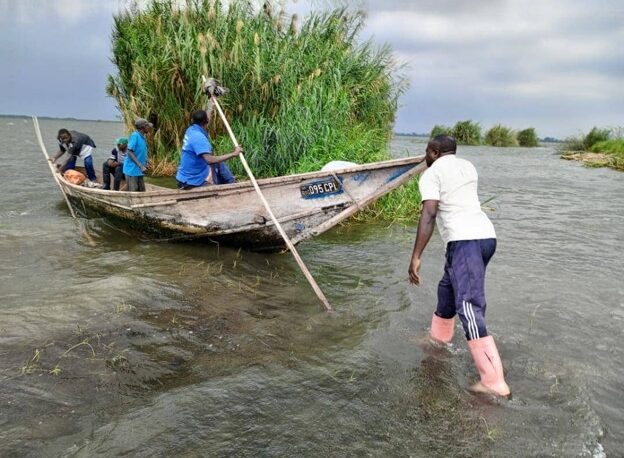
The hippopotamus was found dead on 8 August by an ICCN patrol team in Virunga National Park, according to a health alert issued on Friday 14 August by the Kibirizi rural health zone, which covers the Vitshumbi health area.
Part of the carcass had been taken by local residents before the cause of death could be established. A sample taken from the animal was subsequently analyzed in a laboratory and tested positive for Bacillus anthracis, the bacterium responsible for anthrax.
“A sample taken from a hippopotamus found dead on 8 August (…) was analyzed and the result came back positive for anthrax in the laboratory,” said Muhindo Nzwiri Désiré, chief medical officer of the Kibirizi rural health zone, in the health alert.
The Kibirizi health zone has stepped up awareness-raising efforts in Vitshumbi, a fishing enclave on the south-western shore of Lake Edward in Virunga National Park, following confirmation of a case of anthrax in a hippopotamus found dead in the area.
A delegation from the health zone travelled to Vitshumbi on Sunday 16 August to raise awareness amongst residents of the risks associated with consuming wild animal meat and to encourage anyone who may have eaten meat from this hippopotamus to come forward voluntarily to a health center for testing.
According to local sources, part of the carcass had been taken and consumed by some residents before tests confirmed the presence of the disease.
However, some residents are reportedly reluctant to undergo testing, for fear of possible prosecution by the nature conservation authorities for alleged poaching.
Officials from the Congolese Institute for Nature Conservation (ICCN) have dismissed these fears and described the initiative as a public health measure. They are encouraging anyone who may have been exposed to contact the health services.
“You shouldn’t wait until someone falls ill to seek medical advice. The key thing is that we are aware of the presence of this disease in our community and that we take the necessary precautions,” explains an ICCN source, speaking on condition of anonymity.
Gentil Mungumwa, a member of the Virunga Elite Youth Organization, is also calling on anyone who has eaten hippopotamus meat to come forward.
“This is not a matter of poaching. They must come forward voluntarily. The matter is in the hands of the medical profession. They must not be afraid,” he says.
According to him, priority must be given to prevention and to the care of those who may have been exposed.
“It has been established that the hippopotamus was found dead as a result of an illness. How can these people be lumped together with poachers? We must avoid focusing on unfounded rumors. It is better to encourage them to go to the nearest health centers to get tested,” he adds.
Churches take action
Awareness-raising efforts also continued in several churches in Vitshumbi on Sunday, during announcements made to the congregation. Religious leaders passed on health information and urged the public to take precautions.
“People tend to be skeptical, but they have been informed. We hope they will protect themselves,” says a religious leader contacted in Vitshumbi.
For some local leaders, disseminating reliable information is now a key priority in order to minimize the risks associated with potential exposure and to encourage those affected to visit healthcare facilities.
Written by Victoire Katembo Mbuto